A high-strength stainless steel die serves as the foundational constraint tool for shaping sulfide all-solid-state battery materials. It functions as a rigid vessel that allows researchers to apply extreme uniaxial pressure—often reaching several hundred megapascals—to compress loose powders into dense, dimensionally precise cylindrical pellets without succumbing to deformation.
Core Takeaway The die is not merely a container; it is a precision instrument that translates massive hydraulic force into uniform material density. By resisting elastic deformation under loads up to 400 MPa, it ensures pore elimination and intimate particle contact, which are prerequisites for high ionic conductivity and reliable electrochemical data.
Defining Geometry Under Pressure
Maintaining Dimensional Integrity
The primary role of the die is to enforce strict geometric constraints on the material. It confines the electrode and electrolyte powders radially, ensuring the final pellet achieves precise, standardized dimensions required for comparative electrochemical evaluation.
Withstanding Extreme Loads
To act as an effective constraint, the die is designed to withstand multiple tons of pressure. It must operate typically in the range of 370 to 400 MPa without yielding, ensuring that the force applied by the hydraulic press is directed entirely into densifying the powder rather than expanding the mold.
Driving Material Performance
Achieving Uniform Density
A high-quality die ensures that pressure is transmitted uniformly to every part of the powder sample. This uniformity is critical to preventing density gradients, which can lead to structural weak points, internal cracks, or short circuits in the final battery cell.
Enhancing Ionic Conductivity
The high-pressure densification facilitated by the die is the key mechanism for eliminating pores between sulfide electrolyte particles. By removing these voids, the process reduces grain boundary resistance, directly improving the ionic conductivity of the material.
Ensuring Interfacial Contact
The die enables the creation of tight physical contact between the electrode and electrolyte layers. This mechanical bonding prevents interlayer delamination and ensures stable interfacial performance, which is vital for the cycle stability of the battery.
Critical Operational Considerations
The Risk of Elastic Deformation
If a die lacks sufficient strength for the applied load, it may undergo elastic deformation (bulging) during pressing. This causes a loss of effective pressure on the powder and results in pellets with uneven edges or "barreling," rendering the sample useless for accurate testing.
Surface Finish Importance
The die must possess a smooth surface finish and high hardness. Imperfections in the die wall can cause friction or particle adhesion, leading to surface defects on the pellet or cracking during the ejection process.
Optimizing Your Pelletizing Setup
To ensure consistent results in solid-state battery research, select your tooling based on your specific experimental goals:
- If your primary focus is maximizing ionic conductivity: Prioritize a die rated for pressures exceeding 400 MPa to ensure complete pore elimination and minimal grain boundary resistance.
- If your primary focus is standardized cell evaluation: Prioritize a die with exceptional geometric precision and rigidity to ensure every sample has identical dimensions and density profiles.
Ultimately, the reliability of your electrochemical data is defined by the mechanical integrity of the die used to create your samples.
Summary Table:
| Feature | Role in Pelletizing | Impact on Battery Performance |
|---|---|---|
| Geometric Constraint | Enforces strict dimensional integrity | Ensures standardized, comparable testing data |
| Pressure Resistance | Withstands up to 400 MPa without deformation | Directs full hydraulic force into material densification |
| Uniform Densification | Eliminates internal voids and pores | Minimizes grain boundary resistance and short circuits |
| Interfacial Bonding | Creates tight contact between layers | Prevents delamination and improves cycle stability |
| Surface Finish | Reduces friction during ejection | Ensures defect-free pellets and prevents cracking |
Elevate Your Solid-State Battery Research with KINTEK
Precision molding is the foundation of reliable electrochemical data. KINTEK specializes in high-performance laboratory equipment designed for the most demanding research applications. Whether you need high-strength dies and hydraulic presses (pellet, hot, isostatic) for material densification, or advanced high-temperature furnaces (vacuum, CVD, tube) for material synthesis, we provide the tools to ensure your success.
Our comprehensive range also includes high-temperature high-pressure reactors, electrolytic cells, and dedicated battery research consumables. Let our expertise in crushing, milling, and cooling solutions (ULT freezers, freeze dryers) support your entire workflow.
Ready to achieve superior ionic conductivity and material density?
Contact KINTEK Today to find the perfect tooling solutions for your laboratory.
Related Products
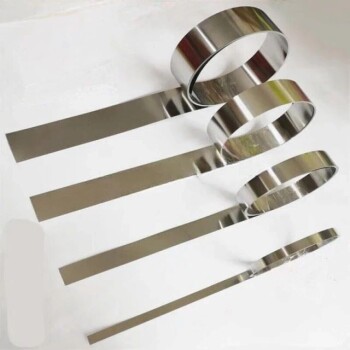
- Battery Lab Equipment 304 Stainless Steel Strip Foil 20um Thick for Battery Test
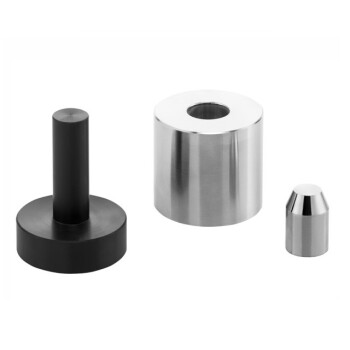
- Button Battery Tablet Press Sealing Mold for Lab Use
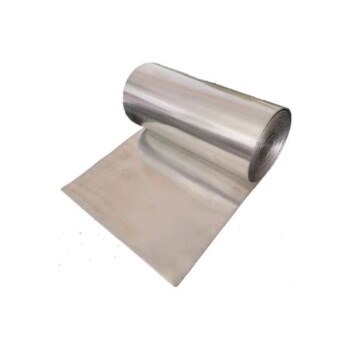
- High Purity Zinc Foil for Battery Lab Applications
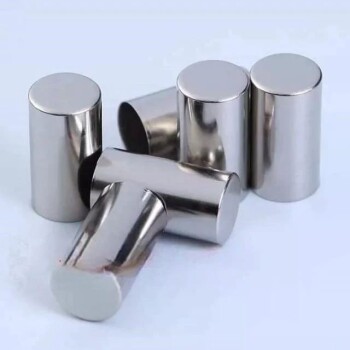
- Cylindrical Battery Steel Case for Battery Lab
People Also Ask
- How is a galvanostat used to evaluate F-rGO layers? Quantifying Protective Performance in Lithium Metal Batteries
- What is the sputtering cathode method? A Guide to Thin Film Deposition Technology
- What is sputtering target material? The Blueprint for High-Quality Thin Film Coatings
- What is organic thin film? A Guide to Engineered Molecular Layers for Advanced Tech
- What are the target materials for sputtering? From Metals to Ceramics for Precise Thin Films