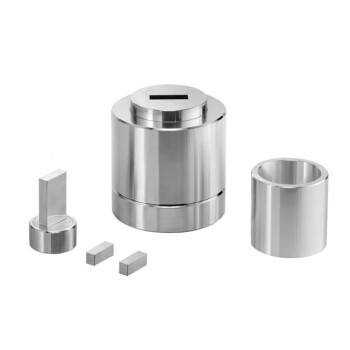
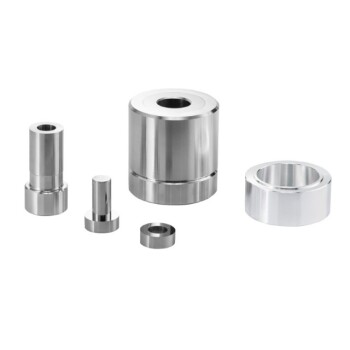
A laboratory hydraulic press or pelletizer acts as the critical bridge between raw material and usable fuel.
These machines apply immense pressure to compress loose biochar powder into distinct geometric shapes, such as pellets or briquettes. This process, known as densification, transforms a light, dusty by-product into a stable, high-performance fuel source ready for storage, transport, and combustion.
Core Takeaway Raw biochar typically suffers from low density and poor mechanical strength, making it difficult to use in industrial settings. By densifying the material, a hydraulic press increases its volumetric energy density and physical stability, enabling it to function as a viable, low-carbon substitute for fossil fuels like coke.
Overcoming the Limitations of Raw Biochar
Solving the Density Issue
Biochar produced directly from pyrolysis is often a lightweight powder with low bulk density. This makes it inefficient to store and difficult to use effectively in energy applications.
Enhancing Energy Potential
By compressing this powder into pellets, the equipment significantly increases the volumetric energy density of the fuel. This ensures that a smaller physical volume of fuel delivers a higher energy output, maximizing efficiency.
Improving Logistics and Safety
Loose biochar powder creates significant dust, posing respiratory hazards and complicating logistics. Densification creates solid shapes that improve transportation and storage characteristics while effectively reducing dust emissions during handling and combustion.
Engineering for Industrial Performance
Building Mechanical Strength
For high-intensity applications like steelmaking, fuel must withstand massive weight without crumbling. Pressing biochar improves its compressive strength and physical stability, preventing it from crushing under the gravitational loads of a blast furnace.
Enabling Fossil Fuel Replacement
Because densified biochar possesses this enhanced durability, it can effectively replace traditional carbon sources. Studies indicate it can substitute up to 20% of fossil coke in ironmaking processes without compromising furnace permeability.
Reducing Carbon Footprint
The ultimate goal of using biochar is environmental impact reduction. By creating a mechanically stable fuel that can survive industrial processing, this equipment directly contributes to the reduction of carbon dioxide emissions in heavy industries.
Understanding the Trade-offs
The Cost of Processing
While densification is beneficial, it introduces an additional processing step. This requires specific equipment and energy input, which must be weighed against the efficiency gains in the final fuel product.
The Necessity of Stability
You cannot skip this step for vertical shaft applications like blast furnaces. Using loose biochar without pressing creates permeability issues, effectively blocking gas flow and reducing system efficiency.
Making the Right Choice for Your Goal
To maximize the value of your biochar development, align your densification strategy with your end-use requirements:
- If your primary focus is logistics and storage: Prioritize densification to maximize volumetric energy density and reduce space requirements.
- If your primary focus is heavy industry (e.g., steel production): Focus on achieving high compressive strength to ensure the pellets can withstand significant gravitational loads.
- If your primary focus is environmental safety: Utilize the press to minimize dust generation and ensure clean, controlled combustion.
Successful biochar fuel development relies not just on the chemical properties of the char, but on the physical engineering of its final form.
Summary Table:
| Feature | Raw Biochar Powder | Densified Biochar Pellets |
|---|---|---|
| Energy Density | Low (Bulky/Light) | High (Concentrated) |
| Physical Form | Loose, Dusty Powder | Solid, Durable Shapes |
| Handling/Safety | High Dust, Hard to Store | Low Dust, Easy Logistics |
| Compressive Strength | Minimal | High (Blast Furnace Ready) |
| Industrial Use | Limited | Viable Fossil Fuel Substitute |
| CO2 Impact | High Potential, Low Utility | High Utility, Low Carbon |
Elevate Your Biochar Research with KINTEK Precision Engineering
Transform your raw materials into high-performance sustainable fuels with KINTEK’s industry-leading laboratory solutions. Whether you are optimizing volumetric energy density or testing mechanical strength for heavy industry applications, our comprehensive range of laboratory hydraulic presses (pellet, hot, and isostatic) ensures consistent, high-quality densification.
Beyond pelletizing, KINTEK supports your entire workflow with:
- High-Temperature Furnaces: Muffle, tube, and vacuum systems for precise pyrolysis.
- Crushing & Milling: Preparing biochar feedstock to the perfect consistency.
- Analytical Tools: Sieve equipment and high-pressure reactors for rigorous fuel testing.
Ready to bridge the gap between lab research and industrial application? Contact us today to discover how KINTEK can enhance your lab’s efficiency and help you lead the transition to low-carbon energy.
References
- Huijuan Wang, Xiqiang Zhao. Applications of Biochar in Fuel and Feedstock Substitution: A Review. DOI: 10.3390/en18174511
This article is also based on technical information from Kintek Solution Knowledge Base .
Related Products
- Automatic Laboratory Hydraulic Pellet Press Machine for Lab Use
- Laboratory Manual Hydraulic Pellet Press for Lab Use
- Laboratory Manual Hydraulic Pellet Press for Lab Use
- Automatic Laboratory Hydraulic Press for XRF & KBR Pellet Press
- kbr pellet press 2t
People Also Ask
- What is the role of a laboratory hydraulic pellet press and stainless steel molds in the fabrication of RuO2/NbC anodes?
- What role does a laboratory pellet press play in the enhancement of biomass energy products? Optimize Fuel Efficiency
- What is the purpose of using a laboratory pellet press when evaluating the electronic conductivity of carbon powders? Guide
- How does a laboratory hydraulic pellet press contribute to SiCw/2024 aluminum composite preforms? Optimize Densification
- What is the significance of applying 200 MPa of pressure with a laboratory hydraulic pellet press for composite ceramics?