A tube annealing furnace serves as the primary tool for defect engineering in Molybdenum Disulfide (MoS2) by providing a high-precision thermal environment to induce, regulate, or repair atomic-scale imperfections. By strictly controlling temperature, gas composition, and duration, the furnace allows researchers to manipulate sulfur vacancies and metal sites to tune the material’s electronic and optical properties.
Core Takeaway: The tube furnace acts as a thermodynamic reactor that enables the selective removal or addition of atoms within the MoS2 lattice. Through precise control of reducing atmospheres and thermal gradients, it transforms MoS2 from a pristine semiconductor into a functionalized material with specific active sites or enhanced crystallinity.
Mechanisms of Defect Induction
Precision Creation of Sulfur Vacancies
The furnace provides the thermal energy necessary to break Mo-S bonds, facilitating the desorption of sulfur atoms from the crystal lattice. By maintaining specific high temperatures over long durations, the system induces controlled sulfur vacancies that are essential for tuning the photoluminescence response and electronic structure of 2D materials.
Formation of Metal Vacancies for Hetero-functionalization
Beyond sulfur removal, high-precision furnaces can be configured to create metal vacancies on the MoS2 basal plane. By regulating hydrogen concentration and temperature, molybdenum atoms can be detached, creating "anchor sites" that allow for the introduction of heterometal atoms to create new material functionalities.
Regulation of Vacancy Density
Achieving specific defect densities requires the extreme stability offered by a tube furnace's fluid and thermal controls. These systems can regulate sulfur vacancy densities within a precise range of 10¹³ to 10¹⁵ cm⁻², ensuring that the resulting material meets exact performance specifications for catalytic or electronic applications.
Atmospheric Control and Environmental Regulation
The Role of Reducing Environments
The introduction of a reducing atmosphere, typically a mixture of Argon and Hydrogen (e.g., 95% Ar / 5% H₂), is critical for selective defect engineering. The hydrogen reacts with sulfur atoms to form H₂S gas, which is then swept away by the flow, allowing for a selective and controllable reduction of the lattice.
Oxygen Exclusion and Material Purity
Maintaining an oxygen-free environment is vital during high-temperature processing to prevent the unwanted oxidation of MoS2 into molybdenum oxides. The sealed nature of the tube furnace, often purged with nitrogen or argon, ensures that the semiconductor properties and chemical purity of the nanoscale powder or thin film remain intact.
Thermal Gradients for Phase Transformation
Tube furnaces are frequently used to convert precursors like molybdenum trioxide (MoO₃) into high-purity MoS2 through sulfurization. This process involves staged heating—often starting at 600°C and rising to 800°C—to ensure the reaction system is fully sulfurized while managing the phase transition of the material.
Defect Repair and Structural Optimization
Sulfur Vapor Passivation
While furnaces can create defects, they are equally essential for defect repair through sulfur vapor passivation. By using a spatially distributed heating strategy—placing sulfur powder in a lower-temperature upstream zone and the sample in the central high-temperature zone—the furnace ensures that sulfur vapor effectively fills existing vacancies to restore lattice integrity.
Enhancement of Crystallinity
Annealing in an inert argon environment at moderate temperatures (around 500°C) helps eliminate structural defects and improve crystallinity. This process reduces lattice strain and removes impurities, which significantly enhances the material's carrier mobility and overall stability.
Recrystallization of Thin Films
For MoS2 thin films grown via MBE or CVD, the furnace provides the thermodynamic conditions for recrystallization. By heating precursors to 900°C in the presence of sulfur vapor, the furnace facilitates an increase in crystal domain size (to 50-100 nm), which optimizes the material’s exciton response and optical quality.
Understanding the Trade-offs and Pitfalls
Loss of Stoichiometry
The primary risk in defect engineering is the unintentional over-reduction of the material. If temperature or hydrogen flow is not perfectly calibrated, the furnace may remove too many sulfur atoms, leading to a complete breakdown of the MoS2 crystal structure and a transition into metallic or amorphous phases that lack the desired semiconducting properties.
Thermal Stress and Substrate Interference
High-temperature annealing can introduce thermal expansion mismatches between the MoS2 layer and its growth substrate (such as SiO₂ or sapphire). This stress can cause cracking or delamination of the 2D film, potentially introducing "uncontrolled" mechanical defects that counteract the benefits of the intentional "engineered" atomic vacancies.
How to Apply This to Your Project
Selection of furnace parameters depends entirely on whether your goal is to add functionality through defects or maximize performance through purity.
- If your primary focus is Catalysis or Sensing: Use a reducing atmosphere (Ar/H₂) at high temperatures to maximize sulfur vacancies, which serve as active sites for chemical reactions.
- If your primary focus is Optoelectronics or Transistors: Prioritize inert gas annealing (Ar) or sulfur passivation to repair defects, increase grain size, and ensure high crystallinity for better electron flow.
- If your primary focus is Hetero-atom Doping: Utilize high-precision hydrogen control to create molybdenum vacancies, providing the necessary "pockets" in the lattice to anchor dopant atoms.
The tube annealing furnace is the definitive tool for MoS2 defect engineering, providing the essential thermal and atmospheric "scalpel" required to modify 2D materials at the atomic level.
Summary Table:
| Engineering Mechanism | Objective in MoS2 Processing | Key Process Parameters |
|---|---|---|
| Vacancy Induction | Creates active sites for catalysis & sensing | Ar/H₂ atmosphere, High Temp |
| Sulfur Passivation | Repairs lattice defects & restores purity | Upstream sulfur vapor, 500°C+ |
| Recrystallization | Increases crystal domain size (50-100 nm) | 600°C–900°C, Sulfur-rich environment |
| Atmosphere Control | Prevents oxidation & ensures semiconductor purity | High-purity N₂/Ar purging |
| Metal Vacancy Creation | Provides sites for hetero-atom doping | Precise H₂ regulation & thermal stability |
Precision Thermal Solutions for Your Nanotechnology Research
Achieving atomic-scale precision in MoS2 defect engineering demands the highest levels of thermal stability and atmospheric control. KINTEK provides researchers with the professional-grade tools necessary to manipulate 2D materials with confidence.
Our comprehensive portfolio includes:
- High-Temperature Furnaces: Advanced tube, vacuum, CVD, and atmosphere furnaces tailored for precise material synthesis.
- Specialized Reactors: High-temperature high-pressure reactors and autoclaves for complex chemical transformations.
- Sample Preparation: Precision crushing, milling, and hydraulic presses (pellet, isostatic) for uniform material processing.
- Essential Consumables: High-purity ceramics, crucibles, and PTFE products to maintain material integrity.
Whether you are focusing on high-efficiency catalysis or next-generation optoelectronics, KINTEK’s equipment ensures the repeatable results your breakthrough deserves.
Ready to elevate your lab's capabilities? Contact our technical experts today to find the perfect furnace or reactor solution for your project!
References
- M K Ranjuna, Jayakumar Balakrishnan. High temperature anomalous Raman and photoluminescence response of molybdenum disulfide with sulfur vacancies. DOI: 10.1038/s41598-023-43756-w
This article is also based on technical information from Kintek Solution Knowledge Base .
Related Products
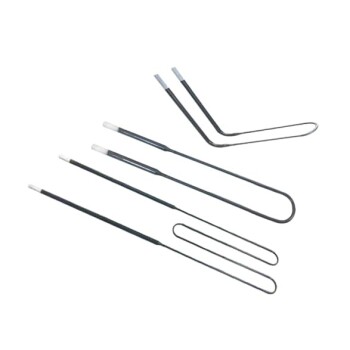
- Molybdenum Disilicide (MoSi2) Thermal Elements Electric Furnace Heating Element
- Multi-zone Laboratory Tube Furnace
- Controlled Nitrogen Inert Hydrogen Atmosphere Furnace
- Vacuum Heat Treat and Molybdenum Wire Sintering Furnace for Vacuum Sintering
- Rotary Tube Furnace Split Multi Heating Zone Rotating Tube Furnace
People Also Ask
- What is the temperature range of molybdenum disilicide heating elements? Choose the Right Grade for Your High-Temp Needs
- What is molybdenum disilicide used for? Powering High-Temperature Furnaces Up to 1800°C
- What is the temperature range of a MoSi2 heating element? Unlock 1900°C Performance for Your Lab
- What is MoSi2 heating element? A High-Temp Solution with Self-Healing Power
- What is the best heating element for a furnace? A Guide to Selecting the Right Material for Your Temperature Needs