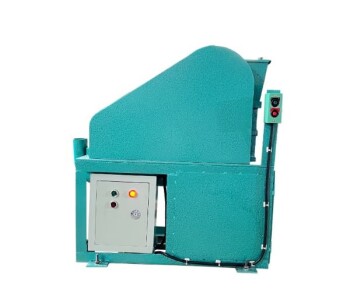
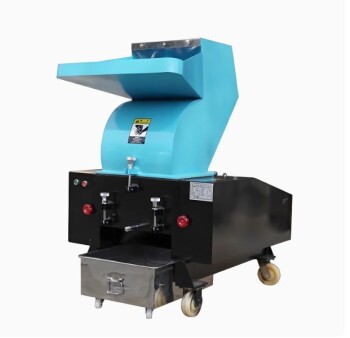
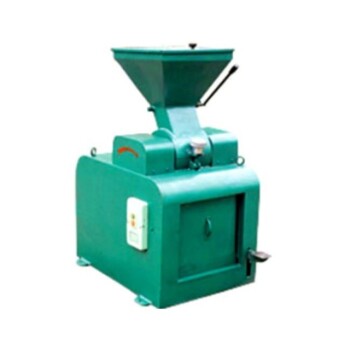
An industrial-grade high-energy crushing system serves as the critical mechanical activator in the pretreatment of raw PCB materials. It utilizes intense collision and shear forces to transform complex circuit board fragments into micron-scale powders, effectively dismantling the board's structure to prepare it for chemical recovery.
The core function of this system is to convert inert waste into a highly active reaction substrate. By refining materials to the micron level, it maximizes surface area to significantly enhance the efficiency of subsequent chemical processes in electrolyte solutions.
The Mechanics of Refinement
Utilizing Shear and Collision
The system does not simply cut the material; it employs intense collision and shear forces.
These forces are necessary to process the durable materials found in printed circuit boards. The energy applied must be sufficient to shatter components rather than just deforming them.
Reaching the Micron Scale
The ultimate physical goal of this equipment is to produce micron-scale powders.
Reducing fragments to this specific size range is a prerequisite for effective downstream processing. It ensures the material is fine enough to interact uniformly with chemical agents.
Preparing for Chemical Processing
Breaking the Laminated Bond
Printed circuit boards consist of complex, laminated structures designed to be durable.
The high-energy crushing process mechanically breaks down these laminations. This separation is vital to liberate metallic components from the non-metallic substrate before chemical treatment begins.
Creating an Active Substrate
The most critical role of the system is increasing the exposed surface area of metallic components.
By creating a fine powder, the system provides a highly active reaction substrate. This allows for faster and more complete reactions when the material is introduced to electrolyte solutions.
Operational Considerations
The Necessity of Intensity
Achieving the required micron-scale refinement demands high-energy input.
Standard or low-energy crushing methods often fail to break the complex laminated structures effectively. Without this intense mechanical pretreatment, the material remains too coarse to serve as an effective substrate for chemical recovery.
Making the Right Choice for Your Goal
To optimize your PCB recycling workflow, consider the specific requirements of your downstream processes:
- If your primary focus is mechanical separation: Prioritize systems that generate intense shear forces to fully dismantle complex laminated structures.
- If your primary focus is chemical reaction efficiency: Ensure the system consistently yields micron-scale powders to maximize the active surface area available for electrolyte interaction.
High-energy crushing is the bridge that transforms raw electronic waste into a chemically reactive resource.
Summary Table:
| Feature | Function in PCB Recycling | Impact on Downstream Processing |
|---|---|---|
| Force Mechanism | Intense collision & shear | Dismantles durable laminated structures |
| Output Size | Micron-scale powder | Maximizes active surface area for reactions |
| Material State | Mechanical activation | Converts inert waste into active substrates |
| Chemical Readiness | Structural liberation | Enhances efficiency in electrolyte solutions |
Maximize Your Recovery Yield with KINTEK Precision
Transitioning from electronic waste to valuable resources requires the right mechanical activation. KINTEK specializes in advanced crushing and milling systems and sieving equipment designed to deliver the precise micron-scale refinement your PCB recycling workflow demands.
Whether you are focusing on mechanical separation or optimizing chemical reaction efficiency in electrolytic cells, our high-performance solutions—including hydraulic presses and high-temperature reactors—ensure your materials are perfectly prepared for the next stage.
Ready to enhance your lab's efficiency and material activity? Contact KINTEK today to discover how our industrial-grade equipment can transform your pretreatment process.
References
- Vera Serga, Vladimir Pankratov. Leaching of Gold and Copper from Printed Circuit Boards under the Alternating Current Action in Hydrochloric Acid Electrolytes. DOI: 10.3390/met12111953
This article is also based on technical information from Kintek Solution Knowledge Base .
Related Products
- High Energy Vibratory Laboratory Ball Mill Grinding Mill Single Tank Type
- High-Energy Omnidirectional Planetary Ball Mill Machine for Laboratory
- High-Energy Omnidirectional Planetary Ball Mill Milling Machine for Laboratory
- Sealed Jaw Crusher High Efficiency Environmental Protection Safe and Reliable
- High Energy Planetary Ball Mill Milling Machine for Laboratory
People Also Ask
- What is the function of a high-energy ball mill in the preparation of nanoparticle-reinforced steel? | KINTEK
- Why is a high-energy ball mill used in the preparation of NTP electrode slurries? Maximize Conductivity & Performance
- What is the role of a high-energy ball mill in Al/Si/Al2O3/SiO2/MWCNTs nanocomposites? Master Powder Pretreatment
- How is a high-energy ball mill utilized in the dry-process preparation of composite electrolytes? | KINTEK
- What is the role of a high-energy ball mill in battery material prep? Optimize Nanostructuring for Li-ion Performance