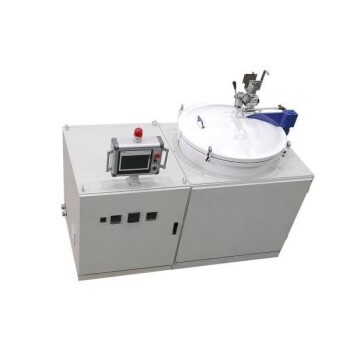
The industrial laboratory muffle furnace serves as the critical simulation environment for replicating fire exposure in polypropylene (PP) modified concrete. It provides a precisely controlled high-temperature setting—typically between 300°C and 600°C—to trigger specific physicochemical changes within the material. By maintaining constant heat for set durations, it ensures the PP fibers melt or pyrolyze uniformly throughout the concrete volume.
The muffle furnace acts as a standardization tool, transforming variable fire scenarios into a controlled thermal process. Its primary value lies in ensuring uniform heat penetration that fully activates the melting and pyrolysis of polypropylene particles, creating consistent baselines for analyzing post-fire material degradation.
Creating a Controlled Thermal Environment
Precision Temperature Regulation
To simulate the varying intensities of a fire, the muffle furnace allows researchers to dial in specific thermal plateaus. The primary reference highlights a critical operational range of 300°C to 600°C.
This precision is necessary to replicate distinct phases of fire intensity accurately. It allows for a standardized comparison between different concrete mixtures under identical thermal stress.
Ensuring Uniform Heat Penetration
Real-world fires are chaotic and uneven, but experimental data requires absolute consistency. The muffle furnace solves this by maintaining high temperatures for extended, constant durations.
A common standard is a three-hour holding time. This duration guarantees that heat penetrates the core of the concrete specimen, ensuring the center reaches the same temperature as the surface.
Triggering Physicochemical Changes
Melting the Polypropylene
The primary function of the heat treatment is to target the polypropylene fibers embedded in the concrete. At the lower end of the simulated temperature range, the furnace energy causes these fibers to transition from solid to liquid.
This phase change is the first step in altering the concrete's internal structure. It prepares the material for the pressure relief mechanisms that PP fibers are designed to provide.
Inducing Pyrolysis
As temperatures rise within the 300°C to 600°C window, the furnace induces pyrolysis. This is the thermal decomposition of the polypropylene particles.
This process eliminates the solid fiber, effectively leaving behind a network of voids. These voids are the critical "channels" that researchers study to understand how the material resists explosive failure during high heat.
Understanding the Trade-offs
Idealized vs. Real-World Conditions
While the muffle furnace provides necessary consistency, it creates a highly idealized environment. The furnace typically applies heat evenly from all sides of the specimen.
In contrast, a real structural fire often heats only one face of a wall or beam. This means the thermal gradient in the lab specimen may differ from a field scenario.
Static Thermal Exposure
The muffle furnace excels at simulating thermal loads but does not account for mechanical stress. It isolates the chemical and physical degradation of the material.
Consequently, this method does not simulate the mechanical loads or dynamic stress changes a building actively experiences during a fire event.
Making the Right Choice for Your Goal
To get the most value from a muffle furnace simulation, align your experimental design with your specific data needs.
- If your primary focus is material characterization: Ensure the furnace duration is sufficient to reach thermal equilibrium at the core of your specific specimen size.
- If your primary focus is comparative analysis: Maintain strict adherence to the heating ramp rates and hold times (e.g., exactly three hours) to ensure data is comparable across different concrete batches.
Reliable fire safety data begins with the precise thermal control that only a high-quality muffle furnace can provide.
Summary Table:
| Process Component | Detail | Impact on Concrete Research |
|---|---|---|
| Temperature Range | 300°C to 600°C | Replicates distinct fire intensity phases |
| Holding Duration | Typically 3 hours | Ensures uniform heat penetration to the core |
| Physical Action | Melting PP Fibers | Initiates structural transition for pressure relief |
| Chemical Action | Pyrolysis | Creates void networks to prevent explosive failure |
| Environment | Controlled & Static | Provides standardized baselines for material analysis |
Elevate Your Material Research with KINTEK Precision
Ensure the accuracy of your fire safety simulations with KINTEK’s high-performance muffle furnaces. Specifically designed for rigorous laboratory standards, our heating systems provide the uniform heat penetration and precise temperature regulation (300°C to 1200°C+) required for polypropylene concrete pre-treatment and complex material pyrolysis.
Beyond furnaces, KINTEK specializes in comprehensive lab solutions including crushing and milling systems, pellet presses, and high-temperature autoclaves to support every stage of your concrete and materials research.
Ready to achieve consistent, standardized thermal data? Contact our technical experts today to find the ideal equipment for your laboratory needs.
References
- Anna Adamczak-Bugno, Jakub Adamczak. Detection of Destructive Processes and Assessment of Deformations in PP-Modified Concrete in an Air-Dry State and Exposed to Fire Temperatures Using the Acoustic Emission Method, Numerical Analysis and Digital Image Correlation. DOI: 10.3390/polym16081161
This article is also based on technical information from Kintek Solution Knowledge Base .
Related Products
- 1400℃ Muffle Oven Furnace for Laboratory
- High Temperature Muffle Oven Furnace for Laboratory Debinding and Pre Sintering
- 1800℃ Muffle Oven Furnace for Laboratory
- 1200℃ Muffle Furnace Oven for Laboratory
- 1700℃ Muffle Oven Furnace for Laboratory
People Also Ask
- How does a muffle furnace ensure reliability in calcification roasting? Achieve Precision in Pellets Conversion
- Why is a laboratory high-temperature muffle furnace required for the post-annealing treatment of copper oxide?
- What role does a laboratory high-temperature muffle furnace play in iron-based composite phase structure development?
- How is a laboratory high-temperature muffle furnace utilized in sol-gel synthesis for perovskite catalysts?
- How does a muffle furnace influence 8YSZ ceramic densification? Master Precision Sintering at 1500°C