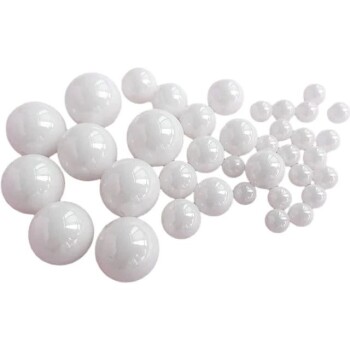
Zirconia (ZrO2) grinding balls provide a critical dual advantage: high kinetic energy for efficient pulverization and chemical inertness for absolute purity. When milling high-molecular-weight polymer electrolyte composites, Zirconia’s high density and hardness generate the necessary impact force to break down tough polymer chains. Simultaneously, its superior wear resistance eliminates the risk of metallic contamination, ensuring the final electrolyte retains its insulation properties and electrochemical stability.
The core challenge in milling polymer electrolytes is applying enough force to process tough materials without contaminating them. Zirconia media solves this by combining the high density required for aggressive grinding with the chemical stability needed to maintain the purity of solid-state electrolytes.
Maximizing Grinding Efficiency
Overcoming Polymer Resilience
High-molecular-weight polymers are inherently tough and resistant to mechanical breakdown.
Zirconia possesses exceptional hardness, allowing the grinding media to withstand the rigors of high-energy milling without deforming.
The Physics of High Density
The effectiveness of ball milling is largely dictated by the kinetic energy transferred upon impact.
Because Zirconia has high density, the grinding balls carry significant momentum.
This provides the substantial impact energy required to pulverize tough polymer mixtures and achieve uniform dispersion, significantly increasing overall grinding efficiency.
Preserving Electrochemical Integrity
Prevention of Impurities
In solid-state electrolytes, purity is paramount; even trace contaminants can ruin performance.
Zirconia is chemically inert, meaning it will not react with the polymer composite during processing.
This characteristic prevents the introduction of metallic or other foreign impurities that often occur with steel or lower-grade ceramic media.
Superior Wear Resistance
Grinding media inevitably experiences friction, which can lead to material degradation.
Zirconia exhibits excellent wear resistance, drastically minimizing the shedding of particles into the batch.
By preventing media wear, you ensure the resulting solid-state electrolyte maintains its critical insulation properties and electrochemical stability.
Common Pitfalls to Avoid
The Hidden Cost of Contamination
A common error in milling electrolytes is prioritizing cost over media compatibility.
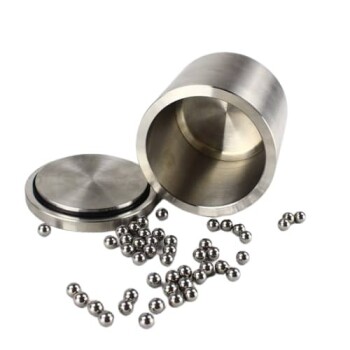
Using metallic media can introduce conductive particles into the mixture due to wear.
In an electrolyte application, these conductive impurities can lead to short circuits or compromised electrochemical performance, negating the value of the composite.
Underestimating Impact Requirements
Using lower-density ceramic alternatives often fails to provide sufficient energy.
If the grinding media lacks the necessary mass, it may fail to fracture the high-molecular-weight polymer chains effectively.
This results in a non-homogeneous mixture and poor dispersion of components, leading to inconsistent electrolyte conductivity.
Making the Right Choice for Your Goal
To ensure the success of your polymer electrolyte project, align your media selection with your critical performance metrics:
- If your primary focus is Process Efficiency: Leverage Zirconia’s high density to maximize impact energy and reduce the time required to pulverize tough polymer chains.
- If your primary focus is Electrochemical Stability: Rely on Zirconia’s chemical inertness to eliminate metallic contamination and preserve the insulation properties of the electrolyte.
By utilizing Zirconia media, you bridge the gap between aggressive mechanical processing and the delicate requirement for high-purity material synthesis.
Summary Table:
| Feature | Technical Advantage | Impact on Polymer Electrolytes |
|---|---|---|
| High Density | Increased kinetic energy & momentum | Efficiently pulverizes tough, high-molecular-weight chains |
| Superior Hardness | Resistance to deformation | Maintains grinding efficiency during high-energy milling |
| Chemical Inertness | Non-reactive material properties | Prevents metallic contamination & maintains insulation |
| Wear Resistance | Minimal particle shedding | Ensures electrochemical stability and high-purity results |
Elevate Your Solid-State Electrolyte Research with KINTEK
Precision milling is the cornerstone of high-performance battery materials. At KINTEK, we specialize in providing advanced crushing and milling systems along with premium ceramic consumables like Zirconia (ZrO2) grinding balls to ensure your high-molecular-weight polymers are processed without compromise.
Whether you are refining electrolyte composites or developing next-generation battery tools, our comprehensive range—from planetary ball mills and hydraulic presses to high-temperature furnaces and autoclaves—is designed to deliver the purity and uniformity your lab requires.
Ready to optimize your material synthesis? Contact KINTEK today to discover how our high-performance laboratory equipment can enhance your research efficiency.
Related Products
- Laboratory Jar Ball Mill with Alumina Zirconia Grinding Jar and Balls
- Precision Machined Zirconia Ceramic Ball for Engineering Advanced Fine Ceramics
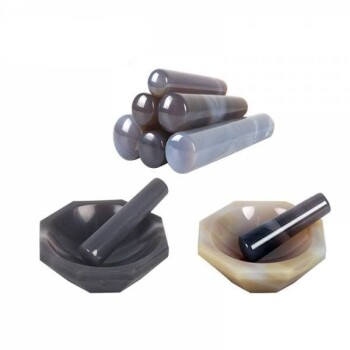
- Laboratory Jar Mill with Agate Grinding Jar and Balls
- Laboratory Ball Mill Jar Mill with Metal Alloy Grinding Jar and Balls
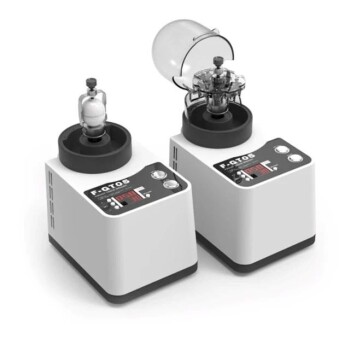
- Laboratory Micro Tissue Grinding Mill Grinder
People Also Ask
- What are the primary functions of using a ball mill for BZCY72 powder? Achieve High Purity and Enhanced Sintering
- In what way does a laboratory ball mill affect material properties when modifying PHBV/pulp fiber composites?
- Why is a laboratory ball mill required for ultra-fine fly ash? Unlock Nano-Scale Adsorption Power
- What is the function of a laboratory ball mill in the preparation of AMMCs? Optimize Dispersion & Grain Refinement
- What is the function of a laboratory ball mill in the pretreatment of waste tire char (WTC)? Optimize Material Reactivity