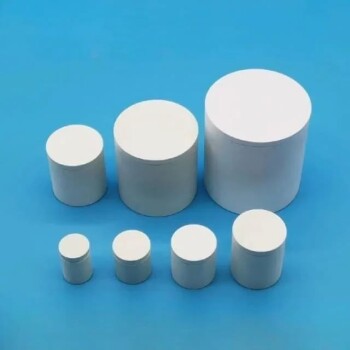
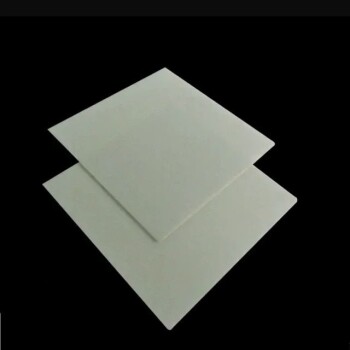
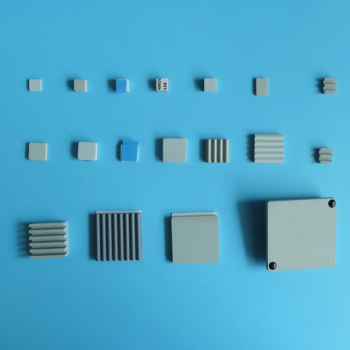
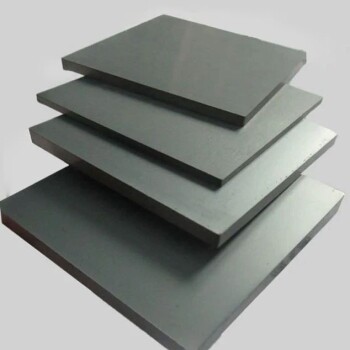
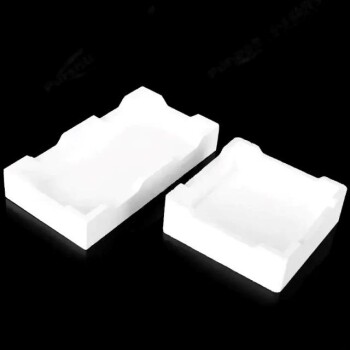
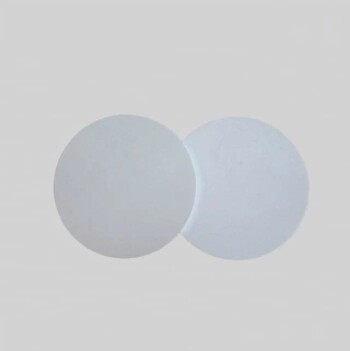
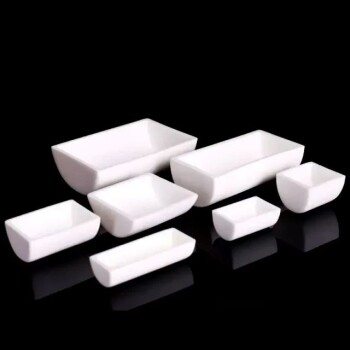
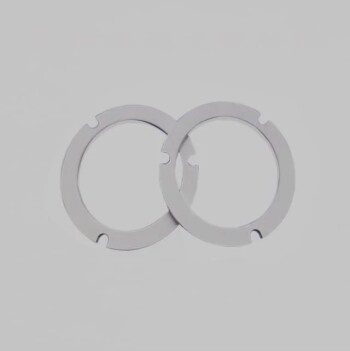
Sintering is the foundational technique for consolidating almost all ceramic manufacturing, turning loose powder into solid, high-performance components. The specific ceramics most commonly used in modern sintering—particularly those suitable for methods like compression molding and 3D printing—include alumina, aluminum nitride, zirconia, silicon nitride, boron nitride, and silicon carbide. These materials are selected because they can be formed into a shape and then thermally fused to achieve high density.
Sintering is the thermal process of heating a "green body" (a compacted powder form) to a temperature below its melting point. This facilitates particle diffusion and removes porosity, transforming a fragile shape into a dense, solid ceramic article with engineered properties.
Common Materials and Forming Methods
The Primary Ceramic Materials
While broadly applied to pottery and clay, industrial sintering focuses on advanced structural ceramics. The most prevalent types include alumina (aluminum oxide) and zirconia, known for their hardness and wear resistance.
Other key materials include aluminum nitride and silicon nitride, which are valued for their thermal and mechanical properties. Boron nitride and silicon carbide are also widely used in high-performance applications requiring extreme durability.
Shaping Before Sintering
Before heat is applied, the ceramic powder must be formed into a shape. This is typically achieved through compression or press molding, which packs the powder tightly.
Advanced manufacturing now allows these specific ceramics to be 3D printed. Techniques such as selective laser sintering (SLS) or paste deposition create the initial geometry before the object is placed in a furnace for final sintering.
The Physics of the Process
Creating the "Green Body"
The process begins with a "green body," which is a low-density object made of compressed ceramic powder. At this stage, the material is fragile and porous.
For raw materials with low plasticity or low affinity for water, manufacturers often introduce organic additives to help bind the powder together and maintain the shape prior to heating.
Densification and Porosity Removal
Sintering works by heating this green body to high temperatures, but crucially, without melting the material to the point of liquefaction.
Instead, the heat triggers naturally occurring solid-state diffusion. This causes the particles to bond and come closer together, drastically reducing the material's porosity and increasing its density.
The Role of Glass Phases
In many ceramic processes, high temperatures cause specific glass phases within the material to flow once a transition temperature is reached. This flow helps fill voids between particles, further consolidating the structure.
Understanding the Trade-offs
Material Shrinkage
The most significant challenge in sintering ceramics is shrinkage. As the porosity is removed and the material densifies, the overall volume of the part decreases.
This dimensional change must be precisely calculated during the initial forming stage (the green body creation) to ensure the final product meets tolerance specifications.
Process Variables
While temperature is the primary driver, it is not the only variable. Techniques like hot isostatic pressing utilize both heat and pressure to achieve complex 3D shapes with higher density.
Conversely, "pressureless sintering" is available for specific graded metal-ceramic composites, though it requires careful control of the material composition to be effective.
Making the Right Choice for Your Project
Selecting the right ceramic and sintering method depends heavily on the final geometry and mechanical requirements of your part.
- If your primary focus is complex geometry: Explore 3D printing methods (SLS or paste deposition) using materials like alumina or zirconia, as these allow for intricate internal structures that traditional pressing cannot achieve.
- If your primary focus is mechanical density: Prioritize processes that combine heat with pressure, such as compression molding or hot isostatic pressing, to minimize porosity and maximize strength in materials like silicon carbide.
Success in sintering lies in balancing the initial compaction of the powder with the thermal shrinkage that occurs during densification.
Summary Table:
| Ceramic Material | Key Properties | Common Applications |
|---|---|---|
| Alumina | High hardness, wear resistance | Structural components, labware |
| Zirconia | High toughness, thermal insulation | Dental, mechanical parts |
| Silicon Carbide | Extreme durability, thermal stability | Kiln furniture, high-performance tools |
| Silicon Nitride | Thermal shock resistance, strength | Engine parts, ball bearings |
| Aluminum Nitride | High thermal conductivity | Electronics, heat sinks |
| Boron Nitride | High temperature stability | Crucibles, lubricants |
Elevate Your Material Research with KINTEK
Precision in sintering requires more than just high temperatures; it demands the right equipment and high-purity consumables. KINTEK specializes in providing laboratory solutions that empower researchers and manufacturers to achieve superior material density and complex geometries.
Whether you are working with alumina, zirconia, or silicon carbide, our comprehensive portfolio is designed to meet your exacting standards:
- Sintering Solutions: Advanced muffle, vacuum, and tube furnaces, plus specialized spark plasma and hot isostatic presses.
- Preparation Tools: High-performance crushing and milling systems, sieving equipment, and hydraulic presses for perfect green body creation.
- High-End Consumables: Premium ceramics, crucibles, and PTFE products to ensure zero-contamination results.
- Specialized Systems: High-temperature high-pressure reactors, autoclaves, and battery research tools.
Ready to optimize your sintering process? Contact our experts today to find the perfect equipment for your lab's unique requirements!
Related Products
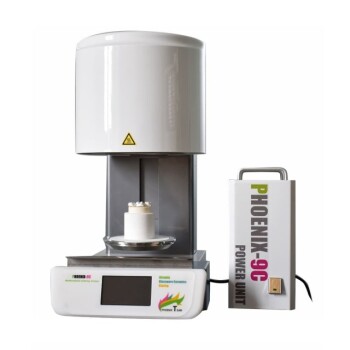
- Dental Porcelain Zirconia Sintering Ceramic Vacuum Press Furnace
- Dental Porcelain Zirconia Sintering Ceramic Furnace Chairside with Transformer
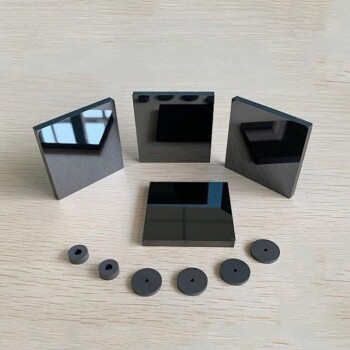
- Silicon Carbide (SIC) Ceramic Sheet Wear-Resistant Engineering Advanced Fine Ceramics
- Vacuum Dental Porcelain Sintering Furnace
- Boron Nitride (BN) Crucible for Phosphorous Powder Sintered
People Also Ask
- What does sintering do to zirconia? Unlock Its Full Strength and Aesthetic Potential
- What is the shrinkage of zirconia during sintering? Mastering the 20-25% Dimensional Change
- What is the sintering temperature of zirconia ceramic? Mastering the 1400°C-1600°C Thermal Profile
- What is the price of zirconia sintering furnace? Invest in Precision, Not Just a Price Tag
- What factors are important to consider when choosing a dental sintering furnace? Match Your Workflow for Optimal Results