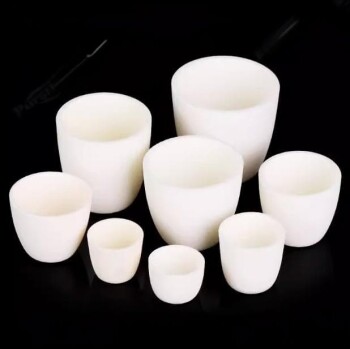
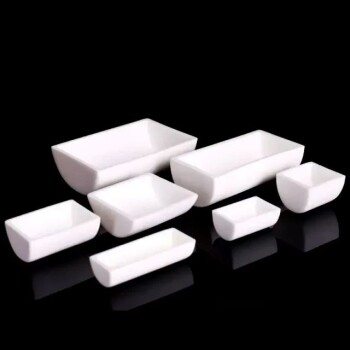
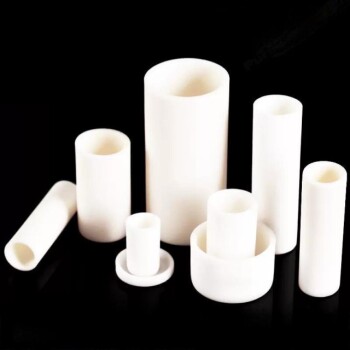
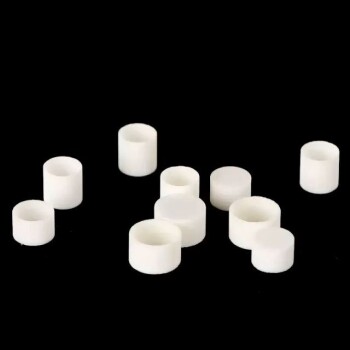
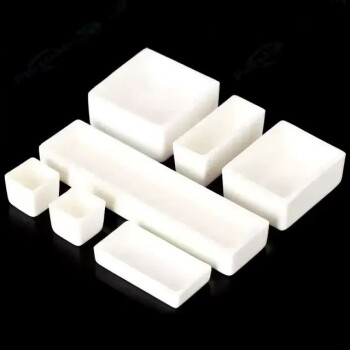
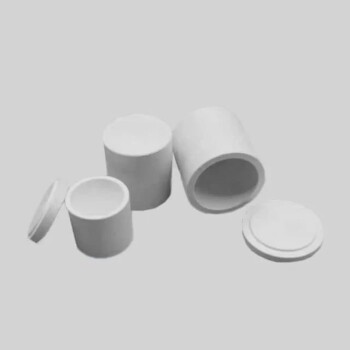
Alumina crucibles are primarily chosen for the calcination of Lithium Lanthanum Zirconium Oxide (LLZO) due to their exceptional thermal resilience and chemical compatibility. They maintain their physical structure without softening at temperatures between 850°C and 1000°C, providing a stable vessel for the initial synthesis of electrolyte powders.
Alumina crucibles provide a critical balance of thermal stability and specific chemical interaction. While they endure high heat without collapsing, they can also act as a passive source of aluminum, which helps stabilize the highly conductive cubic phase of LLZO.
The Mechanics of Thermal Stability
Withstanding Calcination Temperatures
The synthesis of LLZO requires a calcination process typically ranging from 850°C to 1000°C. Alumina crucibles are selected because they remain physically rigid within this window.
Structural Integrity
Unlike materials that might soften or deform under prolonged heat, alumina maintains a solid-phase reaction environment. This ensures the container does not suffer from structural collapse or physical degradation during the multi-step heating processes often required for solid electrolytes.
Chemical Interactions and Phase Stabilization
Maintaining Stoichiometry
According to standard processing guidelines, alumina is chemically stable enough to prevent significant reactions with LLZO precursor powders. This allows the reactants to maintain their intended stoichiometry during the formation of the ceramic powder.
The Role of Passive Aluminum Doping
While generally considered inert, alumina crucibles can interact with LLZO in a specific, often beneficial way. At high temperatures, the crucible can act as an aluminum source, introducing trace amounts of Al into the LLZO structure.
Stabilizing the Cubic Phase
This interaction is critical for the performance of the electrolyte. The introduction of aluminum helps stabilize the cubic phase structure of LLZO. Without this stabilization (or other dopants), LLZO may revert to a tetragonal phase during cooling, which possesses significantly lower ionic conductivity.
Understanding the Trade-offs
The Risk of Impurity Phases
While aluminum doping can be beneficial, uncontrolled reactions between the crucible and the lithium-rich material can be problematic. Excessive interaction may lead to the formation of impurity phases such as lanthanum aluminate (LaAlO3), which can degrade the purity of the final ceramic.
Lithium Volatilization Issues
LLZO is prone to lithium loss at high temperatures, regardless of the crucible used. However, because standard alumina can react with lithium, it may exacerbate deviations in stoichiometry. In strict purity applications, relying solely on an alumina crucible without mitigation strategies (like burying the sample in mother powder) can result in unintended aluminum doping or lithium deficiency.
Making the Right Choice for Your Goal
To select the correct vessel for your specific synthesis requirements, consider the following:
- If your primary focus is stabilizing the cubic phase: Alumina crucibles are an excellent choice, as they provide a cost-effective vessel that facilitates beneficial, passive aluminum doping to prevent the formation of the low-conductivity tetragonal phase.
- If your primary focus is absolute chemical purity: You should consider using platinum crucibles or employing a "mother powder" bed technique within the alumina crucible to prevent direct contact and avoid unintended aluminum contamination or LaAlO3 formation.
Alumina crucibles are the industry standard for LLZO calcination not just because they withstand the heat, but because they often participate in the chemistry required to achieve high ionic conductivity.
Summary Table:
| Feature | Benefit for LLZO Calcination |
|---|---|
| Thermal Resistance | Withstands 850°C - 1000°C without physical degradation or softening. |
| Phase Stabilization | Acts as a passive Al source to stabilize the high-conductivity cubic phase. |
| Cost-Efficiency | Provides a durable and economical alternative to precious metal vessels. |
| Structural Integrity | Ensures a stable solid-phase reaction environment for multi-step heating. |
Elevate Your Solid-State Battery Research with KINTEK
Achieving the perfect cubic phase in LLZO requires more than just heat; it requires the right materials. KINTEK specializes in high-performance laboratory equipment and consumables, providing the precision tools needed for advanced battery synthesis. From our high-purity alumina crucibles and ceramic vessels to our advanced high-temperature muffle and tube furnaces, we empower researchers to maintain strict stoichiometry and enhance ionic conductivity.
Whether you need reliable crushing and milling systems for precursor preparation or vacuum furnaces for specialized sintering, KINTEK offers the comprehensive support your lab deserves. Contact us today to optimize your LLZO synthesis workflow and secure the best materials for your research!
Related Products
- Arc-Shaped Alumina Ceramic Crucible High Temperature Resistant for Engineering Advanced Fine Ceramics
- Alumina Al2O3 Ceramic Crucible Semicircle Boat with Lid for Engineering Advanced Fine Ceramics
- Engineering Advanced Fine Ceramics Alumina Al2O3 Crucible With Lid Cylindrical Laboratory Crucible
- Engineering Advanced Fine Ceramics Alumina Crucibles (Al2O3) for Thermal Analysis TGA DTA
- Engineering Advanced Fine Alumina Al2O3 Ceramic Crucible for Laboratory Muffle Furnace
People Also Ask
- Why Use Alumina Crucibles & Powder Burial for NaSICON? Ensure Phase Purity and Prevent Elemental Volatilization
- What is the primary purpose of using alumina crucibles for LLTO ceramics? Optimize Your High-Temperature Sintering
- Why are alumina crucibles and mother powder essential for LATP sintering? Optimize Your Solid Electrolyte Performance
- Why are high-purity alumina crucibles used for liquid lead corrosion experiments? Ensure Data Accuracy at 550°C
- Primary considerations for choosing alumina crucibles and quartz tubes in indium intercalation: Ensure Material Purity