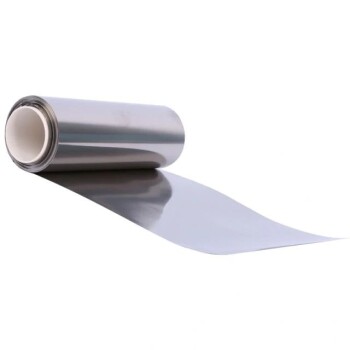
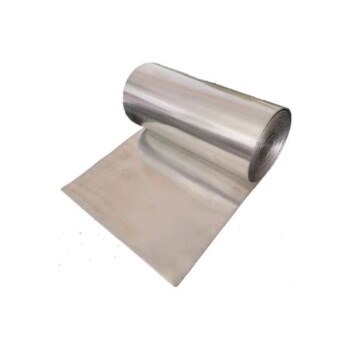
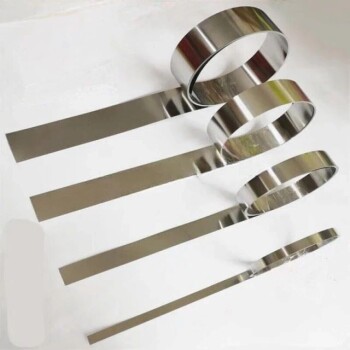
Flexible graphite foil and boron nitride (BN) coatings function as critical isolation and lubrication barriers inside the die during the hot pressing of TiB2-SiC powders. Their primary purpose is to physically separate the ceramic powder from the rigid graphite die, preventing chemical bonding at high temperatures and ensuring the final component can be removed without damaging the mold or the part.
Hot pressing creates an environment ripe for diffusion bonding between the ceramic composite and the graphite mold. These coatings interrupt that process, ensuring easier demolding and significantly extending the service life of expensive graphite tooling.
The Mechanics of Die Protection
Preventing Chemical Interaction
At the elevated temperatures required to sinter TiB2-SiC, ceramic materials become highly reactive. Without a barrier, the ceramic powder can chemically react with or bond to the carbon in the graphite die.
Creating an Isolation Layer
Flexible graphite foil and BN coatings act as a sacrificial interface. They provide a chemical shield that stops the ceramic matrix from fusing to the die walls, preserving the distinct surface of the sintered part.
Facilitating Demolding
Friction is a major challenge when ejecting a hot-pressed part. These materials provide essential lubrication, significantly reducing the force required to push the finished ceramic billet out of the die. This reduces the risk of the part cracking during ejection.
Extending Equipment Longevity
Minimizing Die Wear
Graphite dies are rigid but susceptible to abrasion and surface damage. The direct contact of hard TiB2-SiC ceramic particles against the die wall causes rapid wear.
Preserving Die Geometry
By taking the brunt of the friction and chemical attack, the graphite foil and BN coatings minimize erosion of the die's inner bore. This helps maintain the dimensional tolerance of the die over repeated cycles, preventing premature failure and reducing tooling costs.
Understanding the Trade-offs
While necessary for process efficiency, the use of these liners requires careful consideration regarding precision.
Dimensional Tolerances
Adding a layer of foil or coating inside the die effectively reduces the inner diameter slightly. You must account for the thickness of the graphite foil or BN layer when designing the die to ensure the final sintered part meets its size specifications.
Surface Finish Implications
The surface quality of the sintered part will mirror the interface material. If the flexible graphite foil has a texture or wrinkles during the pressing process, these imperfections can transfer to the surface of the TiB2-SiC component, potentially requiring additional machining or grinding post-process.
Making the Right Choice for Your Goal
When setting up your hot pressing assembly, consider how these materials align with your specific objectives:
- If your primary focus is extending die life: Prioritize high-quality flexible graphite foil to absorb the mechanical stress and abrasion that would otherwise degrade the graphite die.
- If your primary focus is ease of extraction: Ensure a consistent application of Boron Nitride (BN) to maximize lubricity and prevent any localized sticking during demolding.
Strategic use of these isolation layers transforms hot pressing from a destructive, single-use event into a repeatable, cost-effective manufacturing process.
Summary Table:
| Feature | Purpose in Hot Pressing | Key Benefit |
|---|---|---|
| Flexible Graphite Foil | Physical barrier & stress absorber | Minimizes die wear and chemical interaction |
| Boron Nitride (BN) | Lubrication & isolation layer | Facilitates easy demolding and prevents sticking |
| Thermal Stability | Maintains integrity at high temps | Protects mold geometry during sintering |
| Sacrificial Layer | Interface between powder and die | Preserves surface finish and extends tool life |
Optimize Your Sintering Success with KINTEK
Precise material isolation is the key to repeatable, cost-effective manufacturing in advanced ceramics. KINTEK specializes in premium laboratory equipment and high-performance consumables designed for the most demanding thermal processes.
Whether you are processing TiB2-SiC composites or specialized alloys, our comprehensive range of vacuum and atmosphere hot pressing systems, crushing and milling tools, and graphite-compatible consumables (including PTFE products, ceramics, and crucibles) ensures your lab achieves superior results. We help you minimize tooling costs and maximize throughput by providing the right high-temperature furnaces and hydraulic pellet presses for your specific research goals.
Ready to enhance your lab's efficiency and equipment longevity? Contact KINTEK today for expert guidance and tailored solutions!
Related Products
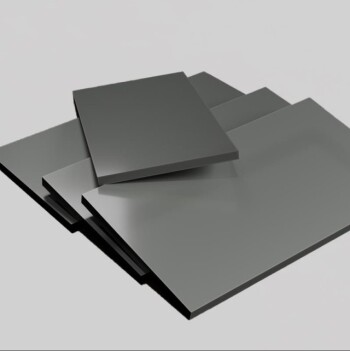
- Carbon Graphite Plate Manufactured by Isostatic Pressing Method
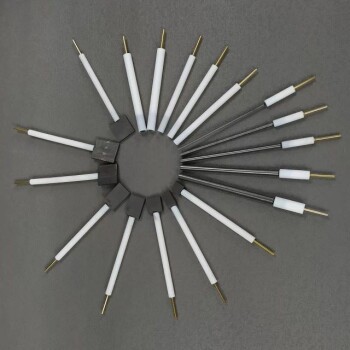
- Graphite Disc Rod and Sheet Electrode Electrochemical Graphite Electrode
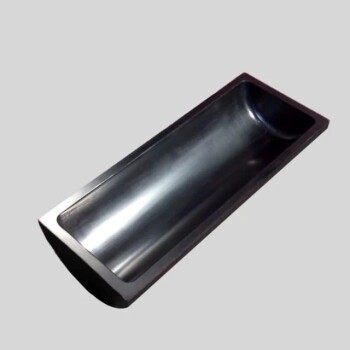
- High Purity Pure Graphite Crucible for Evaporation
- High Purity Pure Graphite Crucible for Electron Beam Evaporation
- Graphite Vacuum Furnace High Thermal Conductivity Film Graphitization Furnace
People Also Ask
- What is the process of isostatic graphite manufacturing? Achieve Unmatched Material Uniformity and Performance
- What is isostatic graphite? The Ultimate Material for High-Tech and High-Temperature Applications
- What is the density of isostatic graphite? Unlock Superior Performance for Demanding Applications
- How big is the isostatic pressing market? A Deep Dive into the $1.2B+ Advanced Manufacturing Enabler
- Why Use an Isostatic or High-Precision Hydraulic Press for Li/LLZO/Li Batteries? Master Solid-State Interfaces