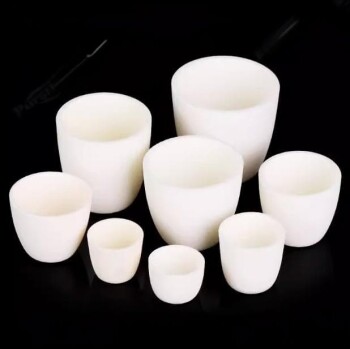
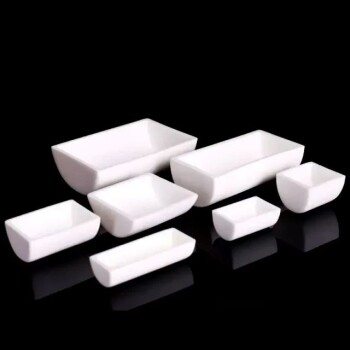
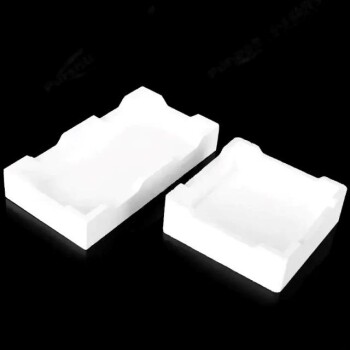
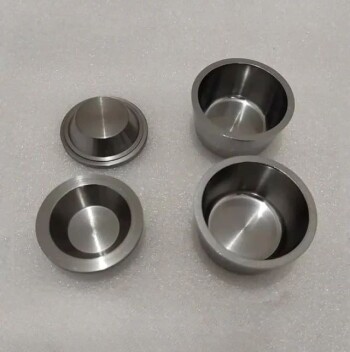
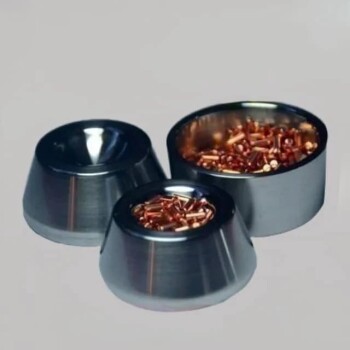
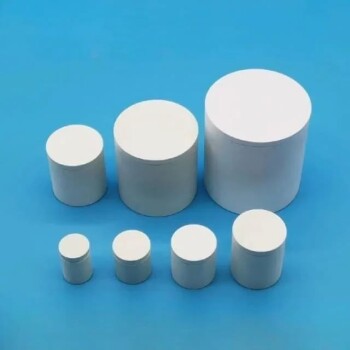
High-purity Alumina (aluminum oxide) crucibles are selected primarily for their exceptional chemical inertness and thermal stability. They provide a neutral containment environment that refuses to react with aggressive molten media, such as nitrate salts, chloride salts, or Lead-Bismuth Eutectic (LBE), even at temperatures exceeding 600°C. This ensures that the container itself does not introduce impurities or skew the corrosion data.
The Core Insight In corrosion science, the container must be chemically invisible. The value of high-purity Alumina lies in its ability to isolate the experiment, ensuring that any observed degradation is caused solely by the molten salt interacting with the metal specimen, rather than artifacts caused by the crucible leaching into the solution.
The Critical Role of Chemical Inertness
Preventing Experimental Contamination
The primary danger in molten salt experiments is the introduction of foreign elements. High-purity Alumina is chemically stable and does not dissolve into solution.
This prevents the crucible material from leaching into the molten salt. By maintaining the purity of the salt solution, researchers ensure that the chemical environment remains consistent throughout the duration of the test.
Isolating the Corrosion Mechanism
To obtain accurate data, the corrosion must result strictly from the interaction between the metal sample and the specific salt mixture.
If a crucible reacts with the salt, it alters the chemistry of the fluid. Alumina’s inertness guarantees that observed phenomena—such as elemental precipitation or spallation in nickel-based alloys—are true representations of the material's performance, not a side effect of container degradation.
Thermal Stability in Aggressive Environments
Withstanding Extreme Heat
Corrosion experiments often push temperatures to simulate reactor conditions. Alumina retains its structural integrity at high temperatures, such as 600°C for Solar Salt mixtures (sodium/potassium nitrate) and even higher (above 973 K) for certain chloride environments.
Functioning as a Protective Liner
In experiments involving liquid metals like Lead-Bismuth Eutectic (LBE), Alumina often serves as a liner within larger pressure vessels.
It effectively isolates the highly corrosive liquid metal from the external steel vessel walls. This prevents "secondary reactions" between the liquid metal and the vessel, ensuring the data collected reflects only the interaction with the specific test specimens (such as T91 or HT9).
Understanding the Trade-offs
Specificity to Salt Type
While Alumina is excellent for nitrates, chlorides, and LBE, it is not a universal solution for every molten salt.
Other materials, such as graphite or glassy carbon, are often preferred for fluoride salts. Fluorides are highly sensitive to oxygen and moisture, and graphite offers better resistance to fluoride erosion while enabling the study of galvanic corrosion effects.
The Importance of Purity Levels
Not all Alumina is created equal. The material selected for these experiments is typically high-purity (exceeding 99.7%).
Lower purity variants may contain binders or additives that could leach out at high temperatures. Using ultra-high purity ensures that the "inert" container truly acts as a neutral variable in the experiment.
Making the Right Choice for Your Goal
To ensure the validity of your corrosion data, select your crucible material based on the specific chemistry of your molten medium.
- If your primary focus is Molten Nitrates or LBE: Select High-Purity Alumina to prevent oxidation and impurity leaching at temperatures up to 600°C.
- If your primary focus is Molten Chlorides: Alumina is a strong candidate, alongside Glassy Carbon, for preventing component leaching in aggressive environments above 973 K.
- If your primary focus is Molten Fluorides: Consider Graphite or Glassy Carbon, as these offer superior erosion resistance and avoid the oxide interactions potentially present with Alumina.
Success in corrosion testing relies on a container that withstands the environment without becoming part of the reaction.
Summary Table:
| Feature | Advantage in Molten Salt Experiments | Compatibility |
|---|---|---|
| Chemical Inertness | Prevents contamination and leaching of impurities into the salt. | Nitrates, Chlorides, LBE |
| Thermal Stability | Maintains structural integrity at temperatures exceeding 600°C. | Solar Salts, Liquid Metals |
| High Purity (>99.7%) | Eliminates experimental artifacts from binders or additives. | Research-Grade Testing |
| Isolation Ability | Acts as a neutral liner to protect external vessel walls. | Corrosive Liquid Metals |
Elevate Your Research Precision with KINTEK
Don't let container contamination compromise your corrosion data. KINTEK specializes in providing high-purity Alumina crucibles and a comprehensive range of laboratory equipment designed for the most demanding environments. Whether you are conducting molten salt studies or metal alloy testing, our portfolio—including high-temperature furnaces, high-pressure reactors, and precision ceramics and crucibles—ensures your experiments remain pure and your results accurate.
Ready to optimize your lab setup? Contact us today to find the perfect materials for your research!
References
- Fadoua Aarab, Thomas Bauer. A New Approach to Low-Cost, Solar Salt-Resistant Structural Materials for Concentrating Solar Power (CSP) and Thermal Energy Storage (TES). DOI: 10.3390/met11121970
This article is also based on technical information from Kintek Solution Knowledge Base .
Related Products
- Arc-Shaped Alumina Ceramic Crucible High Temperature Resistant for Engineering Advanced Fine Ceramics
- Engineering Advanced Fine Alumina Al2O3 Ceramic Crucible for Laboratory Muffle Furnace
- Engineering Advanced Fine Ceramics Alumina Al2O3 Crucible With Lid Cylindrical Laboratory Crucible
- Engineering Advanced Fine Ceramics Alumina Crucibles (Al2O3) for Thermal Analysis TGA DTA
- Alumina Al2O3 Ceramic Crucible Semicircle Boat with Lid for Engineering Advanced Fine Ceramics
People Also Ask
- Why Use Alumina Crucibles & Powder Burial for NaSICON? Ensure Phase Purity and Prevent Elemental Volatilization
- What is the primary purpose of using alumina crucibles for LLTO ceramics? Optimize Your High-Temperature Sintering
- Why are alumina crucibles and mother powder essential for LATP sintering? Optimize Your Solid Electrolyte Performance
- Why are high-purity alumina crucibles used for liquid lead corrosion experiments? Ensure Data Accuracy at 550°C
- Primary considerations for choosing alumina crucibles and quartz tubes in indium intercalation: Ensure Material Purity