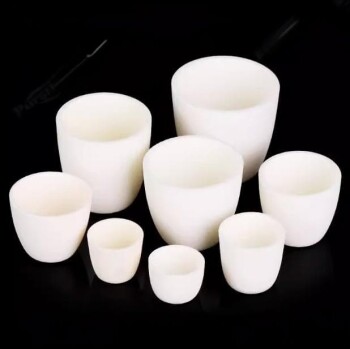
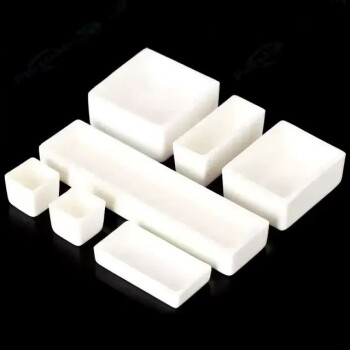
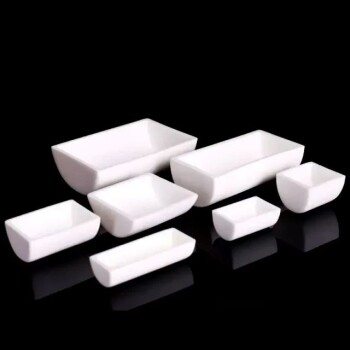
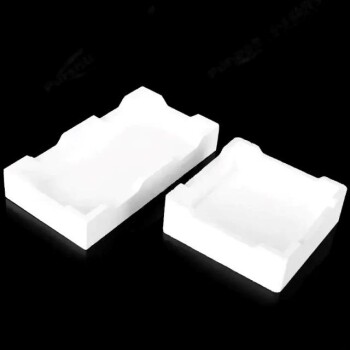
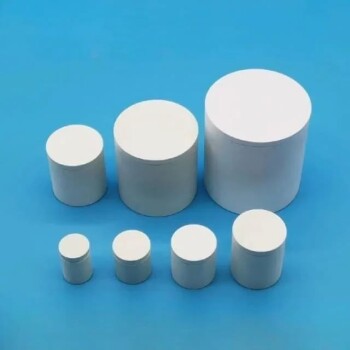
High-purity alumina crucibles are the standard choice for liquid bismuth corrosion testing due to their exceptional chemical inertness and thermal stability. Generally featuring a purity greater than 99%, these crucibles resist reacting with liquid bismuth or metal specimens even at elevated temperatures, which prevents the container material from leaching into the melt and compromising the experiment.
Core Takeaway The selection of high-purity alumina is not merely about containment; it is about data integrity. By acting as a chemically neutral boundary, alumina ensures that any observed corrosion is exclusively a result of the interaction between the specimen and the liquid metal, eliminating false variables caused by container contamination.
The Critical Role of Chemical Inertness
Preventing Elemental Contamination
The primary danger in liquid metal testing is leaching. If a crucible material dissolves even slightly into the liquid bismuth, it alters the chemistry of the melt.
High-purity alumina (typically >99%) possesses extremely low solubility in liquid lead and bismuth. This effectively prevents the introduction of foreign metal impurities from the container into the test environment.
Isolating the Corrosion Mechanism
To understand how a specific alloy resists corrosion, you must ensure the environment is controlled.
If the crucible reacts with the liquid metal, it creates secondary reactions. Alumina ensures the system remains a binary interaction between the test specimen (e.g., FeCrAl) and the liquid bismuth, allowing for an accurate evaluation of oxide film formation and self-healing properties.
Protection as a Liner
In complex experimental setups, alumina crucibles often serve as liners inside static experimental cells.
While the outer vessel may be made of steel to withstand pressure, the alumina liner isolates the corrosive liquid metal from the vessel walls. This prevents the liquid bismuth from corroding the pressure vessel, which would otherwise skew data and compromise safety.
Thermal Stability and Performance
Withstanding Extreme Temperatures
Liquid bismuth and Lead-Bismuth Eutectic (LBE) experiments often operate at temperatures ranging from 500°C to 750°C.
Alumina maintains its structural integrity and chemical stability throughout this range. Unlike lower-grade ceramics or metallic containers, it does not soften or degrade chemically under these thermal loads.
Ensuring Trace Element Accuracy
Modern corrosion studies often focus on trace element comparisons and subtle changes in oxide layers.
Even minute amounts of contamination from a reactive crucible can invalidate these sensitive measurements. High-purity alumina provides the clean baseline required to detect these micro-level interactions with confidence.
Understanding the Trade-offs
Thermal Shock Sensitivity
While chemically superior, alumina is a ceramic and inherently brittle compared to metals.
The primary trade-off is its susceptibility to thermal shock. Rapid heating or cooling can cause the crucible to crack. Experiments must be designed with controlled temperature ramps to prevent mechanical failure of the container.
Mechanical Fragility
Alumina lacks the ductility of metallic containers.
It must be handled with care during setup and cleanup. While it excels at containing static liquid metals, it is less suitable for applications involving high mechanical impact or vibration during the heating phase.
Making the Right Choice for Your Goal
Select your containment strategy based on the specific requirements of your data:
- If your primary focus is fundamental research or trace analysis: Stick to high-purity (>99%) alumina to ensure zero contamination and absolute chemical neutrality.
- If your primary focus is testing under rapid temperature cycling: You must implement strict heating ramp protocols to avoid fracturing the alumina crucible due to thermal shock.
- If your primary focus is protecting structural pressure vessels: Use alumina as an internal liner to isolate the corrosive melt from the structural walls of your test rig.
By prioritizing chemical inertness, high-purity alumina transforms the crucible from a mere bucket into a precision instrument for experimental control.
Summary Table:
| Feature | Alumina Crucible (99%+) | Benefit for Bismuth Testing |
|---|---|---|
| Chemical Inertness | Extremely low solubility | Prevents melt contamination and leaching |
| Thermal Stability | Stable up to 750°C+ | Maintains integrity during high-temp runs |
| Purity Level | >99% Al2O3 | Ensures binary interaction for data integrity |
| Functionality | Protective Liner | Shields pressure vessels from corrosive melts |
| Constraint | Thermal Shock Sensitivity | Requires controlled heating/cooling ramps |
Elevate Your Material Research with KINTEK Precision
Ensure absolute data integrity in your corrosion studies with KINTEK’s high-purity alumina crucibles and ceramic consumables. Whether you are conducting fundamental research in liquid bismuth or scaling up battery research, our solutions provide the chemically neutral environment your experiments demand.
Our Specialized Laboratory Portfolio Includes:
- Thermal Processing: Muffle, tube, vacuum, and atmosphere furnaces.
- Pressure & Reaction: High-temperature high-pressure reactors, autoclaves, and hydraulic presses.
- Consumables: Premium PTFE products, ceramics, and crucibles designed for extreme environments.
- Sample Prep: Crushing, milling, and sieving systems for consistent results.
Don't let container contamination compromise your results. Contact KINTEK today to discuss your specific testing requirements and discover how our high-performance equipment can optimize your lab's workflow.
References
- Toshihide Takai, Noriko S. Ishioka. Corrosion behavior of iron-chrome alloys in liquid bismuth. DOI: 10.1299/mej.21-00397
This article is also based on technical information from Kintek Solution Knowledge Base .
Related Products
- Arc-Shaped Alumina Ceramic Crucible High Temperature Resistant for Engineering Advanced Fine Ceramics
- Engineering Advanced Fine Alumina Al2O3 Ceramic Crucible for Laboratory Muffle Furnace
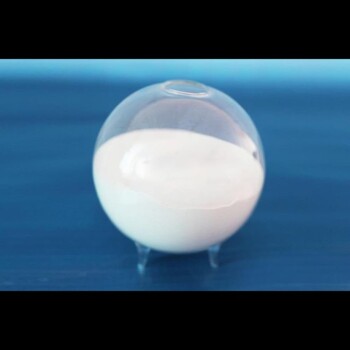
- High Purity Alumina Granulated Powder for Engineering Advanced Fine Ceramics
- Engineering Advanced Fine Ceramics Alumina Al2O3 Crucible With Lid Cylindrical Laboratory Crucible
- High Purity Pure Graphite Crucible for Evaporation
People Also Ask
- Why Use Alumina Crucibles & Powder Burial for NaSICON? Ensure Phase Purity and Prevent Elemental Volatilization
- What is the primary purpose of using alumina crucibles for LLTO ceramics? Optimize Your High-Temperature Sintering
- Why are alumina crucibles and mother powder essential for LATP sintering? Optimize Your Solid Electrolyte Performance
- Why are high-purity alumina crucibles used for liquid lead corrosion experiments? Ensure Data Accuracy at 550°C
- Primary considerations for choosing alumina crucibles and quartz tubes in indium intercalation: Ensure Material Purity