Knowledge Why are high-purity alumina or ceramic crucibles required for LiPb alloys? Ensure Pure & Safe Metal Processing
Author avatar

Tech Team · Kintek Solution

Updated 18 hours ago

Why are high-purity alumina or ceramic crucibles required for LiPb alloys? Ensure Pure & Safe Metal Processing


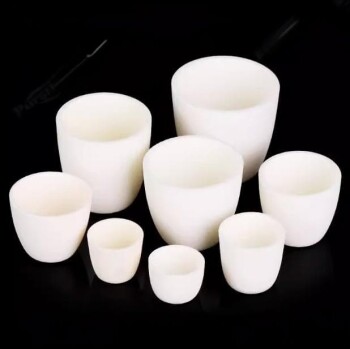
High-purity alumina and ceramic crucibles are strictly required because liquid Lead-Lithium (LiPb) alloys exhibit extreme chemical activity at elevated temperatures. Without these specialized materials, the molten alloy would aggressively corrode the container walls. These crucibles provide the necessary thermal stability and corrosion resistance to contain the melt safely without structural failure.

Liquid Lead-Lithium alloys are highly reactive and will readily dissolve standard crucible materials, ruining both the container and the mixture. High-purity ceramics are the only reliable barrier against this corrosion, ensuring the melt remains uncontaminated for accurate scientific characterization.

The Challenge of Chemical Reactivity

High-Temperature Aggression

Liquid LiPb is not merely hot; it is chemically aggressive. At the melting points required for alloying, the mixture actively attacks the grain boundaries of many standard materials.

Resistance to Molten Metal Corrosion

High-purity alumina and specific ceramics possess a unique microstructure that resists this attack. They provide a robust barrier that prevents the molten metal from eating into the crucible walls.

Preventing Structural Failure

If a standard crucible were used, the corrosion would lead to rapid wall thinning. This could result in a catastrophic leak or total structural failure during the heating process.

Ensuring Experimental Accuracy

Prevention of Contamination

The most critical aspect of using high-purity crucibles is the prevention of cross-contamination. As inferior crucibles corrode, elements from the container wall leach into the LiPb melt.

Maintaining Alloy Purity

For research and performance characterization, the chemical composition of the LiPb must be exact. Even trace amounts of dissolved crucible material can alter the alloy's physical properties.

Validating Research Data

Using high-purity alumina ensures that the data derived from the experiment reflects the true nature of the LiPb alloy. It eliminates variables caused by impurities introduced during the melting process.

Understanding the Trade-offs

Thermal Shock Susceptibility

While alumina offers excellent chemical resistance, it can be susceptible to thermal shock. Rapid heating or cooling can cause these crucibles to crack, unlike more ductile metal containers.

Mechanical Fragility

High-purity ceramics are inherently brittle. They require careful handling during loading and cleaning, as they lack the impact resistance of graphite or metallic alternatives.

Making the Right Choice for Your Goal

Selecting the right vessel is about balancing material longevity with experimental rigor.

  • If your primary focus is high-precision research: Prioritize the highest purity alumina available to ensure zero contamination of your LiPb alloy.
  • If your primary focus is bulk processing: Ensure your specific ceramic choice has verified thermal shock resistance to handle larger melt volumes safely.

Using the correct crucible is not just a safety measure; it is a prerequisite for valid material science.

Summary Table:

Feature High-Purity Alumina/Ceramic Standard Crucible Materials
Corrosion Resistance Excellent; resists grain boundary attack Poor; aggressive dissolution by LiPb
Chemical Purity High; prevents melt contamination Low; leaches container elements
Structural Integrity High thermal stability in molten metal Susceptible to rapid wall thinning
Best Use Case Precise alloying & material research General low-reactivity melting
Risk Mitigation Prevents catastrophic leaks High risk of container failure

Elevate Your Research Precision with KINTEK

Don't let crucible contamination compromise your material characterization. KINTEK specializes in providing high-performance laboratory solutions tailored for extreme environments. Our premium high-purity alumina ceramics and crucibles are specifically engineered to withstand the chemical aggression of liquid breeders like LiPb alloys, ensuring your results remain accurate and your operations safe.

Beyond crucibles, KINTEK offers a comprehensive range of advanced thermal and processing equipment, including:

  • High-Temperature Muffle & Vacuum Furnaces for precise alloy melting.
  • High-Temperature High-Pressure Reactors & Autoclaves for advanced material synthesis.
  • Battery Research Tools & Consumables to support next-generation energy solutions.

Ready to optimize your lab's performance? Contact us today to discuss your specific requirements with our technical experts and discover how our high-quality laboratory equipment can drive your innovation forward.

References

  1. G. Federici, R. Wenninger. European DEMO design strategy and consequences for materials. DOI: 10.1088/1741-4326/57/9/092002

This article is also based on technical information from Kintek Solution Knowledge Base .

Related Products

People Also Ask

Related Products

Engineering Advanced Fine Ceramics Alumina Al2O3 Crucible With Lid Cylindrical Laboratory Crucible

Engineering Advanced Fine Ceramics Alumina Al2O3 Crucible With Lid Cylindrical Laboratory Crucible

Cylindrical Crucibles Cylindrical crucibles are one of the most common crucible shapes, suitable for melting and processing a wide variety of materials, and are easy to handle and clean.

Arc-Shaped Alumina Ceramic Crucible High Temperature Resistant for Engineering Advanced Fine Ceramics

Arc-Shaped Alumina Ceramic Crucible High Temperature Resistant for Engineering Advanced Fine Ceramics

In the journey of scientific exploration and industrial production, every detail is crucial. Our arc-shaped alumina ceramic crucibles, with their excellent high temperature resistance and stable chemical properties, have become a powerful assistant in laboratories and industrial fields. They are made of high-purity alumina materials and manufactured through precision processes to ensure excellent performance in extreme environments.

Alumina Al2O3 Ceramic Crucible Semicircle Boat with Lid for Engineering Advanced Fine Ceramics

Alumina Al2O3 Ceramic Crucible Semicircle Boat with Lid for Engineering Advanced Fine Ceramics

Crucibles are containers widely used for melting and processing various materials, and semicircular boat-shaped crucibles are suitable for special smelting and processing requirements. Their types and uses vary by material and shape.

Engineering Advanced Fine Alumina Al2O3 Ceramic Crucible for Laboratory Muffle Furnace

Engineering Advanced Fine Alumina Al2O3 Ceramic Crucible for Laboratory Muffle Furnace

Alumina ceramic crucibles are used in some materials and metal melting tools, and flat-bottomed crucibles are suitable for melting and processing larger batches of materials with better stability and uniformity.

Engineering Advanced Fine Ceramics Alumina Crucibles (Al2O3) for Thermal Analysis TGA DTA

Engineering Advanced Fine Ceramics Alumina Crucibles (Al2O3) for Thermal Analysis TGA DTA

TGA/DTA thermal analysis vessels are made of aluminum oxide (corundum or aluminum oxide). It can withstand high temperature and is suitable for analyzing materials that require high temperature testing.

Evaporation Crucible for Organic Matter

Evaporation Crucible for Organic Matter

An evaporation crucible for organic matter, referred to as an evaporation crucible, is a container for evaporating organic solvents in a laboratory environment.

Custom Machined and Molded PTFE Teflon Parts Manufacturer with PTFE Crucible and Lid

Custom Machined and Molded PTFE Teflon Parts Manufacturer with PTFE Crucible and Lid

PTFE crucibles, made from pure Teflon, offer chemical inertness and resistance from -196°C to 280°C, ensuring compatibility with a wide range of temperatures and chemicals. These crucibles feature machine-finished surfaces for easy cleaning and prevention of contamination, making them ideal for precise laboratory applications.

Electron Beam Evaporation Coating Gold Plating Tungsten Molybdenum Crucible for Evaporation

Electron Beam Evaporation Coating Gold Plating Tungsten Molybdenum Crucible for Evaporation

These crucibles act as containers for the gold material evaporated by the electron evaporation beam while precisely directing the electron beam for precise deposition.

Electron Beam Evaporation Coating Tungsten Crucible and Molybdenum Crucible for High Temperature Applications

Electron Beam Evaporation Coating Tungsten Crucible and Molybdenum Crucible for High Temperature Applications

Tungsten and molybdenum crucibles are commonly used in electron beam evaporation processes due to their excellent thermal and mechanical properties.

Electron Beam Evaporation Coating Oxygen-Free Copper Crucible and Evaporation Boat

Electron Beam Evaporation Coating Oxygen-Free Copper Crucible and Evaporation Boat

Electron Beam Evaporation Coating Oxygen-Free Copper Crucible enables precise co-deposition of various materials. Its controlled temperature and water-cooled design ensure pure and efficient thin film deposition.

Boron Nitride (BN) Crucible for Phosphorous Powder Sintered

Boron Nitride (BN) Crucible for Phosphorous Powder Sintered

Phosphorus powder sintered boron nitride (BN) crucible has a smooth surface, dense, pollution-free and long service life.

Electron Beam Evaporation Coating Conductive Boron Nitride Crucible BN Crucible

Electron Beam Evaporation Coating Conductive Boron Nitride Crucible BN Crucible

High-purity and smooth conductive boron nitride crucible for electron beam evaporation coating, with high temperature and thermal cycling performance.

Glassy Carbon Electrochemical Electrode

Glassy Carbon Electrochemical Electrode

Upgrade your experiments with our Glassy Carbon Electrode. Safe, durable, and customizable to fit your specific needs. Discover our complete models today.

Platinum Auxiliary Electrode for Laboratory Use

Platinum Auxiliary Electrode for Laboratory Use

Optimize your electrochemical experiments with our Platinum Auxiliary Electrode. Our high-quality, customizable models are safe and durable. Upgrade today!

High Temperature Muffle Oven Furnace for Laboratory Debinding and Pre Sintering

High Temperature Muffle Oven Furnace for Laboratory Debinding and Pre Sintering

KT-MD High temperature debinding and pre-sintering furnace for ceramic materials with various molding processes. Ideal for electronic components such as MLCC and NFC.

Vacuum Heat Treat and Pressure Sintering Furnace for High Temperature Applications

Vacuum Heat Treat and Pressure Sintering Furnace for High Temperature Applications

Vacuum pressure sintering furnaces are designed for high temperature hot pressing applications in metal and ceramic sintering. Its advanced features ensure precise temperature control, reliable pressure maintenance, and a robust design for seamless operation.

Custom PTFE Teflon Parts Manufacturer for Acid and Alkali Resistant Chemical Powder Material Scoops

Custom PTFE Teflon Parts Manufacturer for Acid and Alkali Resistant Chemical Powder Material Scoops

Known for its excellent thermal stability, chemical resistance and electrical insulating properties, PTFE is a versatile thermoplastic material.

Twin Screw Extruder Plastic Granulation Machine

Twin Screw Extruder Plastic Granulation Machine

Twin screw extruder plastic granulation machine is designed for the mixing and processing experiments of engineering plastics, modified plastics, waste plastics and masterbatches.

Glassy Carbon Sheet RVC for Electrochemical Experiments

Glassy Carbon Sheet RVC for Electrochemical Experiments

Discover our Glassy Carbon Sheet - RVC. Perfect for your experiments, this high-quality material will elevate your research to the next level.

Cylindrical Press Mold with Scale for Lab

Cylindrical Press Mold with Scale for Lab

Discover precision with our Cylindrical Press Mold. Ideal for high-pressure applications, it molds various shapes and sizes, ensuring stability and uniformity. Perfect for lab use.


Leave Your Message