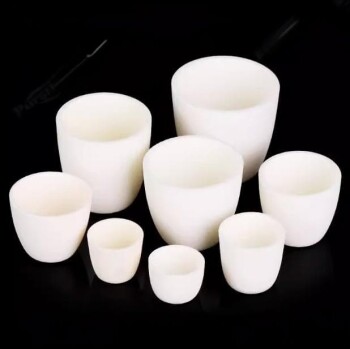
High-purity alumina or quartz crucibles are chosen specifically for their exceptional chemical inertness and extreme thermal resistance. During the high-temperature annealing of Barium Titanate (BTO) nanofibers, these materials act as a stable barrier that prevents the container's own components from diffusing into and contaminating the nanofibers.
The choice of crucible is not merely about containment; it is a critical quality control measure. By preventing the diffusion of foreign atoms into the nanofibers, high-purity crucibles ensure the final material exhibits the precise piezoelectric and dielectric properties essential for solid-state battery systems.
The Critical Role of Chemical Inertness
Preventing Atomic Diffusion
At the high temperatures required for annealing, materials become highly reactive. Atoms from a standard crucible can easily migrate (diffuse) into the material being heated.
High-purity alumina and quartz are selected because they resist this diffusion. They remain chemically stable, ensuring that no foreign elements leach into the Barium Titanate (BTO) matrix.
Preserving Stoichiometry
Barium Titanate relies on a precise ratio of its constituent elements (stoichiometry) to function correctly.
Any contamination from the crucible alters this chemical balance. By using inert vessels, you ensure the BTO nanofibers maintain the exact composition required for their intended application.
Thermal Stability and Structural Transformation
Withstanding the Annealing Environment
The annealing process for BTO nanofibers involves significant heat to treat the material effectively.
Alumina and quartz possess the thermal resistance necessary to withstand these temperatures without warping, melting, or degrading. This ensures the physical integrity of the containment vessel throughout the process.
Enabling the Crystal Phase Transition
The annealing process is not just about drying the material; it is about driving a structural change.
Heat treatment converts the BTO from an amorphous (disordered) precursor into a crystalline tetragonal structure.
This specific crystal structure is vital. It unlocks the material's ferroelectric and piezoelectric capabilities, which are necessary for suppressing lithium dendrite growth in battery applications.
Common Pitfalls to Avoid
The "Good Enough" Fallacy
A common mistake is assuming that any high-temperature ceramic crucible will suffice for annealing.
Using lower-purity crucibles introduces trace contaminants. While the material may look correct to the naked eye, these impurities disrupt the crystal lattice at a microscopic level.
The Impact on Dielectric Performance
Even minor contamination degrades the material's electromagnetic properties.
If the BTO picks up impurities, its dielectric and piezoelectric responses—the very features needed for advanced solid-state batteries—will be significantly diminished.
Making the Right Choice for Your Goal
To ensure your Barium Titanate nanofibers perform as intended, select your equipment based on your specific performance requirements.
- If your primary focus is solid-state battery efficiency: Prioritize the highest purity alumina available to maximize the piezoelectric response for dendrite suppression.
- If your primary focus is general structural research: Ensure your crucible is rated for the specific annealing temperatures to prevent vessel degradation, even if ultra-high purity is less critical.
Success in advanced ceramics is defined not just by the material you make, but by the purity of the environment in which you make it.
Summary Table:
| Feature | Alumina Crucibles | Quartz Crucibles | Importance for BTO Annealing |
|---|---|---|---|
| Chemical Purity | High to Ultra-High | High | Prevents atomic diffusion and contamination. |
| Thermal Stability | Excellent (up to 1800°C) | Good (up to 1200°C) | Maintains structural integrity during heating. |
| Inertness | Exceptional | High | Preserves stoichiometry and crystal phase. |
| Best For | High-temp sintering | Lower-temp research | Ensuring piezoelectric & dielectric properties. |
Elevate Your Material Purity with KINTEK
Don't let crucible impurities compromise your solid-state battery research. KINTEK specializes in providing high-performance laboratory equipment, including high-purity alumina and quartz crucibles, high-temperature furnaces, and specialized ceramics designed to maintain the strict stoichiometry of your BTO nanofibers.
Whether you are refining Barium Titanate or developing advanced electrolytes, our comprehensive range of muffle furnaces, crushing systems, and specialized consumables ensures your materials achieve their peak piezoelectric and dielectric potential.
Ready to optimize your annealing process? Contact KINTEK today for expert solutions and secure the precision your research deserves.
Related Products
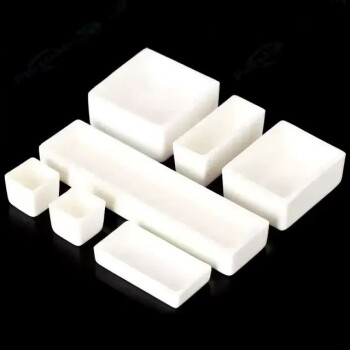
- Arc-Shaped Alumina Ceramic Crucible High Temperature Resistant for Engineering Advanced Fine Ceramics
- Engineering Advanced Fine Alumina Al2O3 Ceramic Crucible for Laboratory Muffle Furnace
- Engineering Advanced Fine Ceramics Alumina Al2O3 Crucible With Lid Cylindrical Laboratory Crucible
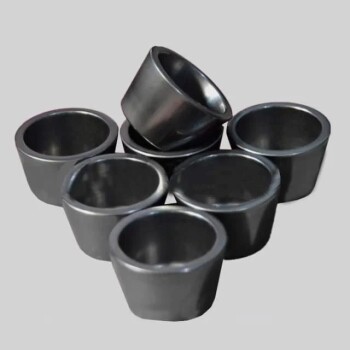
- High Purity Pure Graphite Crucible for Evaporation
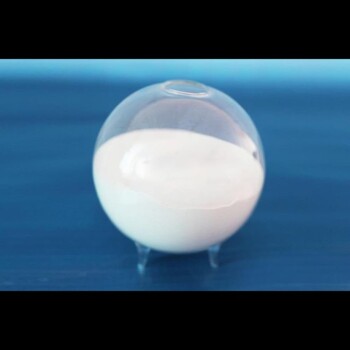
- High Purity Alumina Granulated Powder for Engineering Advanced Fine Ceramics
People Also Ask
- Why Use Alumina Crucibles & Powder Burial for NaSICON? Ensure Phase Purity and Prevent Elemental Volatilization
- What is the primary purpose of using alumina crucibles for LLTO ceramics? Optimize Your High-Temperature Sintering
- Why are alumina crucibles and mother powder essential for LATP sintering? Optimize Your Solid Electrolyte Performance
- Why are high-purity alumina crucibles used for liquid lead corrosion experiments? Ensure Data Accuracy at 550°C
- Primary considerations for choosing alumina crucibles and quartz tubes in indium intercalation: Ensure Material Purity