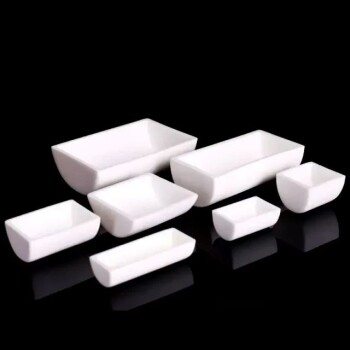
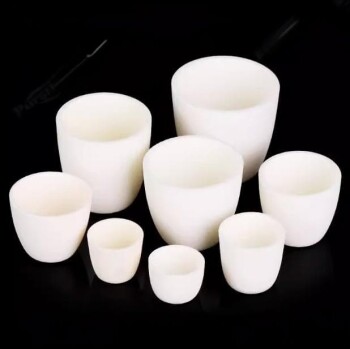
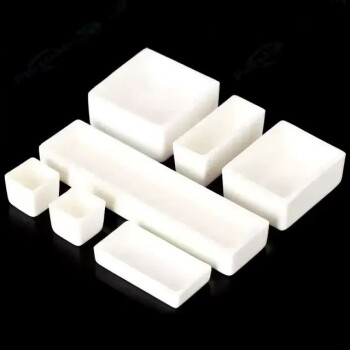
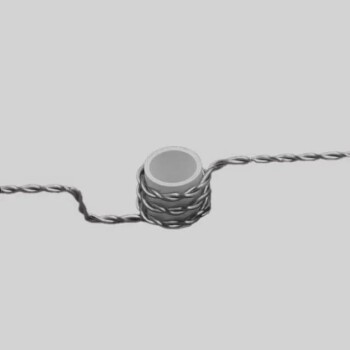
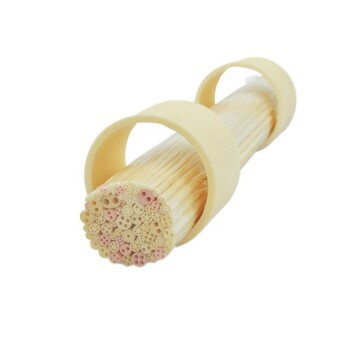
High-purity corundum crucibles are the industry standard for melting Fe-13Cr composite alloys because of their superior chemical inertness and thermal resilience. Specifically, their 99% alumina composition effectively withstands the aggressive erosion caused by molten steel during vacuum induction melting. This prevents the crucible itself from degrading and contaminating the alloy, ensuring that the final material composition remains precise and uncompromised.
The choice of crucible material is not merely about containment; it is about chemical isolation. High-purity corundum ensures that the molten environment remains a closed system, preventing external impurities from skewing trace element analysis or interfering with critical additives.
The Critical Role of Chemical Stability
The primary challenge in melting Fe-13Cr alloys is preventing the container from reacting with its contents.
Resisting High-Temperature Erosion
In the intense environment of vacuum induction melting, molten steel is highly reactive. Standard crucible materials often succumb to physical and chemical erosion under these conditions.
High-purity corundum, typically composed of 99% alumina, provides a robust barrier. It maintains its structural integrity despite the extreme heat, significantly reducing the rate at which the inner wall degrades into the melt.
Eliminating Contamination Sources
When a crucible erodes, particles of the crucible material enter the molten pool. This introduces foreign impurities that were not part of the original alloy design.
By utilizing high-purity corundum, metallurgists minimize this risk. The stability of the alumina ensures that the purity of the melt is dictated solely by the feedstock, not by the degradation of the melting vessel.
Ensuring Analytical Precision
For advanced alloys, the exact chemical composition is the defining factor of performance. The crucible must support this precision, not hinder it.
Accuracy in Trace Element Analysis
Research and quality control often depend on the measurement of trace elements within the alloy.
If the crucible leaches material into the melt, it alters the baseline composition. This makes it impossible to distinguish between elements that were intentionally added and those that are contaminants, rendering analysis unreliable.
Protecting Additive Efficiency
Fe-13Cr alloys often incorporate specific additives to enhance performance, such as yttrium oxide.
The presence of impurities from a degrading crucible can interfere with how these additives disperse or react within the melt. A chemically stable corundum crucible ensures the injection efficiency of these additives is maximized, allowing them to function exactly as intended without chemical interference.
The Risks of Suboptimal Materials
While high-purity corundum is the preferred choice, understanding the specific consequences of using inferior materials helps clarify its value.
Compromised Alloy Integrity
Using crucibles with lower alumina content or higher impurity levels almost invariably leads to melt contamination. In high-performance applications, even microscopic inclusions from the crucible can compromise the mechanical properties of the final alloy.
Data Distortion
In an experimental setting, the use of a reactive crucible introduces an uncontrolled variable. If the crucible interacts with the melt, any data regarding the alloy's behavior or composition becomes suspect. Reliable repeatability is impossible if the containment vessel is deteriorating during the process.
Making the Right Choice for Your Project
Selecting the correct crucible is a foundational step in high-quality metallurgy.
- If your primary focus is analytical accuracy: Prioritize high-purity (99% alumina) corundum to ensure that trace element readings reflect the alloy, not the container.
- If your primary focus is additive performance: Use chemically stable corundum to guarantee that reactive additives like yttrium oxide are integrated efficiently without interference.
By standardizing on high-purity corundum, you transform the crucible from a potential variable into a reliable constant.
Summary Table:
| Feature | High-Purity Corundum (99% Alumina) | Benefit for Fe-13Cr Melting |
|---|---|---|
| Chemical Stability | Exceptional resistance to molten steel erosion | Prevents crucible degradation and melt contamination |
| Thermal Resilience | Maintains integrity in vacuum induction melting | Ensures long-lasting performance under extreme heat |
| Analytical Precision | Minimal leaching of foreign particles | Guarantees accurate trace element analysis |
| Additive Protection | Inert environment for reactive components | Maximizes efficiency of additives like yttrium oxide |
Elevate Your Metallurgical Precision with KINTEK
Don't let crucible contamination compromise your research or production. KINTEK specializes in high-performance laboratory equipment, offering premium high-purity corundum crucibles and ceramics designed to withstand the rigors of vacuum induction melting. Our comprehensive range includes everything from high-temperature furnaces and vacuum systems to precision crushing and milling tools, ensuring your materials maintain total integrity.
Whether you are refining advanced Fe-13Cr alloys or conducting complex battery research, our expert solutions provide the reliability your lab demands. Contact KINTEK today to discover how our specialized consumables and equipment can optimize your melting processes and analytical accuracy.
References
- Alexandr Panichkin, Alexandr Arbuz. RESEARCH OF INJECTION METHODS FOR Y2O3 NANOPARTICLES INTO NICKEL- FREE STAINLESS STEEL DURING INDUCTION VACUUM REMELTING. DOI: 10.59957/jctm.v59.i1.2024.20
This article is also based on technical information from Kintek Solution Knowledge Base .
Related Products
- Engineering Advanced Fine Ceramics Alumina Al2O3 Crucible With Lid Cylindrical Laboratory Crucible
- Alumina Al2O3 Ceramic Crucible Semicircle Boat with Lid for Engineering Advanced Fine Ceramics
- Arc-Shaped Alumina Ceramic Crucible High Temperature Resistant for Engineering Advanced Fine Ceramics
- Engineering Advanced Fine Ceramics Alumina Crucibles (Al2O3) for Thermal Analysis TGA DTA
- Engineering Advanced Fine Alumina Al2O3 Ceramic Crucible for Laboratory Muffle Furnace
People Also Ask
- Why are high-purity alumina crucibles used for liquid lead corrosion experiments? Ensure Data Accuracy at 550°C
- Why are alumina crucibles and mother powder essential for LATP sintering? Optimize Your Solid Electrolyte Performance
- What is the primary purpose of using alumina crucibles for LLTO ceramics? Optimize Your High-Temperature Sintering
- Why Use Alumina Crucibles & Powder Burial for NaSICON? Ensure Phase Purity and Prevent Elemental Volatilization
- Why are alumina crucibles used as containers during the tungsten diffusion coating process on diamond surfaces?