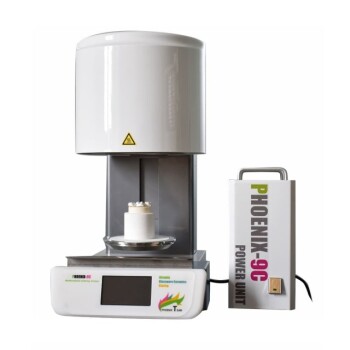
High-temperature thermal processing is essential to induce the specific chemical and physical transformations required to turn raw coal gangue into a durable construction material. Specifically, muffle furnaces or kilns must maintain a precise thermal field between 1000°C and 1100°C to facilitate the melting of mineral components, which acts as the fundamental binding mechanism for the brick.
Core Takeaway The structural integrity of coal gangue bricks relies on liquid-phase bonding, which only occurs within a specific high-temperature window. This process melts internal minerals to form a glass phase, densifying the material and significantly improving its compressive strength and water resistance.
The Mechanism of Sintering
Melting Key Minerals
To create a viable brick, the raw material must undergo a phase change. The precise temperature environment (1000°C–1100°C) is required to melt the silicates and aluminates present in the coal gangue.
Formation of the Glass Phase
As these minerals melt, they transition into a glass phase. This is not merely a change in state; it creates a new material matrix that serves as the internal framework for the finished brick.
Structural Densification
Liquid-Phase Bonding
The glass phase acts as a powerful adhesive within the brick's microstructure. This "liquid-phase bonding action" connects the solid particles of the coal gangue that have not melted, creating a cohesive unit.
Eliminating Porosity
Before firing, the raw brick contains numerous microscopic gaps or pores. The liquid glass phase flows into these voids, effectively filling the pores between materials and resulting in a much tighter, denser structure.
Performance Outcomes
Enhancing Physical Strength
The direct result of pore filling and liquid bonding is a substantial increase in bulk density. This densification leads to significantly higher compressive strength, making the brick suitable for load-bearing construction applications.
Improving Weather Resistance
By sealing the internal pores with the glass phase, the brick's permeability is drastically reduced. This lowers the water absorption rate, which is critical for preventing frost damage and ensuring long-term durability in wet environments.
Understanding the Trade-offs
The Necessity of Precision
The requirement for a "precise" environment is driven by the narrow processing window. If temperatures fall below 1000°C, the silicates may not melt sufficiently to form the necessary glass phase, resulting in a brittle, porous brick.
Thermal Consistency
Conversely, the thermal field must be uniform. Inconsistent heating can lead to uneven densification, where some parts of the brick are vitrified and strong, while others remain weak and absorbent.
Optimizing the Sintering Process
To achieve the best results when preparing coal gangue sintered bricks, you must align your thermal control with your desired material properties.
- If your primary focus is Structural Integrity: Ensure the kiln reaches the upper end of the 1000°C–1100°C range to maximize the volume of the glass phase and increase compressive strength.
- If your primary focus is Durability and Weatherproofing: Prioritize the duration of the hold time within the thermal window to ensure thorough pore filling, which minimizes the water absorption rate.
Precise thermal management is the difference between a loose aggregate and a high-performance building material.
Summary Table:
| Parameter | Range/Mechanism | Impact on Final Product |
|---|---|---|
| Sintering Temperature | 1000°C – 1100°C | Essential for silicate & aluminate melting |
| Phase Transition | Glass Phase Formation | Creates the internal bonding matrix |
| Bonding Mechanism | Liquid-Phase Bonding | Connects solid particles for a cohesive unit |
| Structural Change | Pore Filling | Increases bulk density and compressive strength |
| Durability Factor | Low Water Absorption | Improves frost resistance and weatherproofing |
Elevate Your Material Research with KINTEK Precision
Achieving the perfect glass phase in coal gangue sintering requires absolute thermal uniformity. KINTEK specializes in high-performance laboratory equipment, offering a comprehensive range of high-temperature muffle, tube, and vacuum furnaces designed to maintain the precise thermal fields your research demands.
Beyond thermal processing, we provide the complete ecosystem for brick and ceramic development—from crushing and milling systems and sieving equipment to high-pressure hydraulic presses for pelletizing and sample preparation. Our mission is to empower researchers and manufacturers with durable tools that ensure consistent, repeatable results.
Ready to optimize your sintering process? Contact our technical experts today to find the ideal furnace or material preparation solution for your lab.
References
- Yinghui Sun, Boxiong Shen. Coal Gangue Utilization: Applications, Challenges, and Sustainable Development Strategies. DOI: 10.3390/en18020444
This article is also based on technical information from Kintek Solution Knowledge Base .
Related Products
- High Temperature Muffle Oven Furnace for Laboratory Debinding and Pre Sintering
- 1800℃ Muffle Oven Furnace for Laboratory
- 1200℃ Muffle Furnace Oven for Laboratory
- Laboratory Muffle Oven Furnace Bottom Lifting Muffle Furnace
- 1700℃ Muffle Oven Furnace for Laboratory
People Also Ask
- Why is the annealing treatment in a high-temperature muffle furnace critical for the preparation of an Sb-SnO2 interlayer?
- What role does a high-temperature muffle furnace play in the synthesis of manganese/cobalt-modified ceramic catalysts?
- What is the significance of integrating a high-temperature muffle furnace into an impact wear testing system?
- What is the primary function of high-temperature muffle or tube furnaces for ceramic coatings? Ensure Peak Durability
- What is the role of a muffle furnace in magnetite pellet roasting? Optimize Mineral Phase & Compressive Strength