Industrial-grade crushing and sieving systems are essential because they provide strict control over particle size distribution, which is the governing factor in the performance of agricultural waste-based adsorbents. Without the precision offered by industrial equipment, it is impossible to achieve the uniformity required to balance water permeability with maximum pollutant capture. These systems transform raw biomass into a consistent engineering material capable of sustaining effective filtration over time.
Reliable biofiltration depends on balancing flow dynamics with chemical adsorption. Industrial processing ensures a uniform particle profile, maximizing the surface area available for treating pollutants while preventing the uneven flow patterns that lead to premature system failure.
The Physics of Filtration Efficiency
Controlling Hydraulic Conductivity
The primary reason for utilizing industrial-grade processing is to dictate how fluid moves through the filter bed.
In any filtration or biofiltration process, the particle size of the adsorbent directly determines water permeability.
If particles are too random in size, flow becomes unpredictable. Industrial sieving ensures the material allows water to pass through at a consistent, calculated rate.
Maximizing Adsorption Capacity
The effectiveness of an adsorbent is limited by its surface area.
By using industrial crushers to reduce agricultural waste into uniform small particles, you significantly increase the specific surface area of the material.
This increase creates more physical contact points between the fluid and the adsorbent. Consequently, this maximizes the opportunities for pollutants to bind to the material, drastically improving removal efficiency.
Operational Stability and Longevity
Preventing Localized Clogging
Inconsistent particle sizes are a leading cause of operational failure in filter beds.
When large and small particles are mixed randomly, fine particles often fill the voids between larger ones, creating "choke points."
Industrial sieving creates a uniform bed structure. This prevents localized clogging, ensuring the entire filter bed is utilized evenly rather than just specific channels.
Extending Service Life
A filter that clogs unevenly fails prematurely.
By maintaining uniformity, industrial-grade systems ensure that the hydraulic load is distributed across the entire media volume.
This mechanical consistency directly extends the effective service life of the filtration system, reducing maintenance frequency and downtime.
Understanding the Trade-offs
Precision vs. Complexity
While industrial-grade systems offer superior consistency, they introduce higher capital and operational complexity compared to simple mechanical grinding.
You are effectively trading the low cost of raw processing for the high reliability of an engineered product. For high-stakes filtration where flow rates must be guaranteed, this trade-off is usually necessary.
The Risk of Over-Processing
It is vital to calibrate these systems correctly; producing particles that are too fine can backfire.
Excessively small particles may maximize surface area but can reduce hydraulic conductivity to the point where flow creates excessive backpressure.
The goal of industrial sieving is not just to make particles small, but to make them the correct size for the specific hydraulic requirements of your system.
Making the Right Choice for Your Goal
To determine the level of processing your project requires, consider your primary operational constraints:
- If your primary focus is maximum pollutant removal: Prioritize crushing settings that yield smaller particles to drastically increase specific surface area and contact time.
- If your primary focus is system longevity and flow rate: Prioritize strict sieving protocols to ensure high uniformity, which prevents clogging and maintains stable hydraulic conductivity.
Precision processing transforms raw agricultural waste from simple biomass into a high-performance engineering material.
Summary Table:
| Key Factor | Benefit of Industrial Processing | Impact on Performance |
|---|---|---|
| Particle Size | Strict uniformity and control | Ensures predictable hydraulic conductivity |
| Surface Area | Optimized reduction via crushing | Maximizes pollutant capture and adsorption capacity |
| Flow Dynamics | Elimination of random voids | Prevents localized clogging and channeling |
| Service Life | Even hydraulic load distribution | Reduces maintenance frequency and downtime |
| System Stability | Engineered consistency | Balanced water permeability and filtration speed |
Optimize Your Adsorbent Production with KINTEK Precision
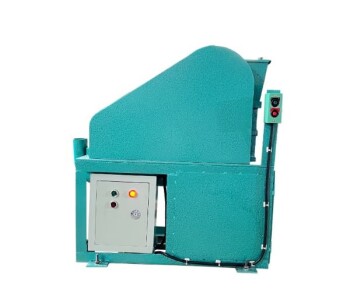
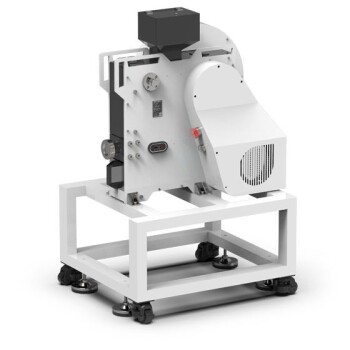
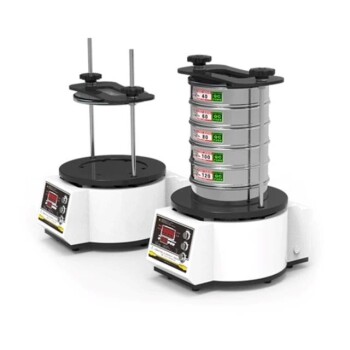
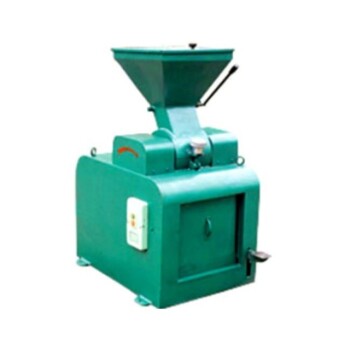
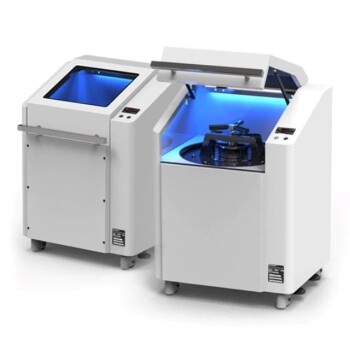
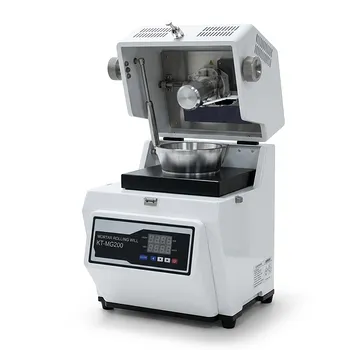
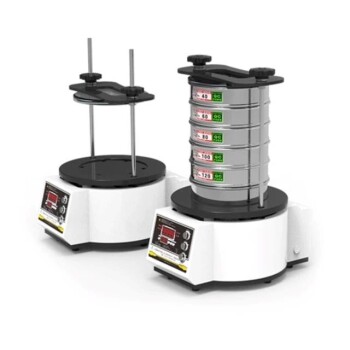
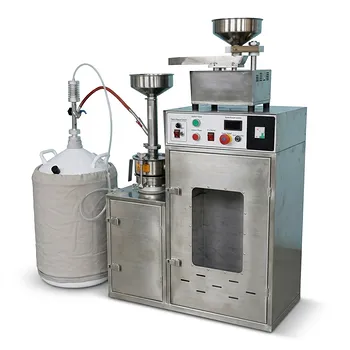
Transform raw biomass into high-engineering-grade adsorbents with KINTEK’s advanced processing solutions. As specialists in laboratory and industrial equipment, we provide the high-performance crushing and milling systems and sieving equipment necessary to achieve the precise particle size distribution required for superior filtration.
Whether you are scaling up agricultural waste research or optimizing industrial biofilters, KINTEK offers the technical expertise and robust equipment—including hydraulic presses and high-temperature furnaces—to ensure your materials meet the highest standards of surface area and hydraulic stability.
Ready to enhance your material performance? Contact our technical experts today to find the perfect crushing and sieving configuration for your specific application.
References
- Cristina E. Almeida‐Naranjo, Cristina Alejandra Villamar. Emerging Contaminants and Their Removal from Aqueous Media Using Conventional/Non-Conventional Adsorbents: A Glance at the Relationship between Materials, Processes, and Technologies. DOI: 10.3390/w15081626
This article is also based on technical information from Kintek Solution Knowledge Base .
Related Products
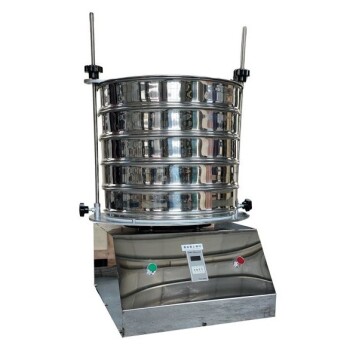
- Laboratory Test Sieves and Sieving Machines
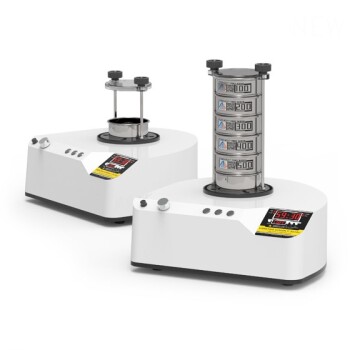
- Three-dimensional electromagnetic sieving instrument
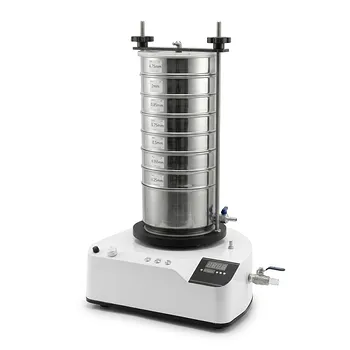
- Laboratory Vibratory Sieve Shaker Machine for Dry and Wet Three-Dimensional Sieving
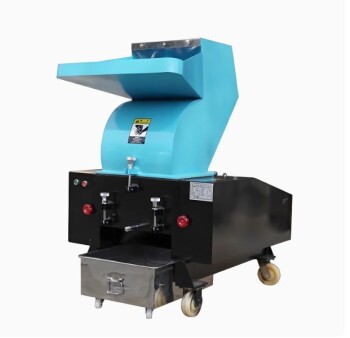
- Powerful Plastic Crusher Machine
- Sealed Jaw Crusher High Efficiency Environmental Protection Safe and Reliable
People Also Ask
- What are laboratory test sieves used for? A Guide to Particle Size Analysis
- How do you calculate the sieve test? Master Particle Size Distribution for Quality Control
- How does a lab test sieve contribute to biomass charcoal powder preparation? Achieve Uniform Particle Size
- What are the specifications for test sieves? A Guide to ASTM & ISO Standards for Accurate Particle Analysis
- What materials are required for sieving? Achieve Accurate Particle Size Analysis