Knowledge Why are inert quartz glass tubes selected for pyrolysis corrosion testing? Ensure Data Integrity and Thermal Stability
Author avatar

Tech Team · Kintek Solution

Updated 1 day ago

Why are inert quartz glass tubes selected for pyrolysis corrosion testing? Ensure Data Integrity and Thermal Stability


Inert quartz glass tubes are selected primarily for their superior combination of thermal stability and chemical inertness. In simulated pyrolysis environments that reach temperatures up to 680 °C and contain highly aggressive gases like hydrogen chloride (HCl) and hydrogen sulfide (H2S), quartz remains strictly non-reactive. This prevents the chamber material from contaminating the atmosphere or interacting with the alloy specimens, ensuring that experimental data reflects only the corrosion of the sample.

The selection of quartz glass is driven by the necessity for a "zero-impact" environment; its inability to react with corrosive agents ensures that any observed degradation is solely due to the interaction between the gas and the test alloy.

The Critical Role of Chemical Inertness

To achieve valid corrosion data, the test environment must remain chemically pure. The reaction chamber serves as the foundation for this accuracy.

Preventing Atmospheric Contamination

In simulated pyrolysis, gases such as HCl and H2S are introduced to mimic harsh industrial conditions.

A standard metal or lower-grade ceramic chamber might react with these gases, altering the chemical composition of the atmosphere. Quartz glass does not react with these test gases, ensuring the concentration of corrosive agents remains constant and controlled.

Eliminating Cross-Contamination

Experimental errors often arise when the chamber material interacts with the test specimen.

Quartz glass prevents this by remaining neutral toward alloys, such as N10276. This isolation ensures that the chamber does not introduce foreign elements into the alloy's surface or the surrounding gas stream.

Thermal Stability Requirements

Pyrolysis simulation requires sustained high temperatures to replicate real-world processing.

Performance at Elevated Temperatures

The reaction chamber must maintain its structural and physical integrity without softening or deforming.

Quartz glass demonstrates excellent stability in environments reaching 680 °C. This thermal resistance allows researchers to conduct long-duration exposures without the risk of chamber failure or physical degradation.

Understanding the Constraints

While quartz is the optimal choice for these specific parameters, it is essential to recognize the operational boundaries defined by the material properties.

Thermal Limits

The primary reference highlights stability up to 680 °C.

While quartz is robust, it is not infinitely heat-resistant. For experiments requiring temperatures significantly exceeding this threshold, the material's stability must be re-evaluated to prevent deformation or devitrification.

Material Application

The choice of quartz is specific to simulated pyrolysis atmospheres.

Its selection is based on its resistance to specific acidic gases (HCl, H2S). If an experiment involves chemical agents that specifically attack silica-based glass (such as hydrofluoric acid), quartz would no longer be a viable candidate despite its thermal properties.

Making the Right Choice for Your Goal

When designing a high-temperature corrosion test, the reaction chamber is not just a vessel; it is a critical component of the measurement system.

  • If your primary focus is data integrity: Select quartz glass to ensure that the corrosive atmosphere remains pure and unaltered by the chamber walls.
  • If your primary focus is high-temperature testing: Verify that your experimental parameters do not exceed the 680 °C threshold where quartz maintains its optimal stability.

By utilizing inert quartz, you transform the reaction chamber from a potential variable into a reliable constant.

Summary Table:

Feature Quartz Glass Tube Advantage Impact on Corrosion Testing
Chemical Inertness Non-reactive with HCl and H2S Prevents atmospheric contamination and ensures gas purity.
Thermal Stability Reliable performance up to 680 °C Maintains structural integrity during long-duration exposures.
Material Neutrality Zero interaction with alloy specimens Eliminates cross-contamination for accurate specimen analysis.
Operational Limit Optimal for acidic/pyrolysis gases Provides a controlled environment for high-precision simulation.

Elevate Your Materials Research with KINTEK

Achieve uncompromising data accuracy in your most demanding high-temperature environments. KINTEK specializes in providing premium laboratory equipment and high-performance consumables designed for precision research.

Whether you are conducting simulated pyrolysis or advanced material synthesis, our comprehensive range—including high-temperature tube and vacuum furnaces, high-pressure reactors, and precision-engineered quartz, ceramic, and PTFE consumables—ensures your experiments remain free from contamination.

Ready to optimize your lab's performance? Contact our experts today to find the perfect furnace systems and consumables tailored to your specific research goals.

References

  1. Manuela Nimmervoll, Roland Haubner. Corrosion of N10276 in a H2S, HCl, and CO2 Containing Atmosphere at 480 °C and 680 °C. DOI: 10.3390/met11111817

This article is also based on technical information from Kintek Solution Knowledge Base .

Related Products

People Also Ask

Related Products

1400℃ Laboratory High Temperature Tube Furnace with Alumina Tube

1400℃ Laboratory High Temperature Tube Furnace with Alumina Tube

Looking for a tube furnace for high-temperature applications? Our 1400℃ Tube Furnace with Alumina Tube is perfect for research and industrial use.

High Temperature Aluminum Oxide (Al2O3) Protective Tube for Engineering Advanced Fine Ceramics

High Temperature Aluminum Oxide (Al2O3) Protective Tube for Engineering Advanced Fine Ceramics

Alumina oxide protective tube, also known as high temperature resistant corundum tube or thermocouple protection tube, is a ceramic tube mainly made of alumina (aluminum oxide).

Custom PTFE Teflon Parts Manufacturer for Centrifuge Tubes

Custom PTFE Teflon Parts Manufacturer for Centrifuge Tubes

PTFE centrifugal tubes are highly valued for their exceptional chemical resistance, thermal stability, and non-stick properties, making them indispensable in various high-demand sectors. These tubes are particularly useful in environments where exposure to corrosive substances, high temperatures, or stringent cleanliness requirements are prevalent.

High Temperature Alumina (Al2O3) Furnace Tube for Engineering Advanced Fine Ceramics

High Temperature Alumina (Al2O3) Furnace Tube for Engineering Advanced Fine Ceramics

High temperature alumina furnace tube combines the advantages of high hardness of alumina, good chemical inertness and steel, and has excellent wear resistance, thermal shock resistance and mechanical shock resistance.

1700℃ Laboratory High Temperature Tube Furnace with Alumina Tube

1700℃ Laboratory High Temperature Tube Furnace with Alumina Tube

Looking for a high-temperature tube furnace? Check out our 1700℃ Tube Furnace with Alumina Tube. Perfect for research and industrial applications up to 1700C.

1200℃ Split Tube Furnace with Quartz Tube Laboratory Tubular Furnace

1200℃ Split Tube Furnace with Quartz Tube Laboratory Tubular Furnace

KT-TF12 split tube furnace: high-purity insulation, embedded heating wire coils, and max. 1200C. Widely used for new materials and chemical vapour deposition.

1800℃ Muffle Oven Furnace for Laboratory

1800℃ Muffle Oven Furnace for Laboratory

KT-18 muffle furnace with Japan Al2O3 polycrystalline fibe and Silicon Molybdenum heating element, up to 1900℃, PID temperature control and 7" smart touch screen. Compact design, low heat loss, and high energy efficiency. Safety interlock system and versatile functions.

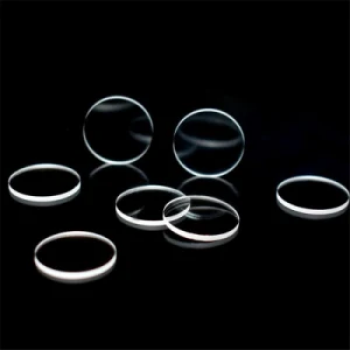
High Temperature Resistant Optical Quartz Glass Sheet

High Temperature Resistant Optical Quartz Glass Sheet

Discover the power of optical glass sheets for precise light manipulation in telecommunications, astronomy, and beyond. Unlock advancements in optical technology with exceptional clarity and tailored refractive properties.

Zirconia Ceramic Gasket Insulating Engineering Advanced Fine Ceramics

Zirconia Ceramic Gasket Insulating Engineering Advanced Fine Ceramics

Zirconia insulating ceramic gasket has high melting point, high resistivity, low thermal expansion coefficient and other properties, making it an important high temperature resistant material, ceramic insulating material and ceramic sunscreen material.

Multi Heating Zones CVD Tube Furnace Machine Chemical Vapor Deposition Chamber System Equipment

Multi Heating Zones CVD Tube Furnace Machine Chemical Vapor Deposition Chamber System Equipment

KT-CTF14 Multi Heating Zones CVD Furnace - Precise Temperature Control and Gas Flow for Advanced Applications. Max temp up to 1200℃, 4 channels MFC mass flow meter, and 7" TFT touch screen controller.

Folding Molybdenum Tantalum Boat With or Without Cover

Folding Molybdenum Tantalum Boat With or Without Cover

Molybdenum boat is an important carrier for preparing molybdenum powder and other metal powders, with high density, melting point, strength and temperature resistance.

Controlled Nitrogen Inert Hydrogen Atmosphere Furnace

Controlled Nitrogen Inert Hydrogen Atmosphere Furnace

KT-AH Hydrogen atmosphere furnace - induction gas furnace for sintering/annealing with built-in safety features, dual housing design, and energy-saving efficiency. Ideal for lab and industrial use.

Hexagonal Boron Nitride HBN Thermocouple Protection Tube

Hexagonal Boron Nitride HBN Thermocouple Protection Tube

Hexagonal boron nitride ceramics is an emerging industrial material. Because of its similar structure to graphite and many similarities in performance, it is also called "white graphite".

1700℃ Controlled Atmosphere Furnace Nitrogen Inert Atmosphere Furnace

1700℃ Controlled Atmosphere Furnace Nitrogen Inert Atmosphere Furnace

KT-17A Controlled atmosphere furnace: 1700℃ heating, vacuum sealing technology, PID temperature control, and versatile TFT smart touch screen controller for laboratory and industrial use.

Electrolytic Electrochemical Cell for Coating Evaluation

Electrolytic Electrochemical Cell for Coating Evaluation

Looking for corrosion-resistant coating evaluation electrolytic cells for electrochemical experiments? Our cells boast complete specifications, good sealing, high-quality materials, safety, and durability. Plus, they're easily customizable to meet your needs.

Boron Nitride (BN) Ceramic Tube

Boron Nitride (BN) Ceramic Tube

Boron nitride (BN) is known for its high thermal stability, excellent electrical insulating properties and lubricating properties.

Vacuum Sealed Continuous Working Rotary Tube Furnace Rotating Tube Furnace

Vacuum Sealed Continuous Working Rotary Tube Furnace Rotating Tube Furnace

Experience efficient material processing with our vacuum-sealed rotary tube furnace. Perfect for experiments or industrial production, equipped with optional features for controlled feeding and optimized results. Order now.

1700℃ Muffle Oven Furnace for Laboratory

1700℃ Muffle Oven Furnace for Laboratory

Get superior heat control with our 1700℃ Muffle Furnace. Equipped with intelligent temperature microprocessor, TFT touch screen controller & advanced insulation materials for precise heating up to 1700C. Order now!

Custom PTFE Teflon Parts Manufacturer for PTFE Bottle Oil Fume Sampling Tube

Custom PTFE Teflon Parts Manufacturer for PTFE Bottle Oil Fume Sampling Tube

PTFE products are generally called "non-stick coating", which is a synthetic polymer material that replaces all hydrogen atoms in polyethylene with fluorine.

Graphite Vacuum Continuous Graphitization Furnace

Graphite Vacuum Continuous Graphitization Furnace

High-temperature graphitization furnace is a professional equipment for graphitization treatment of carbon materials. It is a key equipment for the production of high-quality graphite products. It has high temperature, high efficiency and uniform heating. It is suitable for various high-temperature treatments and graphitization treatments. It is widely used in metallurgy, electronics, aerospace, etc. industry.


Leave Your Message