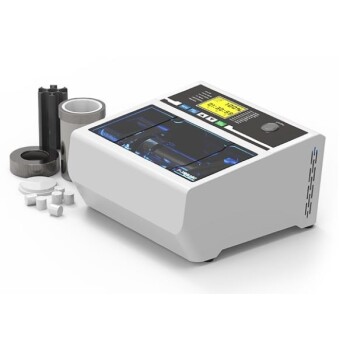
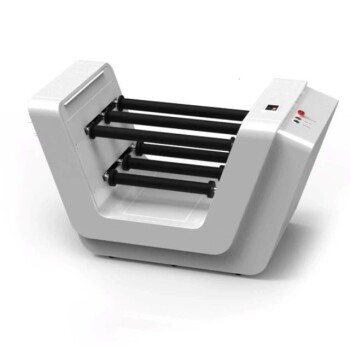
Laboratory reciprocating shakers serve as the critical mechanical driver in batch experiments for co-treating Acid Mine Drainage (AMD) and hospital wastewater. These devices provide the constant, uniform mechanical power necessary to force thorough contact between the reactive agents—specifically Nano Zero-Valent Iron (nZVI)—and the complex wastewater mixture. This continuous agitation is the primary mechanism used to eliminate physical barriers that would otherwise slow down or prevent the necessary chemical reactions.
Core Takeaway In complex co-treatment scenarios, static interaction is insufficient for accurate data. Reciprocating shakers standardize the physical environment, eliminating diffusion limitations so that the observed results reflect the true chemical efficacy of the treatment rather than mechanical mixing inefficiencies.
The Mechanics of Effective Reaction
Ensuring Uniform Contact
In a static environment, solids like Nano Zero-Valent Iron (nZVI) would naturally settle, reducing the surface area available for treatment.
The reciprocating shaker maintains a suspension of these particles within the reaction vessels. This ensures that the nZVI is in constant, uniform contact with the contaminants found in both the Acid Mine Drainage and the hospital wastewater.
Eliminating Diffusion Limitations
A major hurdle in wastewater treatment experiments is the "diffusion limitation," where the reaction slows because contaminants cannot reach the reactive surface of the iron fast enough.
Continuous agitation breaks down these stagnant fluid layers. By keeping the fluid in motion, the shaker ensures that fresh contaminants are constantly brought into contact with the nZVI surfaces.
Optimizing Chemical Kinetics
Accelerating Reaction Rates
The primary goal of using nZVI is to trigger specific chemical processes, namely heavy metal adsorption and reduction.
By providing constant mechanical power, the shaker imparts the energy needed to accelerate these reaction kinetics. This ensures that the chemical processes occur at a rate sufficient for practical measurement and application.
Facilitating Co-precipitation
Beyond simple adsorption, the co-treatment of AMD and hospital wastewater relies on co-precipitation.
This is a complex process where contaminants precipitate out of the solution together. The thorough mixing provided by the shaker is essential to facilitate the interaction required for this mechanism to function effectively.
Ensuring Data Integrity
Accurate Dosage Evaluation
To determine the optimal amount of nZVI needed, researchers must test various dosage levels.
If the mixing were inconsistent, it would be impossible to tell if a failure was due to low dosage or poor mixing. The shaker guarantees uniformity, allowing for an accurate evaluation of treatment efficacy strictly based on the nZVI dosage.
Understanding the Trade-offs
The Risk of Shear Stress
While agitation is necessary, excessive mechanical power can physically degrade fragile flocs or precipitates formed during the process.
It is vital to calibrate the shaker to a speed that eliminates diffusion limitations without disrupting the structural integrity of the resulting solids.
Simulation vs. Reality
Reciprocating shakers are ideal for batch experiments (closed systems), but they do not perfectly replicate continuous flow systems used in full-scale water treatment plants.
Data derived from these experiments represents a "best-case scenario" regarding mixing efficiency, which may require adjustment when scaling up to industrial applications.
Making the Right Choice for Your Goal
When designing your batch experiments, the shaker settings determine the reliability of your data.
- If your primary focus is Kinetics: Ensure the agitation speed is high enough to completely remove mass transfer resistance, isolating the chemical reaction rate.
- If your primary focus is Dosage Optimization: Prioritize consistency across all vessels to ensure that any variance in results is solely attributable to the nZVI concentration.
Ultimately, the reciprocating shaker transforms a chaotic mixture into a controlled chemical environment, providing the baseline stability required for rigorous scientific validation.
Summary Table:
| Feature | Benefit in AMD/Hospital Wastewater Co-treatment |
|---|---|
| Mechanical Agitation | Maintains nZVI suspension and prevents particle settling |
| Diffusion Control | Breaks stagnant fluid layers to accelerate heavy metal adsorption |
| Kinetic Optimization | Provides energy to facilitate reduction and co-precipitation |
| Data Consistency | Standardizes mixing to ensure accurate nZVI dosage evaluation |
| Process Stability | Creates a controlled environment for rigorous scientific validation |
Elevate Your Environmental Research with KINTEK Precision
Precision in wastewater treatment research starts with reliable agitation and high-performance equipment. KINTEK specializes in advanced laboratory solutions designed to optimize your batch experiments, from high-quality shakers and homogenizers to specialized reactors, electrolytic cells, and high-temperature furnaces.
Whether you are refining nZVI dosage for AMD treatment or developing complex co-precipitation models, our comprehensive portfolio of laboratory equipment and consumables (including PTFE products, ceramics, and crucibles) ensures your data remains accurate and reproducible. Partner with KINTEK to transform your lab’s efficiency and scientific impact.
Ready to optimize your reaction kinetics? Contact KINTEK today for expert guidance and tailored equipment solutions!
References
- Thobeka Pearl Makhathini, Babatunde Femi Bakare. Enriched Co-Treatment of Pharmaceutical and Acidic Metal-Containing Wastewater with Nano Zero-Valent Iron. DOI: 10.3390/min11020220
This article is also based on technical information from Kintek Solution Knowledge Base .
Related Products
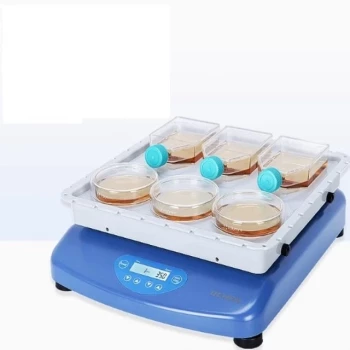
- Laboratory Oscillating Orbital Shaker
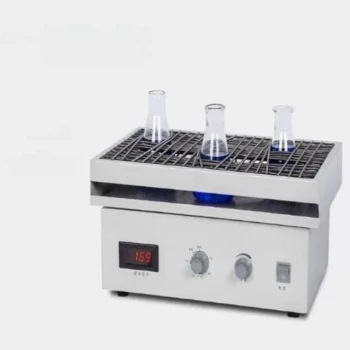
- Laboratory Multifunctional Small Speed-Adjustable Horizontal Mechanical Shaker for Lab
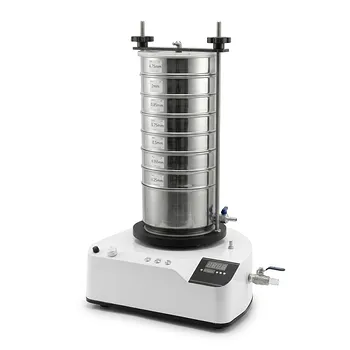
- Laboratory Vibratory Sieve Shaker Machine for Dry and Wet Three-Dimensional Sieving
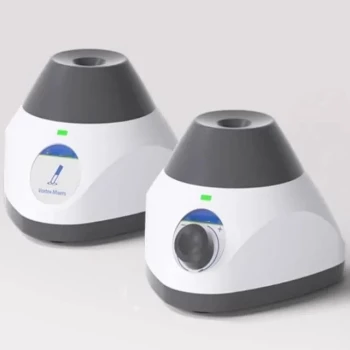
- Laboratory Vortex Mixer Orbital Shaker Multifunctional Rotation Oscillation Mixer
- Laboratory Wet Three-Dimensional Vibratory Sieve Shaker Machine
People Also Ask
- What is the role of a laboratory orbital shaker in activated carbon synthesis? Maximize Pore Depth & Surface Area
- What is the role of a laboratory orbital shaker in copper recovery? Optimize Industrial Waste Liquid Processing
- Why are high-precision shakers required for graphene oxide kinetic studies? Ensure Data Accuracy and Rapid Equilibrium
- What is the role of a laboratory shaker in silane sol preparation? Master Uniform Aramid Fabric Coating
- Why is a laboratory shaker required for continuous 24-hour catalyst treatment? Achieve Deep Uniform Impregnation