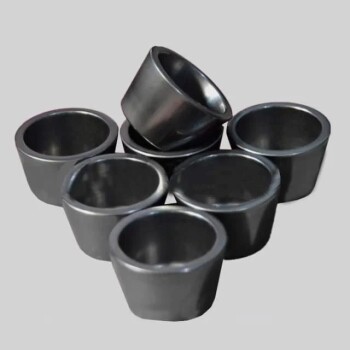
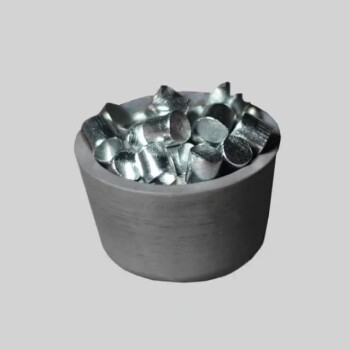
Low-porosity graphite is the definitive material of choice for containing liquid bismuth-lithium alloys due to its unique ability to withstand aggressive chemical environments while maintaining physical impermeability. By utilizing graphite with extremely low porosity, researchers create a barrier that prevents the molten alloy from seeping into the crucible walls, ensuring that the experiment remains chemically stable and the resulting data is not compromised by volume loss or contamination.
High-temperature corrosion experiments require a containment vessel that is both chemically neutral and physically impenetrable. Low-porosity graphite is preferred because it prevents the liquid melt from penetrating the vessel structure, thereby preserving the precise ratio of the experimental medium and ensuring data accuracy.
The Critical Role of Porosity in Containment
Preventing Melt Penetration
The most significant challenge in handling liquid bismuth-lithium alloys is their tendency to infiltrate the containment vessel. Low porosity is the critical specification for these crucibles.
Standard graphite may have microscopic voids that allow liquids to seep in. A low-porosity structure creates a tight, dense barrier that physically blocks the liquid bismuth-lithium alloy from penetrating the crucible walls.
Maintaining Medium Stability
When a liquid alloy penetrates the walls of a crucible, the volume of the experimental melt changes. This fluctuation is disastrous for scientific accuracy.
By preventing penetration, low-porosity graphite ensures the stability of the experimental medium ratio. This stability is essential for deriving accurate, reproducible data regarding the corrosion rates of the materials being tested.
Thermal and Chemical Resilience
Exceptional Chemical Inertness
Liquid bismuth-lithium is highly corrosive to many standard materials. Graphite provides exceptional chemical inertness, meaning it does not react with the aggressive metal melt.
This inertness ensures that the crucible itself does not introduce impurities into the experiment. The vessel acts solely as a container, not a chemical participant.
Structural Integrity at High Heat
Corrosion experiments are conducted at extreme temperatures. Graphite is a temperature-resistant mineral capable of maintaining its structure and form at temperatures as high as 5000°F.
It does not melt, burn, or chemically degrade under these conditions. Additionally, it effectively resists thermal shock, ensuring the crucible does not crack during rapid temperature changes.
Understanding the Trade-offs
The Risk of Standard Graphite
Not all graphite is suitable for this specific application. Using standard or high-porosity graphite would likely lead to immediate experimental failure.
If the porosity is not sufficiently low, the alloy will penetrate the vessel. This results in the loss of experimental medium and the invalidation of corrosion data.
Material Selection Precision
It is not enough to simply specify "graphite." The material selection must explicitly prioritize density and low porosity.
Failing to select the correct grade of graphite compromises the physical barrier required to contain the melt, rendering the chemical inertness of the material irrelevant.
Making the Right Choice for Your Experiment
To ensure the validity of your high-temperature corrosion studies, your material selection must prioritize containment integrity.
- If your primary focus is Data Accuracy: Select the lowest porosity grade available to maintain a constant medium ratio and prevent melt loss into the vessel walls.
- If your primary focus is Equipment Longevity: Rely on graphite’s high thermal resistance (up to 5000°F) and resistance to thermal shock to prevent structural failure during heating cycles.
By standardizing on low-porosity graphite, you eliminate variable containment factors and isolate the true corrosion behaviors you intend to study.
Summary Table:
| Feature | Benefit for Bismuth-Lithium Alloy Experiments |
|---|---|
| Extremely Low Porosity | Prevents liquid melt penetration and maintains volume stability. |
| Chemical Inertness | Eliminates risk of contamination or reaction with aggressive alloys. |
| Thermal Resistance | Maintains structural integrity at temperatures up to 5000°F. |
| Thermal Shock Resistance | Prevents cracking during rapid heating or cooling cycles. |
Precision Lab Solutions for Your Most Challenging Experiments
Don’t let material failure compromise your high-temperature research. At KINTEK, we specialize in providing high-performance laboratory equipment and specialized consumables designed for extreme environments.
Whether you need specialized graphite crucibles, high-temperature furnaces, or high-pressure reactors, our team offers the technical expertise to ensure your data remains accurate and your equipment lasts. From battery research tools and electrolytic cells to advanced crushing and milling systems, KINTEK is your partner in laboratory excellence.
Ready to upgrade your containment precision? Contact us today to find the perfect graphite solution for your lab!
References
- Aleksander V. Abramov, Ilya B. Polovov. Corrosion of Molybdenum-Based and Ni–Mo Alloys in Liquid Bismuth–Lithium Alloy. DOI: 10.3390/met13020366
This article is also based on technical information from Kintek Solution Knowledge Base .
Related Products
- High Purity Pure Graphite Crucible for Electron Beam Evaporation
- High Purity Pure Graphite Crucible for Evaporation
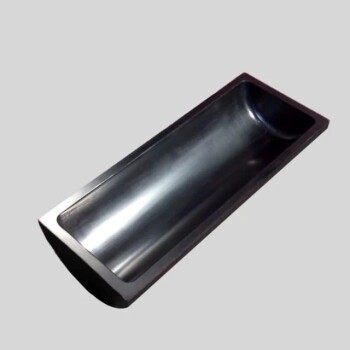
- Carbon Graphite Boat -Laboratory Tube Furnace with Cover
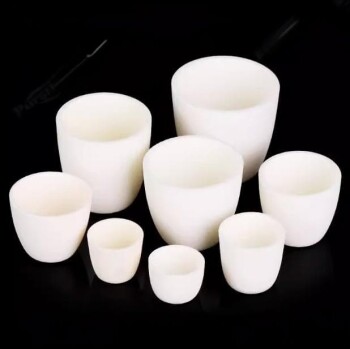
- Arc-Shaped Alumina Ceramic Crucible High Temperature Resistant for Engineering Advanced Fine Ceramics
- Engineering Advanced Fine Alumina Al2O3 Ceramic Crucible for Laboratory Muffle Furnace
People Also Ask
- What is the container that holds the metal source material called in e-beam evaporation? Ensure Purity and Quality in Your Thin-Film Deposition
- What role do high-purity graphite crucibles play in molten salt corrosion research? Ensure Reactor-Grade Precision
- Why is a high-purity graphite crucible ideal for nitrogen-doped graphene at 1500 °C? Maximize Purity and Stability
- What dual roles do high-purity graphite crucibles play? Expert Insights into Fluoride Salt Testing
- What role does a high-purity graphite crucible play in CaO-MgO-Al2O3-SiO2 system equilibrium experiments? Maximize Accuracy