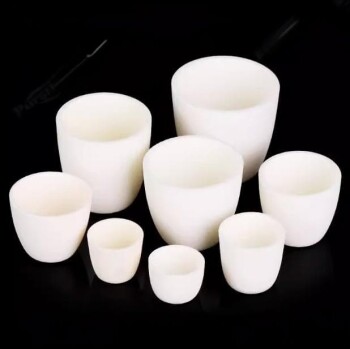
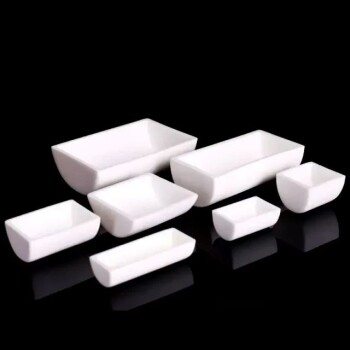
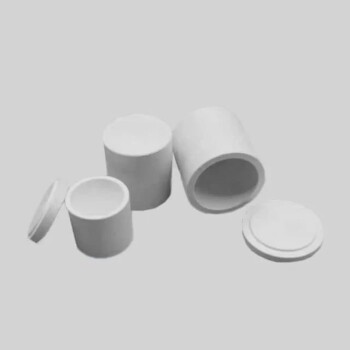
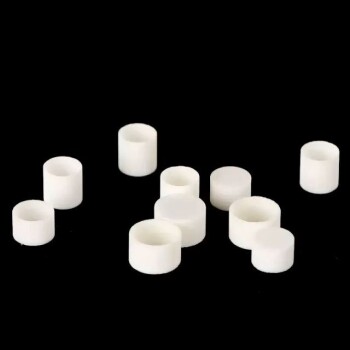
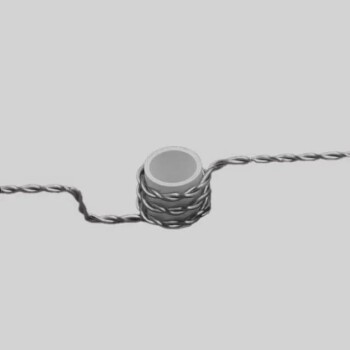
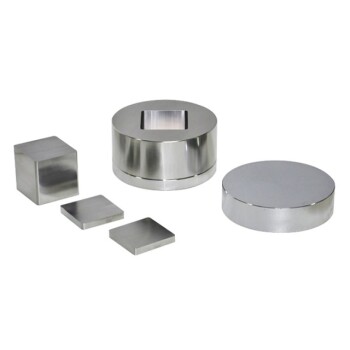
Magnesium Oxide (MgO) crucibles are the superior choice for sintering LLZTO ceramic pellets primarily due to their chemical compatibility with the sample. While standard Alumina crucibles are thermally robust, they are prone to reacting with the sample at high temperatures, leading to unintentional aluminum doping that fundamentally alters the material's properties.
The critical advantage of MgO is the preservation of stoichiometry. Unlike Alumina, which can leach into the sample and form a performance-degrading glassy phase, MgO remains chemically distinct, ensuring the electrical and structural integrity of the ceramic pellet.
The Chemistry of Contamination
Unintentional Aluminum Doping
When sintering LLZTO (Lithium Lanthanum Zirconium Tantalum Oxide) pellets, the choice of container is not merely about holding the sample; it is about chemical isolation.
Research indicates that Alumina crucibles react with LLZTO during the sintering process. This reaction introduces aluminum atoms into the ceramic structure, a phenomenon known as unintentional doping.
Formation of the Glassy Phase
The aluminum introduced by the crucible tends to segregate at the grain boundaries of the ceramic pellet.
This segregation creates an unwanted "glassy phase"—an amorphous region between the crystalline grains. This phase acts as a barrier, negatively impacting the material's overall performance and ionic conductivity.
Why Magnesium Oxide Wins
Superior Chemical Inertness
Magnesium Oxide (MgO) acts as a chemically inert barrier for LLZTO processing.
Unlike Alumina, MgO resists reacting with the highly reactive lithium-based components at sintering temperatures. This inertness prevents the side reactions that plague Alumina-based processes.
Maintaining Precise Stoichiometry
High-performance ceramics rely on exact chemical ratios, or stoichiometry.
By preventing the leaching of foreign elements (like aluminum) into the sample, MgO crucibles ensure the final pellet retains the exact chemical composition intended during synthesis. This results in higher purity and more reliable data.
Understanding the Trade-offs
The Limitations of Alumina
It is important to acknowledge that Alumina is often selected for general ceramic processing due to its excellent high-temperature resistance.
Supplementary data notes that Alumina can withstand temperatures up to 1125°C without structural failure, providing a consistent thermal field. However, for LLZTO specifically, this physical stability is outweighed by its chemical instability (reactivity) with the sample.
Structural Support vs. Chemical Purity
While Alumina provides robust physical support for densification, the trade-off is the introduction of impurities.
In the context of LLZTO, the physical ability to hold the shape is less critical if the chemical composition is compromised. MgO offers the necessary balance: sufficient thermal stability to survive the process without the penalty of chemical contamination.
Making the Right Choice for Your Goal
- If your primary focus is maximizing ionic conductivity: Choose Magnesium Oxide (MgO) to prevent the formation of resistive glassy phases at the grain boundaries.
- If your primary focus is basic thermal containment (non-critical samples): Alumina may serve as a structurally stable vessel, but you must account for the high likelihood of aluminum contamination.
For the synthesis of high-performance LLZTO pellets, chemical purity is paramount, making MgO the definitive standard.
Summary Table:
| Feature | MgO Crucibles | Alumina Crucibles |
|---|---|---|
| Chemical Reactivity | Highly Inert with LLZTO | Reactive (Leaches Aluminum) |
| Impact on Sample | Maintains Stoichiometry | Unintentional Al-Doping |
| Grain Boundaries | Clean and Crystalline | Forms Resistive Glassy Phase |
| Ionic Conductivity | High (Optimal) | Reduced due to impurities |
| Primary Application | Precision LLZTO Sintering | General High-Temp Support |
Elevate Your Advanced Material Synthesis with KINTEK
Precision in ceramic processing starts with the right environment. At KINTEK, we specialize in high-performance laboratory equipment and consumables designed for the most demanding research applications. Whether you are sintering LLZTO pellets or developing next-gen energy storage, our comprehensive range of MgO and Alumina crucibles, high-temperature furnaces (muffle, vacuum, and tube), and pellet presses ensures your samples remain contaminant-free.
Don't let crucible reactivity compromise your ionic conductivity results. Partner with KINTEK for superior chemical purity and expert technical support.
Ready to optimize your lab's performance? Contact us today to find the perfect solution for your research!
Related Products
- High Purity Pure Graphite Crucible for Evaporation
- Electron Beam Evaporation Coating Gold Plating Tungsten Molybdenum Crucible for Evaporation
- High Purity Pure Graphite Crucible for Electron Beam Evaporation
- Electron Beam Evaporation Coating Tungsten Crucible and Molybdenum Crucible for High Temperature Applications
- Engineering Advanced Fine Ceramics Alumina Al2O3 Crucible With Lid Cylindrical Laboratory Crucible
People Also Ask
- Why are high-purity graphite crucibles preferred for sulfide solid electrolytes? Achieve Superior Material Purity
- Why is a high-purity graphite crucible required for Chromel-TaC composites? Ensure Peak Purity at 1400°C
- What role do high-purity graphite crucibles play in molten salt corrosion research? Ensure Reactor-Grade Precision
- Why are high-purity graphite crucibles used for magnesium distillation? Ensure 3N8 Purity & Thermal Stability
- Why is a high-purity graphite crucible ideal for nitrogen-doped graphene at 1500 °C? Maximize Purity and Stability