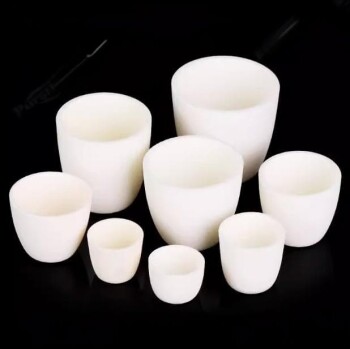
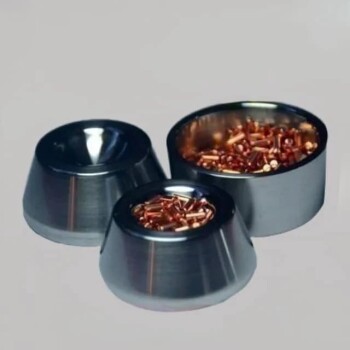
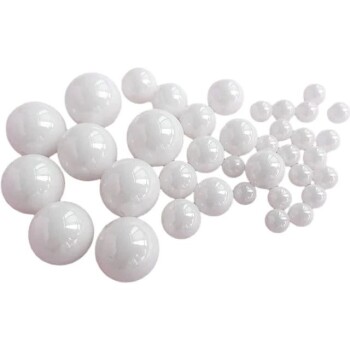
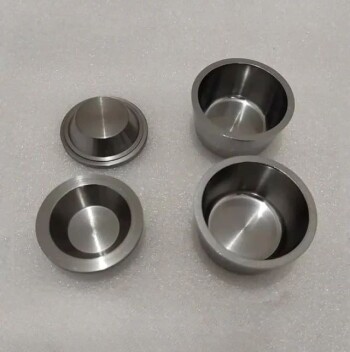
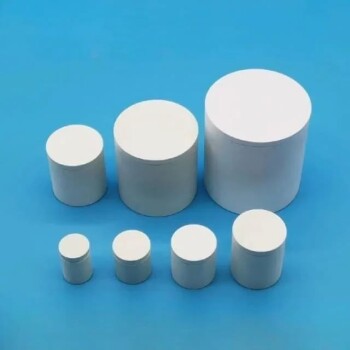
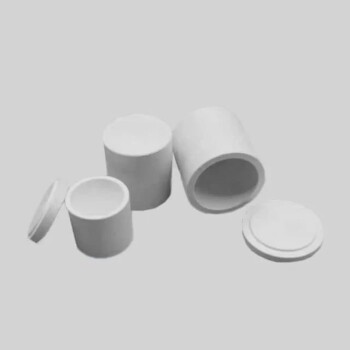
The selection of zirconia crucibles is driven by the necessity for a reaction vessel that combines extreme thermal resilience with absolute chemical neutrality. Specifically, these crucibles are chosen because they can withstand processing temperatures up to 1200°C while resisting interaction with reactive materials like automotive shredder residue (ASR), ensuring the growing ceramic layer remains uncontaminated.
In-situ ceramic growth is a delicate chemical process that demands isolation. Zirconia serves as a critical barrier, providing a thermally stable and chemically inert environment that forces the reaction to occur on the steel surface rather than compromising the vessel walls.
The Critical Role of Thermal Stability
Withstanding Extreme Processing Heat
The process of growing super-hard ceramic layers on steel requires aggressive heating cycles. Zirconia crucibles are selected for their ability to maintain structural integrity at temperatures reaching 1200°C.
Resisting Thermal Shock
Beyond static heat resistance, the processing environment often involves rapid temperature fluctuations. Zirconia offers superior thermal shock resistance, preventing the crucible from cracking or failing during heating and cooling phases.
This stability is non-negotiable; a failure in the crucible wall would breach the containment of the steel samples and the reaction materials.
Ensuring Chemical Purity and Containment
A Sealed Reaction Space
To grow a complex ceramic layer in-situ, the chemical environment must be tightly controlled. Zirconia crucibles provide a sealed reaction space, effectively containing the steel substrate and reaction agents (such as ASR).
Absolute Chemical Inertness
The primary danger in this process is cross-contamination. Zirconia is chemically inert, meaning it does not react with the volatile components inside the crucible.
Preserving Component Quality
By refusing to participate in the chemical reaction, the crucible ensures that all chemical activity is focused on the steel surface. This maintains the purity of the resulting ceramic layer components, preventing foreign elements from the vessel itself from degrading the final product.
Understanding the Process Constraints
The Risk of Material Interaction
While zirconia is robust, the success of this application hinges entirely on the vessel's lack of reactivity. Using a crucible material with lower inertness would likely result in the vessel walls leaching into the reaction mix.
The Necessity of Total Containment
The reference highlights that the crucible must effectively contain complex reactions. If the seal or structural integrity is compromised even slightly, the in-situ chemical reactions will fail to produce the desired ceramic layer, rendering the process ineffective.
Making the Right Choice for Your Goal
Selecting the correct crucible material is about aligning physical properties with your specific processing conditions.
- If your primary focus is Chemical Purity: Prioritize zirconia for its inertness to ensure the ceramic layer's composition is not altered by the vessel material.
- If your primary focus is High-Temperature Processing: Rely on zirconia to maintain containment and structural stability at temperatures up to 1200°C.
- If your primary focus is Complex In-Situ Reactions: Use zirconia to create a sealed environment that facilitates reaction containment without interference.
By utilizing zirconia, you ensure that the high-temperature environment acts solely as a catalyst for growth, rather than a source of contamination.
Summary Table:
| Feature | Performance Benefit |
|---|---|
| Max Operating Temp | Up to 1200°C |
| Chemical Properties | Absolute inertness; prevents cross-contamination |
| Thermal Stability | High resistance to thermal shock and cracking |
| Containment | Creates a sealed reaction space for volatile materials |
| Application | In-situ growth of super-hard ceramic layers on steel |
Elevate Your Material Research with KINTEK Precision
Don't let vessel contamination compromise your results. At KINTEK, we specialize in high-performance laboratory equipment and consumables designed for the most demanding thermal processes. Whether you are growing super-hard ceramic layers or conducting advanced battery research, our zirconia crucibles, high-temperature furnaces, and ceramic components provide the stability and purity your project requires.
From high-temperature high-pressure reactors to specialized crushing and milling systems, KINTEK offers a comprehensive range of tools for target customers in aerospace, automotive, and materials science. Ensure your chemical reactions occur exactly where they should.
Ready to optimize your lab's performance? Contact our technical experts today to find the perfect solution for your high-temperature applications!
References
- Farshid Pahlevani, Veena Sahajwalla. Enhancing steel properties through in situ formation of ultrahard ceramic surface. DOI: 10.1038/srep38740
This article is also based on technical information from Kintek Solution Knowledge Base .
Related Products
- High Purity Pure Graphite Crucible for Electron Beam Evaporation
- Arc-Shaped Alumina Ceramic Crucible High Temperature Resistant for Engineering Advanced Fine Ceramics
- High Purity Pure Graphite Crucible for Evaporation
- Engineering Advanced Fine Alumina Al2O3 Ceramic Crucible for Laboratory Muffle Furnace
- Electron Beam Evaporation Coating Gold Plating Tungsten Molybdenum Crucible for Evaporation
People Also Ask
- What is the container that holds the metal source material called in e-beam evaporation? Ensure Purity and Quality in Your Thin-Film Deposition
- What role do high-purity graphite crucibles play in molten salt corrosion research? Ensure Reactor-Grade Precision
- Why is a high-purity graphite crucible ideal for nitrogen-doped graphene at 1500 °C? Maximize Purity and Stability
- What dual roles do high-purity graphite crucibles play? Expert Insights into Fluoride Salt Testing
- What role does a high-purity graphite crucible play in CaO-MgO-Al2O3-SiO2 system equilibrium experiments? Maximize Accuracy