At its core, using a vacuum for evaporation is about control. A vacuum fundamentally alters the physical conditions of the process, primarily by lowering the boiling point of a liquid. This allows you to achieve evaporation at much lower temperatures, which saves energy and protects heat-sensitive materials. It also creates an ultra-clean environment, which is critical for high-purity applications like electronics manufacturing.
Evaporation is a battle between a liquid's molecules trying to escape and the atmospheric pressure pushing them down. By removing that pressure with a vacuum, you make it significantly easier for the molecules to escape, fundamentally changing when and how evaporation occurs.
The Fundamental Principle: Lowering the Boiling Point
The most important reason to use a vacuum is to reduce the temperature at which a liquid boils and evaporates.
How Pressure Affects Boiling
A liquid boils when its vapor pressure equals the pressure of the environment around it. At sea level, water must reach 100°C (212°F) to generate enough vapor pressure to overcome the surrounding atmospheric pressure.
When you place that water in a vacuum chamber and pump out the air, you drastically reduce the environmental pressure. Now, the water needs far less energy—and therefore a lower temperature—to boil and evaporate.
The Benefit: Energy Efficiency
Heating liquids, especially large volumes of water, consumes a significant amount of energy. By lowering the boiling point, you reduce the heat required to drive evaporation.
This principle is the cornerstone of vacuum evaporation for wastewater treatment. It allows for the separation of pure water from contaminants at a lower temperature, resulting in substantial energy and operational cost savings.
The Benefit: Protecting Heat-Sensitive Materials
Many substances in the pharmaceutical, chemical, and food industries are damaged or destroyed by high heat. For example, concentrating a fruit juice or isolating a delicate pharmaceutical compound at its atmospheric boiling point would destroy its flavor or efficacy.
Using a vacuum allows for the removal of solvents or water at low, gentle temperatures, preserving the integrity and quality of the final product. This is a common practice in processes using a rotary evaporator ("rotovap").
The Second Core Function: Ensuring Purity and Precision
In fields like electronics and optics, the goal isn't just to evaporate a material, but to deposit it as an ultra-pure thin film onto a surface. Here, a vacuum serves a different but equally critical purpose.
Removing Contaminants
The air around us is filled with oxygen, nitrogen, water vapor, and other reactive gases. During a high-tech coating process, if these gases were present, they would react with the evaporated material.
A high vacuum (as low as 10⁻⁷ mbar) removes virtually all of these atmospheric molecules. This prevents unwanted chemical reactions, ensuring the material that lands on the target surface is of the highest possible purity.
Enabling Line-of-Sight Travel
In a vacuum, there are almost no air molecules for the evaporated atoms to collide with. This allows them to travel in a straight, uninterrupted line from the source material to the target substrate.
This line-of-sight trajectory is essential for creating the precise, uniform, and dense coatings required for manufacturing integrated circuits, optical lenses, and other advanced components.
Understanding the Trade-offs
While powerful, vacuum evaporation is not a universal solution. It involves clear trade-offs that must be considered.
Equipment Complexity and Cost
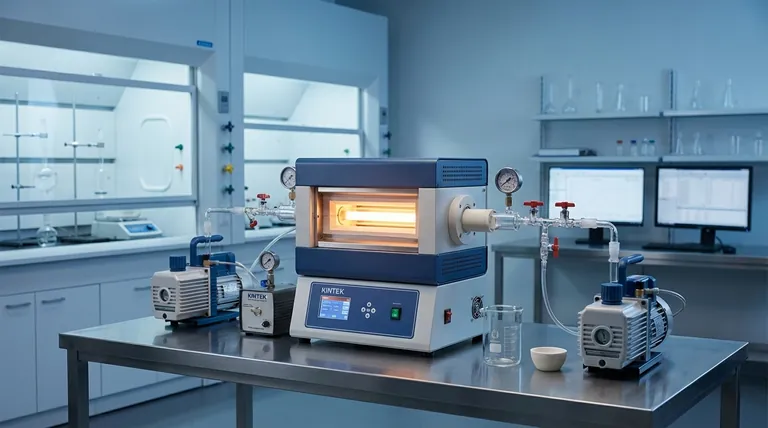
Vacuum systems involve sophisticated and expensive components, including vacuum chambers, high-performance pumps, and precise gauges. The initial capital investment can be significant compared to simple atmospheric heating.
Maintenance and System Demands
Vacuum pumps, especially those handling condensable or corrosive vapors from a chemical process, require regular and specialized maintenance to function reliably. A failure in the vacuum system can bring the entire process to a halt.
Throughput and Process Time
Many vacuum processes operate in batches. The cycle of loading a chamber, pumping it down to the required vacuum level, running the process, and venting it back to atmospheric pressure can be time-consuming and limit overall throughput compared to some continuous, non-vacuum alternatives.
Making the Right Choice for Your Goal
The decision to use a vacuum depends entirely on what you are trying to achieve.
- If your primary focus is purification or concentration: Use a vacuum to lower the boiling point, which reduces energy costs and protects heat-sensitive products.
- If your primary focus is creating high-purity thin films: Use a high vacuum to eliminate atmospheric contaminants and ensure a direct, line-of-sight path for material deposition.
- If your primary focus is simple water removal with no heat sensitivity: A vacuum may be an unnecessary expense, and simpler atmospheric evaporation or other drying methods could be more cost-effective.
Ultimately, a vacuum is a powerful tool that gives you precise control over the physics of evaporation, enabling processes that would otherwise be inefficient, destructive, or impossible.
Summary Table:
| Key Benefit | Primary Application | Key Outcome |
|---|---|---|
| Lower Boiling Point | Wastewater Treatment, Pharma, Food | Energy Savings & Material Protection |
| Ultra-Clean Environment | Electronics, Optics | High-Purity Thin Film Deposition |
| Line-of-Sight Deposition | Semiconductor Manufacturing | Precise, Uniform Coatings |
Ready to harness the power of vacuum evaporation in your lab?
KINTEK specializes in providing high-quality lab equipment, including vacuum systems and evaporation tools, tailored to the precise needs of laboratories in pharmaceuticals, electronics, and materials science. Our solutions are designed to enhance your process efficiency, protect sensitive materials, and ensure the highest levels of purity.
Contact our experts today to discuss how we can support your specific application and help you achieve superior results.
Visual Guide

Related Products
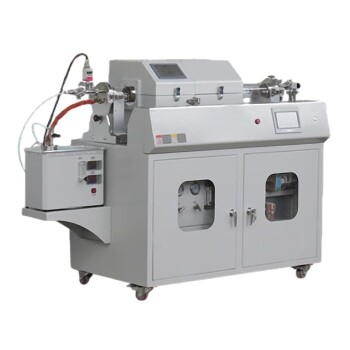
- Chemical Vapor Deposition CVD Equipment System Chamber Slide PECVD Tube Furnace with Liquid Gasifier PECVD Machine
- RF PECVD System Radio Frequency Plasma-Enhanced Chemical Vapor Deposition RF PECVD
- Split Chamber CVD Tube Furnace with Vacuum Station Chemical Vapor Deposition System Equipment Machine
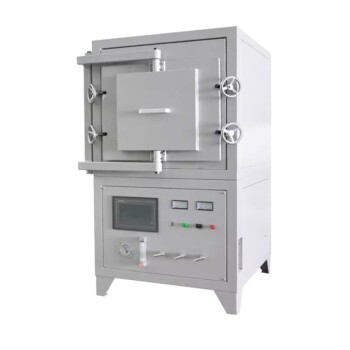
- Small Vacuum Heat Treat and Tungsten Wire Sintering Furnace
- Molybdenum Vacuum Heat Treat Furnace
People Also Ask
- Why is PECVD better than CVD? Achieve Superior Low-Temperature Thin Film Deposition
- How plasma is generated in PECVD? A Step-by-Step Breakdown of the Process
- What are the advantages of PECVD over CVD? Achieve High-Quality Thin Films at Lower Temperatures
- What is the difference between CVD and PVD process? A Guide to Choosing the Right Coating Method
- What are the examples of CVD method? Discover the Versatile Applications of Chemical Vapor Deposition