A boron nitride coating serves as a critical diffusion barrier applied to alumina crucibles during the calcination of Lithium Lanthanum Zirconium Oxide (LLZO). This coating physically isolates the LLZO green pellet from the crucible walls, preventing chemical reactions that occur at high temperatures.
While alumina is thermally stable, lithium-stuffed garnets are highly reactive at sintering temperatures. The boron nitride coating prevents the diffusion of aluminum into the LLZO sample, ensuring the stoichiometry of the material remains pure while protecting the crucible from corrosion.
The Chemistry of Containment
The Reactivity of LLZO
Although alumina crucibles are selected for their high thermal stability, they are not perfectly inert when in contact with aggressive lithium materials.
At the high temperatures required for calcination, lithium-stuffed garnet materials (like LLZO) tend to react chemically with alumina.
The Consequence of Contact
If the LLZO pellet comes into direct contact with the alumina surface, two detrimental processes occur.
First, aluminum diffusion takes place, where aluminum atoms migrate from the crucible into the LLZO structure.
Second, the crucible itself suffers from corrosion, degrading its surface and structural integrity over time.
The Function of Boron Nitride
Isolating the Materials
Boron nitride acts as a non-reactive shield between the vessel and the sample.
By applying this coating, you effectively stop the diffusion process before it begins.
This isolation preserves the stoichiometry of the LLZO, ensuring the chemical composition you intend to create is exactly what you get after thermal processing.
Extending Equipment Lifespan
Beyond protecting the sample, the coating protects your lab equipment.
By preventing chemical bonding between the pellet and the container, the boron nitride coating protects the service life of the crucible.
This allows for repeated use of the alumina vessel without significant degradation or risk of cross-contamination in future runs.
Understanding the Trade-offs
Context Matters: Powder vs. Pellets
It is important to note that alumina is generally considered chemically inert regarding LLZO precursor powders at temperatures between 850°C and 1000°C.
However, the risk profile changes significantly when processing green pellets or when aiming for higher sintering temperatures.
The Risk of Omission
Skipping the boron nitride coating might be acceptable for lower-temperature powder processing, but it introduces a high risk for sintered pellets.
Without the coating, you trade a small amount of preparation time for a high probability of unintended stoichiometric changes and permanent damage to your crucible.
Making the Right Choice for Your Goal
To ensure the success of your calcination process, align your crucible preparation with your specific objectives:
- If your primary focus is Sample Purity: Apply a boron nitride coating to preventing aluminum diffusion from altering the delicate stoichiometry of your LLZO.
- If your primary focus is Equipment Longevity: Use the coating to prevent corrosive reactions that cause the LLZO pellet to stick to and degrade the alumina surface.
Treating the crucible surface is a fundamental step in ensuring that high-temperature stability does not come at the cost of chemical contamination.
Summary Table:
| Feature | Direct Contact (Alumina Only) | With Boron Nitride Coating |
|---|---|---|
| Chemical Interaction | High reactivity with lithium | Inert/Non-reactive shield |
| Sample Purity | Aluminum diffusion alters stoichiometry | High purity; stoichiometry preserved |
| Crucible Integrity | Surface corrosion and degradation | Surface protected; extended lifespan |
| Pellet Handling | Risk of sticking to crucible walls | Easy release; no chemical bonding |
| Best Use Case | Low-temp powder processing | High-temp pellet sintering |
Elevate Your Battery Research with KINTEK Precision Solutions
Don't let chemical contamination compromise your solid-state electrolyte research. KINTEK provides the specialized laboratory equipment and consumables needed for advanced material synthesis, from high-purity ceramics and crucibles to precision high-temperature furnaces (muffle, vacuum, and atmosphere).
Whether you are processing LLZO pellets or scaling up battery research, our expert team is ready to provide you with the high-performance PTFE products, hydraulic presses, and crushing systems your lab demands.
Ready to ensure the stoichiometry and purity of your samples? Contact KINTEK today to discuss your equipment needs and see how our comprehensive portfolio—including autoclaves, cooling solutions, and milling systems—can optimize your workflow.
Related Products
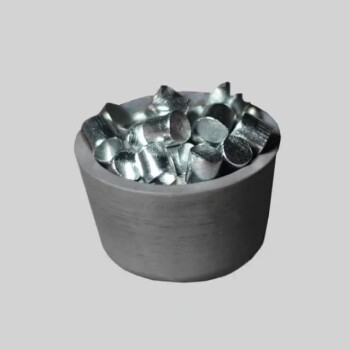
- Electron Beam Evaporation Coating Conductive Boron Nitride Crucible BN Crucible
- Boron Nitride (BN) Crucible for Phosphorous Powder Sintered
- Boron Nitride (BN) Ceramic Plate
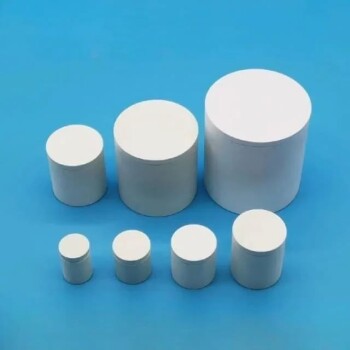
- Engineering Advanced Fine Ceramics Alumina Al2O3 Crucible With Lid Cylindrical Laboratory Crucible
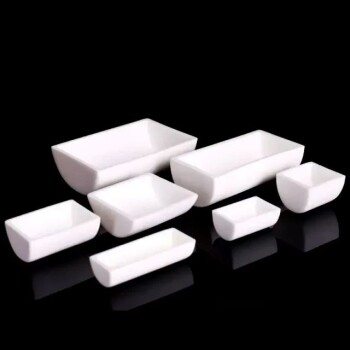
- Alumina Al2O3 Ceramic Crucible Semicircle Boat with Lid for Engineering Advanced Fine Ceramics
People Also Ask
- Why use Boron Nitride (BN) crucibles in metal infiltration? Ensure sample purity and non-wetting performance.
- Why are Boron Nitride (BN) or Alumina crucibles preferred for Na-flux GaN growth? Optimize Your Crystal Yield
- What is the container that holds the metal source material called in e-beam evaporation? Ensure Purity and Quality in Your Thin-Film Deposition
- What is the process of e-beam coating? Achieve High-Purity, Precise Thin Films for Your Lab
- What materials are used in electron beam evaporation? Master High-Purity Thin Film Deposition