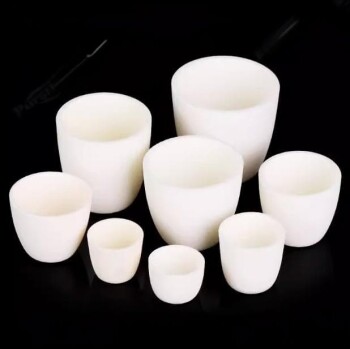
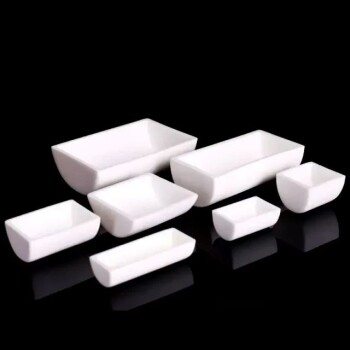
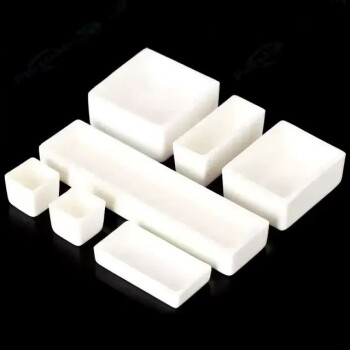
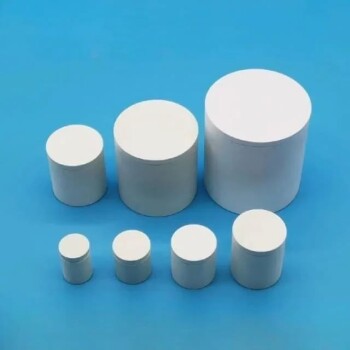
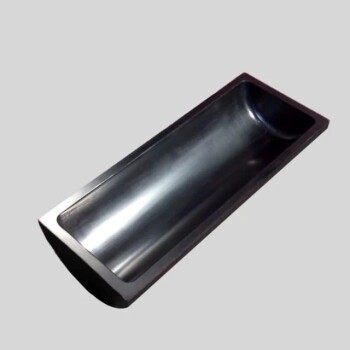
A corundum crucible is the standard choice for the thermal reduction of Cu@BN composites because it provides a chemically neutral environment at extreme temperatures. In a high-activity reducing atmosphere at 900°C, corundum remains stable and does not react with boron-containing precursors or the resulting metallic copper. This ensures that the final composite maintains its intended purity and that the material's properties are not compromised by container-related contamination.
The use of corundum (alumina) ensures that the synthesis of Cu@BN composites is governed strictly by the precursor ratios and heat treatment, rather than unintended chemical interference from the sample container. Its high refractoriness and chemical inertness are critical for maintaining phase purity in highly reactive environments.
Superior Thermal Stability and Refractoriness
High-Temperature Resistance
Corundum, a high-purity form of alumina, is a refractory material capable of withstanding temperatures up to 1500°C. During the thermal reduction of Cu@BN at 900°C, the crucible remains far below its softening point.
Maintaining Structural Integrity
Because the material does not undergo deformation or softening at these temperatures, it provides a stable platform for the sample. This structural reliability is essential for consistent heat distribution throughout the composite material.
Resistance to Thermal Erosion
Even in the presence of molten or highly active phases, corundum exhibits strong resistance to erosion. This prevents the crucible walls from thinning or shedding particles into the Cu@BN mixture during the reduction process.
Chemical Inertness in Reducing Atmospheres
Prevention of Precursor Reactions
The thermal reduction process often involves boron-containing precursors that are highly reactive. Corundum is uniquely qualified because it does not engage in secondary chemical reactions with these precursors or silicon-based powders.
Protection of the Metallic Copper Phase
In a high-activity reducing atmosphere, many containers might alloy with or react with metallic copper. Corundum remains inert, ensuring the copper phase remains pure and distinct within the BN matrix.
Ensuring Phase Accuracy
By eliminating container-to-sample reactions, researchers can ensure that phase evaluations depend solely on the initial composition ratio. This allows for an accurate assessment of the heat treatment's effectiveness without interference from external elements.
Understanding the Trade-offs
Sensitivity to Thermal Shock
While corundum is chemically and thermally stable, it is susceptible to thermal shock. Rapid heating or cooling cycles can cause the crucible to crack, requiring controlled ramp rates during the furnace cycle.
Cost and Material Purity
Higher purity corundum crucibles offer better inertness but come at a higher cost. Using lower-grade alumina may introduce trace impurities that could still migrate into the sample at high temperatures.
Limited Reusability with Certain Slags
While excellent for Cu@BN, corundum can be vulnerable to certain aggressive alkaline fluxes or specific metallic melts over repeated uses. For the specific chemistry of copper and boron nitride, however, it remains the most reliable option.
How to Apply This to Your Project
When selecting a container for high-temperature composite synthesis, your choice should align with your specific purity requirements and temperature ranges.
- If your primary focus is material purity: Use high-purity corundum (99% alumina) to ensure zero migration of container elements into the Cu@BN composite.
- If your primary focus is experimental accuracy: Ensure the crucible is pre-cleaned and fired to remove any surface volatiles that could interfere with the reducing atmosphere.
- If your primary focus is crucible longevity: Implement strict heating and cooling protocols (typically 5-10°C per minute) to prevent cracking due to thermal expansion stress.
By utilizing a corundum crucible, you ensure that the integrity of the Cu@BN composite is defined by your science, not your equipment.
Summary Table:
| Feature | Performance in Cu@BN Reduction | Benefit for Research |
|---|---|---|
| Temperature Limit | Stable up to 1500°C (Process at 900°C) | Prevents crucible softening or deformation |
| Chemical Inertness | Zero reaction with Boron or Copper | Ensures sample purity and accurate phase evaluation |
| Erosion Resistance | High resistance to active phases | Prevents contamination from container shedding |
| Thermal Control | Low thermal expansion | Provides a stable platform for heat distribution |
| Stability | Remains neutral in reducing atmospheres | Prevents unintended alloying or chemical interference |
Elevate Your Materials Synthesis with KINTEK Precision
Achieving the perfect Cu@BN composite requires more than just high-quality precursors—it demands the right environment. KINTEK specializes in high-purity laboratory equipment designed to meet the rigorous demands of advanced materials research.
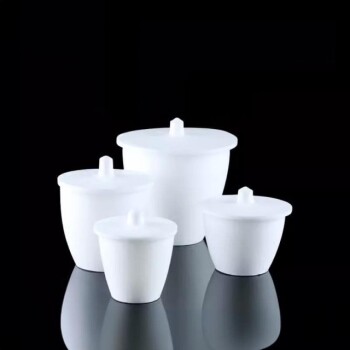
Whether you need high-purity corundum or ceramic crucibles to ensure chemical inertness, or specialized high-temperature furnaces (muffle, tube, vacuum, or atmosphere) for precise thermal reduction, we provide the tools to guarantee experimental accuracy. From crushing and milling systems for precursor preparation to high-pressure reactors for specialized synthesis, KINTEK is your partner in laboratory excellence.
Ready to optimize your heat treatment process? Contact us today to discuss how our laboratory solutions can enhance your research outcomes!
References
- Еlena А. Malinina, Nikolay T. Kuznetsov. Physicochemical Fundamentals of the Synthesis of a Cu@BN Composite Consisting of Nanosized Copper Enclosed in a Boron Nitride Matrix. DOI: 10.3390/inorganics11080345
This article is also based on technical information from Kintek Solution Knowledge Base .
Related Products
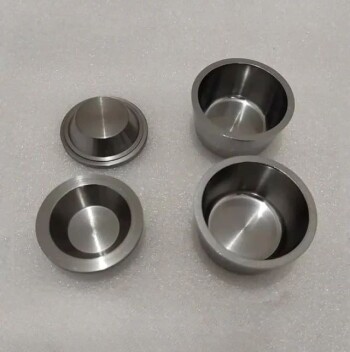
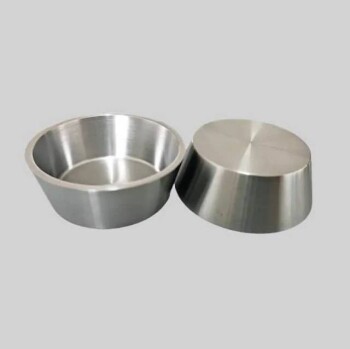
- Electron Beam Evaporation Coating Tungsten Crucible and Molybdenum Crucible for High Temperature Applications
- Electron Beam Evaporation Coating Gold Plating Tungsten Molybdenum Crucible for Evaporation
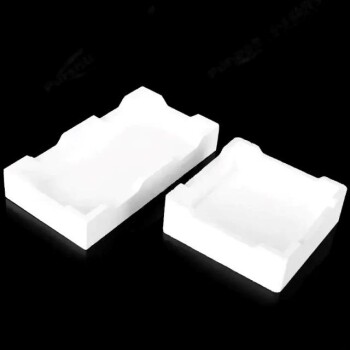
- Arc-Shaped Alumina Ceramic Crucible High Temperature Resistant for Engineering Advanced Fine Ceramics
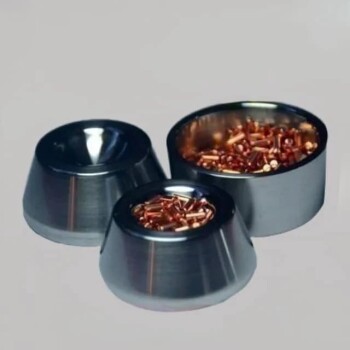
- Electron Beam Evaporation Coating Oxygen-Free Copper Crucible and Evaporation Boat
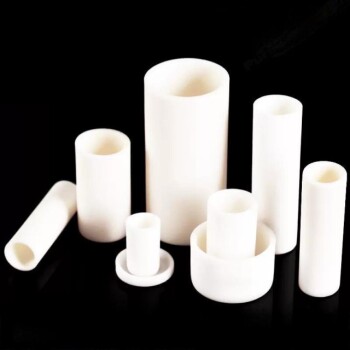
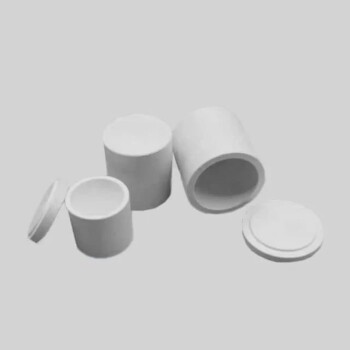
- Engineering Advanced Fine Ceramics Alumina Al2O3 Crucible With Lid Cylindrical Laboratory Crucible
People Also Ask
- What is the container that holds the metal source material called in e-beam evaporation? Ensure Purity and Quality in Your Thin-Film Deposition
- What materials are used in electron beam evaporation? Master High-Purity Thin Film Deposition
- What is the voltage of e-beam evaporation? Achieve Precise Thin-Film Deposition
- What are the applications of e-beam evaporation? Achieve High-Purity Coatings for Optics & Electronics
- What is e-beam evaporation? Achieve High-Purity Thin Film Deposition for Your Lab