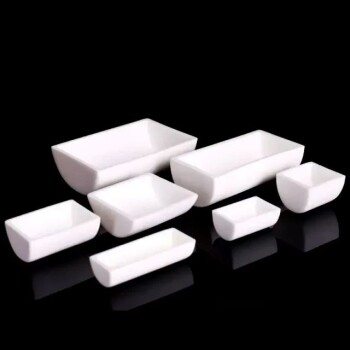
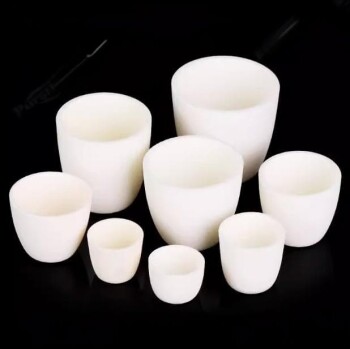
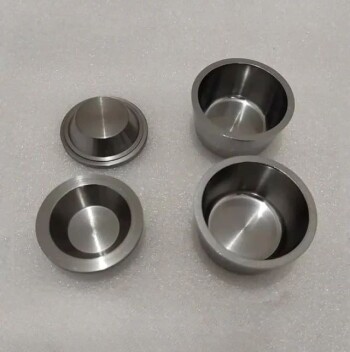
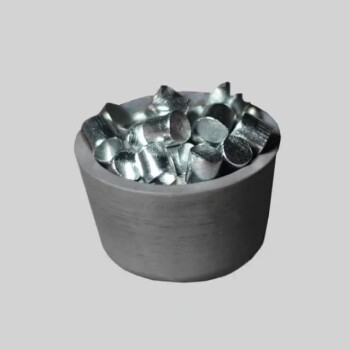
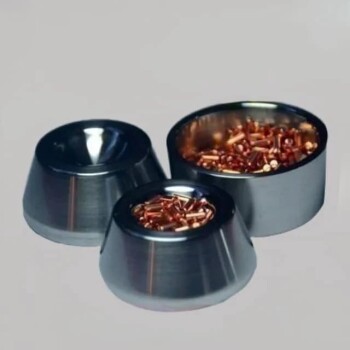
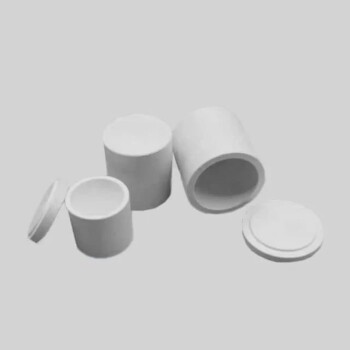
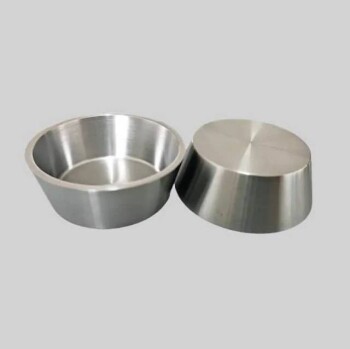
High-density Magnesium Oxide (MgO) is essential because it is one of the few materials capable of withstanding the aggressive alkalinity of lithium-based molten salts without dissolving.
While standard ceramics fail due to chemical reactions with lithium oxides, high-density MgO remains chemically inert at 650°C, preventing the crucible from contaminating the molten salt and ensuring your corrosion data reflects the metal specimen, not the container.
The Core Reality In high-temperature LiCl-Li2O environments, standard laboratory ceramics act like acids reacting with a base, leading to rapid degradation. High-density MgO is required because its basic chemical nature matches the environment, neutralizing the risk of "basic fluxing" and preserving the integrity of your experiment.
The Chemistry of Crucible Survival
The Threat of Basic Fluxing
Lithium molten salts, specifically those containing lithium oxide (Li2O), create a highly alkaline environment.
At temperatures around 650°C, this alkalinity attacks acidic or amphoteric oxides through a process called basic fluxing corrosion.
If the crucible material is not chemically compatible, the salt will literally dissolve the container walls.
Why Alumina Fails
Alumina (Al2O3) is the standard for many lower-temperature experiments, such as those involving nitrate salts (Solar Salts).
However, in the presence of lithium oxides, alumina reacts chemically and degrades.
This reaction introduces foreign particles into the melt, altering the chemistry of the solution and rendering corrosion rate measurements inaccurate.
The Magnesium Oxide Solution
MgO is chemically classified as a basic oxide.
Because it shares the same chemical nature as the alkaline LiCl-Li2O melt, it does not react with the solution.
This thermodynamic stability is what allows the crucible to remain inert, ensuring that any corrosion observed is strictly between the metal specimen and the salt.
The Role of Density
Combating Physical Infiltration
Chemical stability is only half the battle; physical structure matters equally.
A "high-density" specification implies that the MgO crucible has minimal porosity.
Preventing Mechanical Failure
Porous ceramics allow molten salt to infiltrate the crucible walls.
High-density manufacturing ensures the salt stays contained within the vessel, preventing physical breakdown or leakage during long-duration experiments.
Understanding the Trade-offs
Context is Critical
While MgO is superior for chemical inertness in lithium salts, it is not a universal solution for all molten salt experiments.
Selecting the wrong crucible for a specific salt type can lead to immediate failure or skewed data.
Electrical Conductivity vs. Isolation
MgO is an electrical insulator, which is ideal for isolating the metal specimen to study pure chemical corrosion.
However, if your goal is to study galvanic corrosion (interaction between structural components), a conductive material like Graphite is required to form an electrochemical circuit.
Salt Specificity
It is vital to note that MgO is specifically required for alkaline chlorides (LiCl-Li2O).
For fluoride salts, high-purity Graphite is the preferred standard due to its specific inertness to fluorides.
For nitrate salts, Alumina remains the most cost-effective and stable choice.
Making the Right Choice for Your Goal
To ensure the validity of your high-temperature data, select your crucible based on the specific salt chemistry and experimental goals:
- If your primary focus is Lithium/Alkaline Stability: Use High-density MgO to prevent basic fluxing corrosion and maintain solution purity at 650°C.
- If your primary focus is Fluoride Salt Resistance: Choose High-purity Graphite to withstand aggressive fluorides and facilitate electrochemical studies.
- If your primary focus is Nitrate Salt (Solar Salt) Systems: Select High-purity Alumina, which offers excellent stability up to 600°C in these specific mixtures.
Success in molten salt corrosion testing begins with matching the chemical basicity of your container to the acidity or alkalinity of your melt.
Summary Table:
| Crucible Material | Recommended Salt Environment | Temperature Limit | Primary Benefit |
|---|---|---|---|
| High-Density MgO | Lithium Chlorides (LiCl-Li2O) | ~650°C+ | Resists basic fluxing; chemically inert to alkalinity |
| High-Purity Alumina | Nitrate Salts (Solar Salts) | Up to 600°C | Cost-effective; stable in nitrate systems |
| High-Purity Graphite | Fluoride Salts | High Temp | Resistant to aggressive fluorides; electrically conductive |
| Standard Ceramics | Non-reactive Salts | Variable | General purpose; prone to degradation in Li-based melts |
Maximize Your Research Precision with KINTEK
Don't let crucible degradation compromise your molten salt corrosion data. KINTEK specializes in high-performance laboratory equipment and consumables designed for the most demanding thermal environments.
Our extensive portfolio includes:
- High-Density MgO & Alumina Crucibles: Engineered for chemical inertness and minimal porosity.
- Advanced Thermal Systems: From muffle and tube furnaces to high-temperature high-pressure reactors and autoclaves.
- Material Processing: Crushing, milling, and hydraulic presses (isostatic, pellet, and hot) for sample preparation.
- Battery & Chemical Research: Electrolytic cells, electrodes, and specialized cooling solutions like ULT freezers.
Whether you are studying lithium-based energy storage or advanced metallurgy, our experts are ready to help you select the perfect materials for your specific salt chemistry.
Contact KINTEK Today to Optimize Your Lab Setup
References
- Wan-Bae Kim, Jong‐Hyeon Lee. High-Temperature Corrosion Behavior of Al-Coated Ni-Base Alloys in Lithium Molten Salt for Electroreduction. DOI: 10.3390/coatings11030328
This article is also based on technical information from Kintek Solution Knowledge Base .
Related Products
- High Purity Pure Graphite Crucible for Evaporation
- High Purity Pure Graphite Crucible for Electron Beam Evaporation
- Engineering Advanced Fine Ceramics Alumina Al2O3 Crucible With Lid Cylindrical Laboratory Crucible
- Alumina Al2O3 Ceramic Crucible Semicircle Boat with Lid for Engineering Advanced Fine Ceramics
- Engineering Advanced Fine Ceramics Alumina Crucibles (Al2O3) for Thermal Analysis TGA DTA
People Also Ask
- Why are high-purity graphite crucibles preferred for sulfide solid electrolytes? Achieve Superior Material Purity
- Why is a high-purity graphite crucible required for Chromel-TaC composites? Ensure Peak Purity at 1400°C
- What role do high-purity graphite crucibles play in molten salt corrosion research? Ensure Reactor-Grade Precision
- Why are high-purity graphite crucibles used for magnesium distillation? Ensure 3N8 Purity & Thermal Stability
- Why is a high-purity graphite crucible ideal for nitrogen-doped graphene at 1500 °C? Maximize Purity and Stability