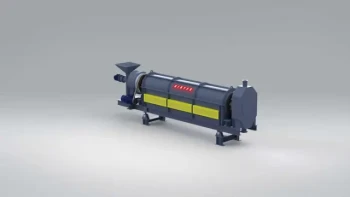
High-performance alloy tube furnaces are the specialized backbone of steam activation because they provide the unique combination of thermal stability and chemical resistance required to survive 900°C temperatures in the presence of corrosive water vapor. Standard equipment often fails under these conditions, but alloy-based systems ensure the precise atmospheric control necessary to etch the carbon fiber surface. This process is what transforms raw carbon into a highly developed microporous structure with a significantly increased specific surface area.
The necessity of high-performance alloy tube furnaces stems from the dual requirement of high-temperature durability and resistance to steam-induced corrosion. By maintaining a stable thermal and atmospheric environment, these furnaces allow for the uniform etching of activated carbon fibers, which is critical for achieving optimal pore distribution and surface area.
The Role of Material Integrity in Harsh Environments
Resistance to High-Temperature Steam Corrosion
Steam activation introduces a highly corrosive environment that can rapidly degrade standard furnace components. High-performance alloys, such as Inconel, are specifically engineered to resist high-temperature oxidation and the aggressive nature of water vapor at 900°C. This durability ensures that the furnace tube does not introduce impurities or fail structurally during the activation cycle.
Maintaining Thermal and Flow Field Stability
For activated carbon fibers (ACFs) to achieve uniform properties, the temperature and gas flow must remain perfectly consistent throughout the tube. High-performance alloys provide the structural rigidity needed to prevent warping at extreme temperatures, which helps maintain a stable flow field. This stability is essential for ensuring that every fiber in the batch is exposed to the same activation conditions.
Longevity Under Thermal Cycling
The activation process often involves ramping temperatures up to 900°C and back down, which places immense stress on the furnace materials. Alloy tubes are better equipped to handle thermal expansion and contraction than many ceramic alternatives, which may be prone to cracking under rapid changes. This reliability is vital for maintaining a continuous and repeatable production or research workflow.
Precision Control of the Activation Mechanism
Facilitating Uniform Surface Etching
The primary goal of steam activation is the heterogeneous reaction between the steam and the carbon matrix to create pores. A high-performance furnace ensures that the heat is distributed evenly, allowing for the uniform etching of highly developed microporous structures. Without this precision, the resulting fibers would have inconsistent surface areas and unpredictable performance in applications like energy storage.
Regulation of Atmosphere Purity
The sealing integrity of a high-performance alloy furnace is critical for maintaining a strict atmospheric shield. Whether using nitrogen to prevent oxidation or carbon dioxide for mild redox reactions, the furnace must prevent oxygen ingress. This high level of sealing ensures that the biomass or carbonaceous material undergoes controlled activation rather than simple combustion.
Optimization of Pore Size Distribution
By providing precise temperature regulation—often within a few degrees—these furnaces allow researchers to tune the micropore and mesopore ratios. This level of control is necessary for specialized applications, such as enhancing the energy storage capacity of supercapacitor electrodes. The constant thermal energy facilitates a thorough reaction between the activator and the carbonized material.
Understanding the Trade-offs and Limitations
Cost vs. Performance
The primary drawback of high-performance alloy tube furnaces is their significant initial capital investment. While they offer superior durability, the materials used (like Inconel) are much more expensive than quartz or standard stainless steel. Users must weigh the long-term benefit of equipment longevity against the higher upfront cost.
Temperature Ceilings
Although alloy tubes are exceptionally durable, they do have a maximum operating temperature that may be lower than certain specialized ceramics. For processes requiring temperatures well above 1100°C, even high-performance alloys may begin to soften or lose their chemical resistance. It is crucial to verify that the alloy grade matches the specific temperature and chemical requirements of the activation agent.
Maintenance and Cleaning
Alloy tubes can sometimes accumulate carbon deposits or residual activators that are difficult to remove without damaging the metal surface. Regular maintenance and inspection for signs of pitting or thinning are required to ensure the tube remains safe for high-pressure or high-flow operations.
Making the Right Choice for Your Goal
How to Apply This to Your Project
Choosing the right furnace configuration depends heavily on your specific material targets and the scale of your activation process.
- If your primary focus is maximum surface area and pore precision: Invest in a high-performance alloy furnace with advanced PID temperature controllers and mass flow controllers for steam and inert gases.
- If your primary focus is long-term equipment reliability in a production setting: Prioritize furnaces constructed with Inconel or similar heat-resistant alloys to minimize downtime caused by tube failure or corrosion.
- If your primary focus is surface modification or functionalization at lower temperatures: A standard quartz tube furnace may suffice, provided the temperature remains below 700°C and the atmosphere is non-corrosive.
By utilizing the superior durability and precision of a high-performance alloy tube furnace, you ensure the technical integrity of the steam activation process, resulting in high-quality activated carbon fibers with optimized performance characteristics.
Summary Table:
| Key Requirement | Benefit for ACF Activation | Why High-Performance Alloy? |
|---|---|---|
| Steam Resistance | Prevents material degradation and impurities | Specialized alloys (Inconel) resist oxidation at 900°C |
| Thermal Stability | Ensures uniform etching and pore development | Maintains structural integrity to prevent gas flow warping |
| Atmosphere Control | Optimizes micropore and mesopore ratios | Superior sealing integrity prevents oxygen ingress |
| Thermal Cycling | Supports repeatable research & production | Better durability during rapid heating and cooling cycles |
Elevate Your Material Research with KINTEK Precision
Achieving the perfect microporous structure in activated carbon fibers requires equipment that thrives under pressure. KINTEK specializes in high-performance laboratory solutions designed for the most demanding thermal environments.
Whether you are scaling up steam activation or exploring advanced material synthesis, our comprehensive range of alloy tube furnaces, CVD systems, and vacuum furnaces provides the thermal stability and chemical resistance your project demands. Beyond heating, we offer a complete ecosystem of laboratory tools, including:
- High-Temperature Furnaces: Muffle, Tube, Rotary, and Atmosphere-controlled systems.
- Material Processing: Advanced crushing, milling, and hydraulic pellet presses.
- Specialized Reactors: High-temperature high-pressure reactors and autoclaves.
- Lab Essentials: Precision electrolytic cells, electrodes, and high-purity ceramics.
Ready to optimize your activation process? Contact our technical experts today to find the ideal furnace configuration and consumables for your specific application. Let KINTEK provide the reliability you need to push the boundaries of energy storage and carbon research.
References
- Hun-Seung Jeong, Byung-Joo Kim. Effects of Nickel Impregnation on the Catalytic Removal of Nitric Oxide by Polyimide-Based Activated Carbon Fibers. DOI: 10.3390/nano13162297
This article is also based on technical information from Kintek Solution Knowledge Base .
Related Products
- High Temperature Alumina (Al2O3) Furnace Tube for Engineering Advanced Fine Ceramics
- 1700℃ Laboratory High Temperature Tube Furnace with Alumina Tube
- 1400℃ Laboratory High Temperature Tube Furnace with Alumina Tube
- 1700℃ Controlled Atmosphere Furnace Nitrogen Inert Atmosphere Furnace
- 1200℃ Controlled Atmosphere Furnace Nitrogen Inert Atmosphere Furnace
People Also Ask
- What is the primary function of an Alumina (Al2O3) tube in LLZTO sintering? Optimize Your Thermal Processing
- What role does a high-alumina furnace tube play in high-temperature nickel slag reduction? Ensure 1400°C Precision
- How does an alumina tube furnace with a controlled atmosphere simulate conditions in CSP environments? Master Accuracy.
- How do you clean an alumina tube furnace? Extend Tube Life with Proper Maintenance
- How to clean an alumina tube furnace? Extend Tube Life and Ensure Experimental Purity