A high-precision laboratory PID controller is essential for eliminating thermal variables in polyethylene terephthalate (PET) hydrolysis. It functions as the central nervous system of your experimental setup, coordinating inputs from thermocouples and outputs to heating jackets to achieve real-time, active regulation of the reaction temperature.
Core Insight Success in PET hydrolysis relies on correlating specific temperatures with terephthalic acid (TPA) yield. A PID controller is required to prevent thermal overshoot and fluctuations, ensuring the system remains strictly within the target subcritical temperature range necessary for valid data.
The Mechanics of Precision Control
Real-Time Monitoring and Adjustment
A standard heating element simply turns on or off. A PID controller, however, works in conjunction with thermocouples to continuously sense the reaction environment.
It processes this thermal data in real-time. Based on the feedback, it modulates the power supplied to the heating jackets instantly.
Dynamic Response to Change
The controller does not wait for a significant temperature drop to react. It anticipates thermal inertia.
This allows it to make micro-adjustments to the energy input, maintaining a steady state even as the chemical reaction progresses.
Preventing Thermal Instability
Eliminating Temperature Overshoot
One of the most common sources of experimental error is overshoot—where the temperature exceeds the setpoint during the initial heating phase.
In subcritical experiments, exceeding the target temperature can alter the reaction kinetics. The PID algorithm calculates the trajectory of the heating curve to slow down heat input before the target is reached, preventing this overshoot.
Stabilizing Against Fluctuations
External environmental factors or endothermic/exothermic changes within the vessel can cause temperature waves.
The PID controller flattens these waves. It ensures the temperature remains a constant, rather than an average of peaks and valleys, which is critical for reproducibility.
The Impact on Experimental Validity
Protecting the Subcritical Range
The primary reference highlights that this process requires a strictly set subcritical temperature range.
If the temperature drifts outside this specific band, the chemical phase or reaction pathway may change. The PID controller acts as a guardrail, locking the system into the required physical state.
Ensuring Accurate TPA Yield Data
The ultimate goal of these experiments is often to study the effect of temperature on terephthalic acid (TPA) yield.
To claim that a specific temperature results in a specific yield, that temperature must be absolute. Without PID control, temperature becomes a confounding variable, rendering yield data unreliable.
Understanding the Trade-offs
The Necessity of Proper Tuning
A PID controller is not a "magic bullet" if used incorrectly. It requires precise tuning of its three parameters (Proportional, Integral, Derivative).
If the controller is poorly tuned to the thermal mass of the PET mixture, it can actually induce the oscillations it is meant to prevent.
Hardware Dependencies
The controller is only as precise as its peripheral sensors.
Even the best algorithm cannot compensate for a slow-reacting thermocouple or a poorly fitted heating jacket. The entire thermal loop must be high-quality to achieve the desired precision.
Making the Right Choice for Your Experiment
To ensure your PET hydrolysis data is scientifically valid, assess your equipment against your specific goals:
- If your primary focus is TPA Yield Analysis: You must use a PID controller to isolate temperature as a fixed variable, ensuring yield changes are caused by reaction kinetics, not thermal drift.
- If your primary focus is Process Safety: You rely on the PID's ability to prevent overshoot, ensuring the reaction does not unintentionally exceed subcritical limits.
Precision in temperature control is not just an operational detail; it is the prerequisite for reproducible scientific insight in PET hydrolysis.
Summary Table:
| Feature | Function in PET Hydrolysis | Benefit for Researcher |
|---|---|---|
| Real-time Feedback | Coordinates thermocouples & heating jackets | Eliminates thermal inertia and drift |
| Overshoot Prevention | Calculates trajectory to slow heat before setpoint | Protects sensitive subcritical reaction ranges |
| Wave Flattening | Compensates for endothermic/exothermic changes | Ensures constant temperature for reproducibility |
| PID Tuning | Customizes Proportional, Integral, Derivative parameters | Optimizes response based on specific thermal mass |
Precision temperature control is the foundation of reliable PET hydrolysis and TPA yield analysis. At KINTEK, we specialize in the high-performance laboratory equipment required to stabilize your most sensitive reactions. From advanced high-temperature high-pressure reactors and autoclaves to precision-tuned controllers and heating solutions, our equipment is designed to eliminate confounding variables in your research. Whether you are scaling battery research or perfecting chemical synthesis, KINTEK provides the high-quality furnaces, reactors, and consumables your lab demands. Optimize your experimental accuracy and contact KINTEK today!
References
- Dacosta Osei, Ana Rita C. Morais. Subcritical CO<sub>2</sub>–H<sub>2</sub>O hydrolysis of polyethylene terephthalate as a sustainable chemical recycling platform. DOI: 10.1039/d3gc04576e
This article is also based on technical information from Kintek Solution Knowledge Base .
Related Products
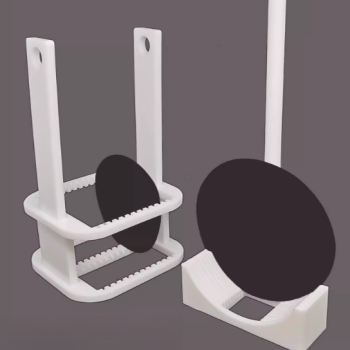
- Customizable PTFE Wafer Carriers for Semiconductor and Lab Applications
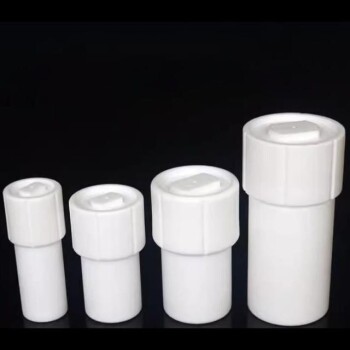
- Custom PTFE Teflon Parts Manufacturer for Microwave Digestion Tank
- Custom PTFE Teflon Parts Manufacturer for Hydrothermal Synthesis Reactor Polytetrafluoroethylene Carbon Paper and Carbon Cloth Nano-growth
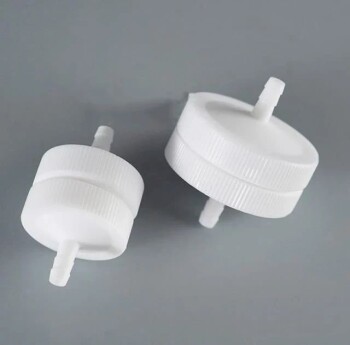
- Custom PTFE Teflon Parts Manufacturer for Sampling Filters
- Custom PTFE Teflon Parts Manufacturer for Culture Dish and Evaporation Dish
People Also Ask
- How is PTFE utilized for insulation in Alloy 22 corrosion setups? Ensure Signal Purity & Accuracy
- What are the specific applications of PTFE in micro-batch slug flow systems? Enhance Your Microfluidic Reaction Purity
- Is PTFE corrosion resistant? Discover the Ultimate Chemical Resistance for Your Lab
- What is the function of a customized PTFE cap in IL-TEM? Bridge the Gap Between Microscopy and Electrochemistry
- Why are PTFE wafer fixtures used after diamond nucleation? Ensure Purity and Protect Fragile Nucleation Layers