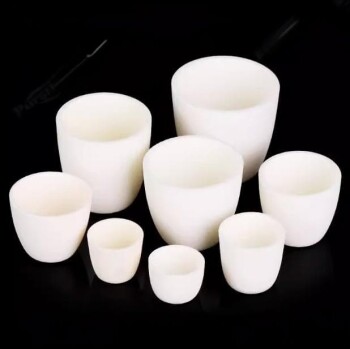
High-purity alumina crucibles are essential for LSTZ calcination because they provide the extreme chemical inertness required to handle reactive lithium precursors at elevated temperatures. Without this specific grade of containment, the crucible material would react with the mixture, introducing impurities and altering the precise chemical composition of the final ceramic powder.
Core Insight: The synthesis of LSTZ ceramics requires maintaining a strict stoichiometric ratio. High-purity alumina acts as a neutral thermal barrier, preventing the vessel itself from becoming a reactant and ensuring the final powder remains chemically pure.
The Critical Role of Chemical Inertness
Preventing Reactions with Precursors
During solid-state synthesis, the lithium salts used as precursors are highly reactive.
A standard crucible might chemically interact with these salts. High-purity alumina effectively resists this interaction, ensuring the vessel does not degrade or leach material into the mixture.
Preserving Stoichiometry
The key to successful LSTZ synthesis is maintaining the exact ratio of elements, known as the stoichiometric ratio.
If the crucible reacts with the precursors, it consumes some of the active ingredients. This loss shifts the chemical balance, leading to a final product that lacks the intended ceramic properties.
Eliminating Impurities
Any reaction between the vessel and the powder introduces foreign elements, or impurities, into the ceramic.
High-purity alumina is selected specifically to avoid this cross-contamination. It ensures the final LSTZ powder consists only of the intended chemical components.
Thermal Durability Requirements
Withstanding High Temperatures
The calcination process for ceramics like LSTZ involves significant heat.
High-purity alumina possesses excellent thermal stability, allowing it to withstand these temperatures without softening or physically degrading. This mechanical integrity is vital for holding reactants safely over prolonged heating cycles.
Barrier Against the Furnace Environment
Beyond holding the sample, the crucible acts as a shield.
It prevents the LSTZ precursors from reacting with the furnace chamber itself. This isolation is critical for keeping the synthesis environment controlled and clean.
Operational Considerations and Trade-offs
Managing Volatilization
While the crucible prevents reactions, it does not automatically stop material from evaporating.
If the sample is known to volatize or evaporate upon heating, the open nature of a standard crucible can lead to mass loss. In these cases, a crucible lid is required to contain the vapor and maintain the sample's mass balance.
The Necessity of High Purity
Not all alumina is created equal.
Standard alumina may contain binders or impurities that can leach out at high temperatures. For sensitive ceramics like LSTZ, investing in high-purity grades is a non-negotiable requirement to guarantee the chemical integrity described above.
Making the Right Choice for Your Goal
To ensure your LSTZ synthesis yields high-performance ceramic powders, consider the following:
- If your primary focus is Chemical Purity: Select a high-purity alumina crucible to prevent diffusion of crucible material into your lithium precursors.
- If your primary focus is Stoichiometric Precision: Ensure the crucible is chemically inert to prevent the loss of active lithium salts to vessel-wall reactions.
- If your primary focus is Mass Retention: Utilize a crucible lid if you suspect your specific precursor mix is prone to volatilization during heating.
By selecting the correct vessel, you transform the crucible from a potential variable into a reliable constant in your synthesis process.
Summary Table:
| Feature | Benefit for LSTZ Calcination |
|---|---|
| High Chemical Inertness | Prevents reactions with reactive lithium precursors and leaching. |
| Stoichiometric Control | Ensures the precise ratio of elements is maintained without loss. |
| Thermal Stability | Withstands extreme temperatures without softening or degrading. |
| Impurity Prevention | Eliminates cross-contamination for high-performance ceramic output. |
| Contained Environment | Protects the furnace chamber and supports mass retention with lids. |
Elevate Your Ceramic Synthesis with KINTEK
Don't let crucible contamination compromise your research results. KINTEK specializes in premium laboratory equipment and consumables designed for the most demanding thermal processes. From high-purity alumina crucibles and ceramics to advanced high-temperature muffle and vacuum furnaces, we provide the tools necessary to maintain strict stoichiometric precision and chemical purity.
Whether you are working on LSTZ ceramic powders or advanced battery research, our comprehensive range—including crushing systems, hydraulic presses, and high-pressure reactors—ensures your lab operates at peak efficiency.
Ready to optimize your calcination process? Contact KINTEK today to find the perfect high-purity solution for your lab!
Related Products
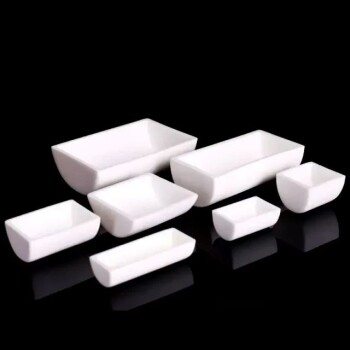
- Arc-Shaped Alumina Ceramic Crucible High Temperature Resistant for Engineering Advanced Fine Ceramics
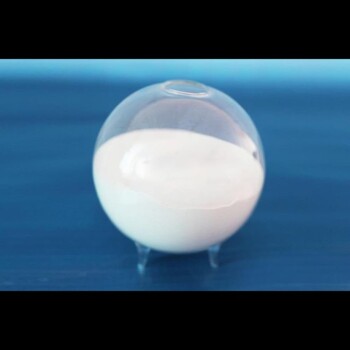
- High Purity Alumina Granulated Powder for Engineering Advanced Fine Ceramics
- High Purity Pure Graphite Crucible for Evaporation
- Engineering Advanced Fine Alumina Al2O3 Ceramic Crucible for Laboratory Muffle Furnace
- High Purity Pure Graphite Crucible for Electron Beam Evaporation
People Also Ask
- Why Use Alumina Crucibles & Powder Burial for NaSICON? Ensure Phase Purity and Prevent Elemental Volatilization
- What is the primary purpose of using alumina crucibles for LLTO ceramics? Optimize Your High-Temperature Sintering
- Why are alumina crucibles and mother powder essential for LATP sintering? Optimize Your Solid Electrolyte Performance
- Why are high-purity alumina crucibles used for liquid lead corrosion experiments? Ensure Data Accuracy at 550°C
- Primary considerations for choosing alumina crucibles and quartz tubes in indium intercalation: Ensure Material Purity