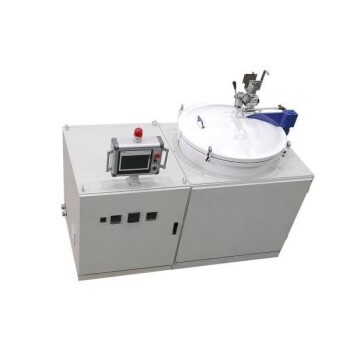
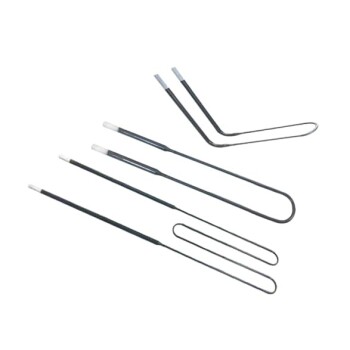
The primary reason for using a high-vacuum graphite heating element furnace is to prevent the oxidation of Cobalt-Chromium (CoCr) substrates while ensuring the clean removal of organic binders. This specific equipment creates an oxygen-free environment essential for maintaining the structural integrity of the metal substrate during the high-temperature sintering of Hydroxyapatite (HAp).
The furnace acts as a dual-purpose control system: it shields the metal substrate from corrosive oxidation and utilizes vacuum pressure to cleanly extract pine oil binders, ensuring the final coating is dense, pure, and securely bonded.
Protecting Substrate Integrity
The most critical challenge in coating Cobalt-Chromium (CoCr) is its sensitivity to oxygen at elevated temperatures.
Preventing Severe Oxidation
At the high temperatures required for sintering, standard atmospheres would cause CoCr to oxidize rapidly. A high-vacuum environment effectively removes oxygen from the chamber.
Preserving Mechanical Properties
By preventing oxidation, the furnace ensures the underlying metal retains its original mechanical strength. This is vital for biomedical implants that must bear significant loads without structural failure.
Managing Organic Binders
Pine oil is used as a vehicle to apply the HAp coating, but it must be completely removed to ensure biocompatibility.
Efficient Decomposition
The vacuum environment lowers the vaporization point of organic components. This forces the pine oil to decompose and evaporate at temperatures lower than standard atmospheric conditions would require.
Eliminating Contaminants
Proper removal of the binder is essential to prevent defects. The vacuum extraction prevents the formation of carbon residues, which could compromise the chemical purity of the HAp layer.
preventing Pore Formation
If pine oil is trapped during sintering, it creates gas pockets that result in porosity. The vacuum continuously draws these gases out, ensuring a dense and uniform coating structure.
Optimizing Coating Microstructure
The quality of the final HAp layer depends heavily on how thermal energy is applied.
Uniform Thermal Field
Graphite heating elements are utilized because they provide an exceptionally uniform thermal field. This prevents hot spots that could cause uneven sintering or cracking in the ceramic coating.
Diffusion Bonding
The consistent heat promotes diffusion bonding. This process encourages atoms to migrate across the interface between the HAp particles and the CoCr substrate, creating a robust mechanical lock.
Densification and Crystallization
High thermal energy triggers the transformation of HAp from an amorphous state to a crystalline phase. This densification increases the coating's stability and ensures the bioactivity required for successful bone integration.
Critical Process Trade-offs
While this furnace type is optimal for HAp coatings, precise control is required to avoid common pitfalls.
Balancing Vacuum and Temperature
If the vacuum level is insufficient, trace oxygen will compromise the CoCr substrate immediately. Conversely, if the temperature ramp is too aggressive, the pine oil may volatilize too explosively, disrupting the coating layer before it sinters.
Graphite Sensitivity
Graphite elements are highly effective but react with oxygen. They can only be used in this vacuum or inert environment; any leak in the system will degrade the heating elements rapidly.
Making the Right Choice for Your Project
The success of your coating depends on prioritizing the right parameters during the sintering cycle.
- If your primary focus is Adhesion Strength: Ensure the vacuum level is maximized to prevent any substrate oxidation layer from forming, as this blocks diffusion bonding.
- If your primary focus is Biocompatibility: Prioritize a slow thermal ramp during the pine oil decomposition phase to ensure zero carbon residue remains in the matrix.
Precise atmospheric control is the difference between a coating that flakes off and one that integrates seamlessly with the human body.
Summary Table:
| Feature | Role in HAp/Pine Oil Sintering | Benefit to Final Product |
|---|---|---|
| High Vacuum | Eliminates oxygen and lowers binder vaporization point | Prevents CoCr oxidation & ensures zero carbon residue |
| Graphite Element | Provides an exceptionally uniform thermal field | Prevents cracking and ensures consistent HAp crystallization |
| Controlled Ramp | Manages the decomposition of pine oil binders | Prevents gas pockets and ensures a dense, pore-free coating |
| Diffusion Bonding | Facilitates atomic migration at the interface | Creates a robust mechanical lock between HAp and substrate |
Elevate Your Biomaterial Research with KINTEK Precision
High-performance coatings require absolute atmospheric control. KINTEK specializes in advanced laboratory equipment designed for the most demanding sintering processes. Whether you are working on medical implants or advanced material science, our high-temperature vacuum and atmosphere furnaces provide the thermal uniformity and vacuum integrity essential for HAp crystallization and substrate protection.
From high-temperature high-pressure reactors to precision crushing and milling systems, KINTEK offers the comprehensive tools you need for superior material density and purity.
Ready to optimize your sintering cycle? Contact our technical experts today to find the perfect furnace solution for your laboratory.
References
- Fernanda Albrecht Vechietti, Luís Alberto dos Santos. Influence of cobalt chromium alloy surface modification on the roughness and wettability behavior of pine oil/hydroxyapatite as coating. DOI: 10.1088/2053-1591/aae8d6
This article is also based on technical information from Kintek Solution Knowledge Base .
Related Products
- 2200 ℃ Graphite Vacuum Heat Treat Furnace
- Ultra-High Temperature Graphite Vacuum Graphitization Furnace
- Vertical High Temperature Graphite Vacuum Graphitization Furnace
- Horizontal High Temperature Graphite Vacuum Graphitization Furnace
- Graphite Vacuum Furnace High Thermal Conductivity Film Graphitization Furnace
People Also Ask
- How does heat transmit in a vacuum? Mastering Thermal Radiation for Purity & Precision
- What is the process of vacuum heat treating? Achieve Superior Hardening with a Clean, Bright Finish
- Why do you heat treat in a vacuum? Achieve Perfect Surface Finish and Material Integrity
- How does a vacuum heat treat furnace work? Achieve Pristine, Oxide-Free Metal Parts
- What is graphite heating? A Guide to Durable, High-Temp Industrial Furnace Solutions