The horizontal tube furnace is the primary tool for biomass carbonization because it provides a strictly controlled, high-temperature environment required for oxygen-free thermal decomposition. By utilizing a sealed reaction tube and a continuous flow of inert gas, the furnace enables the precise conversion of raw biomass into a stable carbon framework while preventing the material from burning into ash.
A horizontal tube furnace allows for the controlled pyrolysis of biomass by maintaining an anaerobic environment and precise heating profiles. This process is essential for removing volatiles and establishing the primary pore structures necessary for high-quality carbon materials.
The Role of Atmospheric Control in Carbonization
Preventing Unwanted Oxidation
Biomass materials will naturally combust and turn into ash if heated in the presence of oxygen. The horizontal tube furnace utilizes a sealed reaction space that allows for the total displacement of oxygen using inert gases like nitrogen or argon. This ensures the material undergoes pyrolysis—a thermochemical decomposition—rather than simple combustion.
Facilitating Devolatilization and Degassing
As the furnace heats the biomass, it effectively removes moisture and volatile organic compounds. This dehydration and degassing process is critical for the decomposition of hemicellulose and the depolymerization of cellulose and lignin. The result is a material with significantly enhanced energy density and increased hydrophobicity.
Heteroatom Integration
The controlled atmosphere within a tube furnace can also be used to introduce specific chemical characteristics. By regulating the gas flow, researchers can facilitate the stable integration of nitrogen and sulfur heteroatoms into the carbon lattice. This allows for the customization of the carbon's chemical surface for specific industrial applications.
Precision Thermal Management
Programmable Heating Rates
The structural integrity of biomass carbon depends heavily on how quickly it is heated. Horizontal tube furnaces allow for precise heating rates (such as 5 °C/min), which prevents the internal stresses that could collapse the emerging carbon skeleton. This controlled ramp-up is vital for maintaining the structural integrity of the carbon framework.
Maintaining Isothermal Residence Times
The furnace provides a stable environment for "holding" the material at specific temperatures, often ranging from 550°C to 800°C. These isothermal residence times ensure thorough carbonization and complete devolatilization. This consistency is what produces a uniform amorphous carbon framework.
Formation of Primary Pore Structures
The thermal treatment within the tube furnace induces the formation of initial micron-scale pore structures. By carefully managing the temperature and duration, the furnace ensures the creation of a primary pore structure in materials like rice husks or walnut shells. This skeletal framework is essential for any subsequent activation steps used to create activated carbon.
Understanding the Trade-offs
Throughput and Scalability
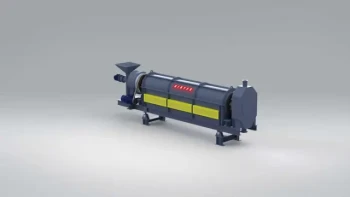
While horizontal tube furnaces offer unmatched precision and control, they are typically designed for smaller batch sizes. This makes them ideal for research, development, and the production of high-purity specialty carbons. However, they may offer lower throughput compared to industrial-scale rotary kilns or batch furnaces.
Maintenance of Sealing Integrity
The success of the carbonization process is entirely dependent on the integrity of the furnace seals. Any leak that introduces oxygen during a high-temperature run will result in sample oxidation and the potential loss of the material. Regular maintenance of the tube ends and gas connections is a non-negotiable requirement for consistent results.
How to Apply This to Your Project
When selecting a horizontal tube furnace for biomass treatment, your choice should align with your specific material goals.
- If your primary focus is maximizing surface area: Prioritize a furnace with highly accurate temperature controllers to maintain the specific isothermal holding times required for primary pore formation.
- If your primary focus is high-purity carbonization: Ensure the system features high-quality vacuum-tight seals and precise mass flow controllers for inert gases like Argon.
- If your primary focus is material structural integrity: Select a furnace with a programmable logic controller (PLC) that allows for very slow and precise heating and cooling ramps.
The horizontal tube furnace remains the definitive standard for converting raw biomass into sophisticated carbon precursors through precise atmospheric and thermal regulation.
Summary Table:
| Feature | Benefit for Biomass Carbonization |
|---|---|
| Anaerobic Environment | Prevents combustion/oxidation, ensuring high carbon yield and preventing ash formation. |
| Precise Heating Rates | Protects the structural integrity of the carbon skeleton and prevents internal stress. |
| Atmosphere Control | Facilitates devolatilization and allows for heteroatom (N, S) integration for customization. |
| Isothermal Stability | Ensures uniform carbonization and the creation of primary micron-scale pore structures. |
| Sealed Reaction Tube | Maintains high-purity conditions necessary for research-grade specialty carbon production. |
Elevate Your Carbon Research with KINTEK Precision
Unlock the full potential of your biomass materials with KINTEK’s advanced horizontal tube furnaces. Designed for researchers who demand absolute control over atmosphere and thermal profiles, our furnaces provide the perfect environment for high-purity carbonization, CVD, and pyrolysis applications.
Beyond our industry-leading high-temperature furnaces (muffle, tube, vacuum, and atmosphere), KINTEK offers a comprehensive ecosystem for material science, including:
- Crushing & Milling Systems for biomass preparation.
- High-Pressure Reactors & Autoclaves for hydrothermal carbonization.
- Pellet Presses & Specialized Ceramics for material characterization.
Ready to optimize your carbon framework? Contact our technical experts today to find the ideal thermal solution for your laboratory’s unique requirements.
References
- Bakhytzhan Lesbayev, Aidos Tolynbekov. Modification of Biomass-Derived Nanoporous Carbon with Nickel Oxide Nanoparticles for Supercapacitor Application. DOI: 10.3390/jcs7010020
This article is also based on technical information from Kintek Solution Knowledge Base .
Related Products
- Graphite Vacuum Furnace Bottom Discharge Graphitization Furnace for Carbon Materials
- Vertical Laboratory Tube Furnace
- Horizontal High Temperature Graphite Vacuum Graphitization Furnace
- Electric Rotary Kiln Small Rotary Furnace Biomass Pyrolysis Plant
- Graphite Vacuum Furnace Negative Material Graphitization Furnace
People Also Ask
- What is the use of graphite furnace? Achieve Extreme-Temperature Processing for Advanced Materials
- What is the disadvantage of graphite furnace? Managing Reactivity and Contamination Risks
- What gas is used in graphite furnace? Maximize Accuracy with the Right Inert Gas
- What are the stages of graphite furnace? A Guide to Precise Multi-Stage Temperature Programming
- What is the graphite furnace technique? Achieve Extreme Temperatures for Advanced Materials