Knowledge Why is a laboratory constant temperature drying oven required to process rice husks? Ensure Composite Quality
Author avatar

Tech Team · Kintek Solution

Updated 3 days ago

Why is a laboratory constant temperature drying oven required to process rice husks? Ensure Composite Quality


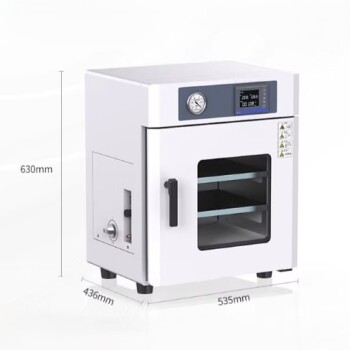
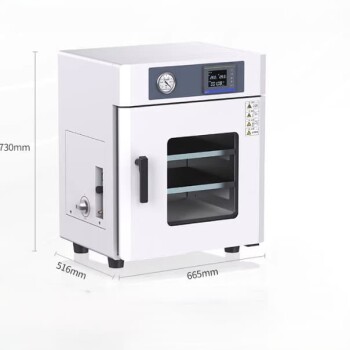
To ensure the structural integrity of rice husk-based composites, a laboratory constant temperature drying oven is mandatory. Following liquid hot water pretreatment, rice husks retain high moisture levels that must be precisely reduced to between 2% and 3%. This strict moisture control is the only way to ensure compatibility with adhesives and prevent catastrophic failure during subsequent manufacturing steps.

The drying phase is not merely about water removal; it is a critical calibration step. By achieving a specific moisture window, you prevent adhesive failure and eliminate the risk of steam-induced "board bursting" during high-temperature pressing.

The Critical Role of Moisture Control

Optimizing Adhesive Performance

The success of composite materials relies heavily on how well the rice husks bond with binders, specifically urea-formaldehyde resin adhesives.

If the husks are too wet, the excess water acts as a solvent, diluting the resin. This prevents the glue from properly wetting the husk surface, resulting in weak chemical bonds and poor adhesion.

Preventing Structural Delamination

The subsequent stage of processing typically involves high-temperature hot pressing. During this phase, any residual moisture trapped deep within the husks will rapidly convert to steam.

If the moisture content exceeds the 2-3% threshold, the internal steam pressure becomes too great for the material to contain. This leads to delamination (separation of layers) or board bursting, rendering the final product unusable.

The Role of Standardization in Analysis

Establishing Dry Matter Baselines

Beyond manufacturing, the constant temperature oven plays a vital role in analytical consistency. It is standard practice to dry samples at 105°C to determine the Dry Matter (DM) content.

This creates a consistent logical starting point for all chemical composition calculations. Whether quantifying cellulose, lignin, or ash, accurate results depend entirely on standardizing the sample to a consistent dry weight.

Understanding the Trade-offs

High Temperature vs. Structural Preservation

While the constant temperature oven is ideal for preparing materials for composite boards or standard chemical analysis, it applies significant thermal stress.

For applications requiring the preservation of microscopic structures, this method has limitations. High temperatures can cause thermal denaturation or secondary oxidation of the lignocellulosic structure.

When to Consider Vacuum Drying

If your goal is deep structural analysis (such as FTIR or XRD) rather than board manufacturing, a vacuum drying oven may be superior.

By lowering the boiling point of water, a vacuum oven allows for drying at much lower temperatures (e.g., 40°C). This preserves the microporous structures and chemically active groups that might otherwise be altered by a standard constant temperature oven.

Making the Right Choice for Your Goal

Select your drying protocol based on the specific end-use of the rice husks:

  • If your primary focus is Composite Board Manufacturing: Adhere strictly to the constant temperature oven method to reach 2-3% moisture, ensuring the resin bonds correctly and the board does not burst.
  • If your primary focus is Chemical Composition Analysis: Use the oven at 105°C to establish an accurate Dry Matter baseline for calculating lignin and cellulose percentages.
  • If your primary focus is Microstructural Research: Pivot to a vacuum drying oven to remove moisture at low temperatures without altering the material's chemical skeleton.

Precision in the drying stage is the single variable that secures the mechanical and chemical integrity of your final material.

Summary Table:

Drying Method Temp Range Primary Application Key Benefit
Constant Temp Oven 105°C Composite Board / DM Analysis Prevents board bursting & delamination
Vacuum Drying Oven ~40°C Microstructural Research Preserves chemical skeleton & micropores
Hot Pressing High Final Forming Solidifies rice husk-adhesive bonds

Elevate Your Biomass Research with KINTEK Precision

Don't let moisture compromise your material integrity. KINTEK specializes in high-performance laboratory equipment designed for rigorous biomass processing and chemical analysis. Whether you are manufacturing rice husk composites or conducting deep structural research, our comprehensive range of laboratory constant temperature ovens, vacuum drying ovens, and high-temperature furnaces ensures your samples reach the exact moisture window required for success.

From high-pressure reactors to precision milling systems and hydraulic presses, KINTEK provides the end-to-end tools needed for advanced material science. Secure the mechanical and chemical integrity of your final product—contact our technical experts today to find the perfect drying solution for your lab.

References

  1. Peng Luo, Yueqi Wang. Effect of liquid hot water pretreatment on selected properties of rice husk and its particleboard. DOI: 10.15376/biores.15.3.6714-6723

This article is also based on technical information from Kintek Solution Knowledge Base .

Related Products

People Also Ask

Related Products

Laboratory Scientific Electric Heating Blast Drying Oven

Laboratory Scientific Electric Heating Blast Drying Oven

The desktop fast autoclave sterilizer is a compact and reliable device used for rapid sterilization of medical, pharmaceutical, and research items.

High Temperature Muffle Oven Furnace for Laboratory Debinding and Pre Sintering

High Temperature Muffle Oven Furnace for Laboratory Debinding and Pre Sintering

KT-MD High temperature debinding and pre-sintering furnace for ceramic materials with various molding processes. Ideal for electronic components such as MLCC and NFC.

1200℃ Muffle Furnace Oven for Laboratory

1200℃ Muffle Furnace Oven for Laboratory

Upgrade your lab with our 1200℃ Muffle Furnace. Achieve fast, precise heating with Japan alumina fibers and Molybdenum coils. Features TFT touch screen controller for easy programming and data analysis. Order now!

Benchtop Laboratory Freeze Dryer for Lab Use

Benchtop Laboratory Freeze Dryer for Lab Use

Premium benchtop laboratory freeze dryer for lyophilization, preserving samples with ≤ -60°C cooling. Ideal for pharmaceuticals & research.

Vertical Laboratory Tube Furnace

Vertical Laboratory Tube Furnace

Elevate your experiments with our Vertical Tube Furnace. Versatile design allows for operation under various environments and heat treatment applications. Order now for precise results!

Dental Porcelain Zirconia Sintering Ceramic Furnace Chairside with Transformer

Dental Porcelain Zirconia Sintering Ceramic Furnace Chairside with Transformer

Experience top-notch sintering with Chairside Sintering Furnace with Transformer. Easy to operate, noise-free pallet, and automatic temperature calibration. Order now!

Vacuum Heat Treat and Pressure Sintering Furnace for High Temperature Applications

Vacuum Heat Treat and Pressure Sintering Furnace for High Temperature Applications

Vacuum pressure sintering furnaces are designed for high temperature hot pressing applications in metal and ceramic sintering. Its advanced features ensure precise temperature control, reliable pressure maintenance, and a robust design for seamless operation.

Shaking Incubators for Diverse Laboratory Applications

Shaking Incubators for Diverse Laboratory Applications

Precision lab shaking incubators for cell culture & research. Quiet, reliable, customizable. Get expert advice today!

Platinum Sheet Electrode for Laboratory and Industrial Applications

Platinum Sheet Electrode for Laboratory and Industrial Applications

Elevate your experiments with our Platinum Sheet Electrode. Crafted with quality materials, our safe and durable models can be tailored to fit your needs.

5L Heating Chilling Circulator Cooling Water Bath Circulator for High and Low Temperature Constant Temperature Reaction

5L Heating Chilling Circulator Cooling Water Bath Circulator for High and Low Temperature Constant Temperature Reaction

KinTek KCBH 5L Heating Chilling Circulator - Ideal for labs and industrial conditions with multi-functional design and reliable performance.

Silicon Carbide SiC Thermal Heating Elements for Electric Furnace

Silicon Carbide SiC Thermal Heating Elements for Electric Furnace

Experience the advantages of Silicon Carbide (SiC) Heating Element: Long service life, high corrosion and oxidation resistance, fast heating speed, and easy maintenance. Learn more now!

Engineering Advanced Fine Ceramics Alumina Crucibles (Al2O3) for Thermal Analysis TGA DTA

Engineering Advanced Fine Ceramics Alumina Crucibles (Al2O3) for Thermal Analysis TGA DTA

TGA/DTA thermal analysis vessels are made of aluminum oxide (corundum or aluminum oxide). It can withstand high temperature and is suitable for analyzing materials that require high temperature testing.

Vibratory Sieve Shaker Machine Dry Three-Dimensional Vibrating Sieve

Vibratory Sieve Shaker Machine Dry Three-Dimensional Vibrating Sieve

The KT-V200 product focuses on solving common sieving tasks in the laboratory. It is suitable for sieving 20g-3kg dry samples.

Custom PTFE Teflon Parts Manufacturer for PTFE Mesh F4 Sieve

Custom PTFE Teflon Parts Manufacturer for PTFE Mesh F4 Sieve

PTFE mesh sieve is a specialized test sieve designed for particle analysis in various industries, featuring a non-metallic mesh woven from PTFE filament. This synthetic mesh is ideal for applications where metal contamination is a concern . PTFE sieves are crucial for maintaining the integrity of samples in sensitive environments, ensuring accurate and reliable results in particle size distribution analysis.

Custom PTFE Teflon Parts Manufacturer for Culture Dish and Evaporation Dish

Custom PTFE Teflon Parts Manufacturer for Culture Dish and Evaporation Dish

The PTFE culture dish evaporating dish is a versatile laboratory tool known for its chemical resistance and high-temperature stability. PTFE, a fluoropolymer, offers exceptional non-stick properties and durability, making it ideal for various applications in research and industry, including filtration, pyrolysis, and membrane technology.

Laboratory manual slicer

Laboratory manual slicer

Manual microtome is a high-precision cutting device designed for laboratories, industry and medical fields. It is suitable for the preparation of thin slices of various materials such as paraffin samples, biological tissues, battery materials, food, etc.

Lab Blown Film Extrusion Three Layer Co-Extrusion Film Blowing Machine

Lab Blown Film Extrusion Three Layer Co-Extrusion Film Blowing Machine

Lab blown film extrusion is mainly used to detect the feasibility of film blowing of polymer materials and the colloid condition in the materials, as well as the dispersion of colored dispersions, controlled mixtures, and extrudates;

Rubber Vulcanizer Vulcanizing Machine Plate Vulcanizing Press for Lab

Rubber Vulcanizer Vulcanizing Machine Plate Vulcanizing Press for Lab

The Plate vulcanizing press is a kind of equipment used in the production of rubber products, mainly used for the vulcanization of rubber products. Vulcanization is a key step in rubber processing.

Laboratory Oscillating Orbital Shaker

Laboratory Oscillating Orbital Shaker

Mixer-OT orbital shaker uses brushless motor, which can run for a long time. It is suitable for vibration tasks of culture dishes, flasks and beakers.

Twin Screw Extruder Plastic Granulation Machine

Twin Screw Extruder Plastic Granulation Machine

Twin screw extruder plastic granulation machine is designed for the mixing and processing experiments of engineering plastics, modified plastics, waste plastics and masterbatches.


Leave Your Message