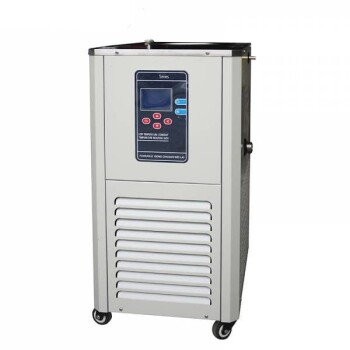
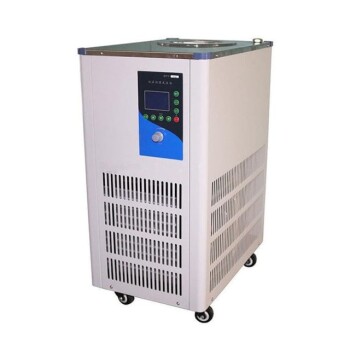
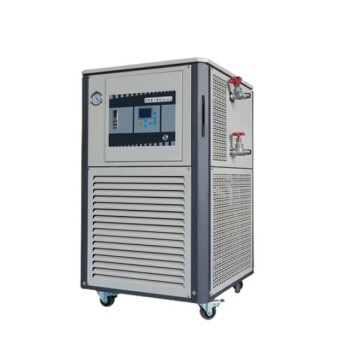
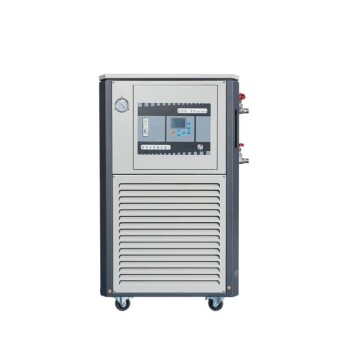
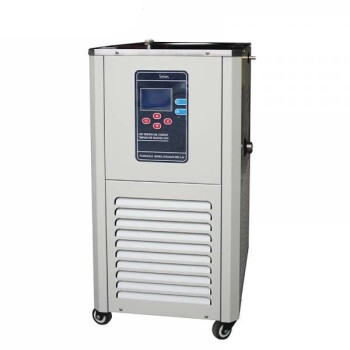
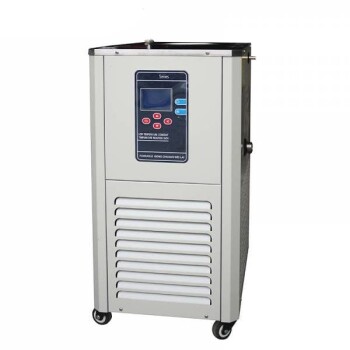
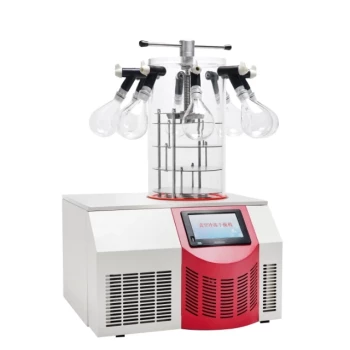
A laboratory thermostatic cooling circulation system is essential because it neutralizes the significant heat generated by ultraviolet (UV) light sources, ensuring the reaction temperature remains constant. Without this precise thermal control, heat-induced degradation interferes with the experiment, making it impossible to isolate the true photocatalytic reaction rate from thermal effects.
Core Takeaway Ultraviolet lamps utilized in photocatalysis generate excess heat that can artificially accelerate chemical breakdown. A thermostatic chiller eliminates this variable, ensuring that kinetic data reflects only the light-driven oxidation process, thereby validating pseudo-first-order kinetic models.
The Challenge: Heat Generation in Photocatalysis
High-Power UV Lamp Emissions
Photocatalytic experiments rely on UV lamps to simulate sunlight or activate catalysts. However, these high-power lamps produce substantial heat as a byproduct during operation.
Unwanted Temperature Spikes
Without intervention, this waste heat transfers directly to the reaction solution. This causes uncontrolled temperature spikes that deviate significantly from intended experimental conditions (e.g., rising well above a target of 15 °C or 25 °C).
Isolating the Photocatalytic Effect
Distinguishing Oxidation from Thermal Degradation
Reaction kinetics are highly sensitive to temperature changes. If the solution heats up, target substances (such as amoxicillin) may degrade simply due to thermal stress rather than the photocatalytic process.
Eliminating Interference
A cooling system circulates a medium through the reactor’s jacket to actively dissipate lamp heat. This guarantees that any observed reduction in pollutant concentration is strictly due to photocatalytic oxidation, effectively removing thermal degradation as a variable.
Validating Mathematical Models
Supporting Pseudo-First-Order Kinetics
Most photocatalytic studies aim to fit data to specific kinetic models, such as pseudo-first-order kinetics. These models rely on the assumption of a constant reaction rate environment.
Ensuring Data Integrity
Because reaction rate constants are temperature-dependent, fluctuating temperatures introduce significant error. Precise thermal control ensures the validity of the kinetic model, allowing for accurate calculation of reaction rates.
Understanding Common Pitfalls
The Risk of Equipment Mismatch
Not all chillers are compatible with every reactor type. If the cooling capacity of the circulation system does not match the heat output of the specific UV lamp used, temperature "creep" can still occur during long experiments.
Circulation Medium Issues
The cooling medium itself must be appropriate for the target temperature. Using water for temperatures near freezing, or failing to insulate the connection tubing, can lead to inefficiencies that compromise the strict temperature stability required for kinetic data.
Ensuring Experimental Success
To ensure your photocatalytic data is publishable and scientifically sound, evaluate your setup based on your specific analytical goals:
- If your primary focus is Kinetic Accuracy: Ensure your chiller has sufficient capacity to counteract the exact wattage of your UV source to maintain a flat temperature profile.
- If your primary focus is Mechanism Elucidation: Use the cooling system to run control tests in the dark at the same temperature, definitively proving that degradation is light-driven, not heat-driven.
By removing heat as an uncontrolled variable, you transform noisy data into a definitive measurement of photocatalytic efficiency.
Summary Table:
| Feature | Impact on Photocatalytic Kinetics |
|---|---|
| Temperature Control | Prevents heat-induced degradation; isolates true photocatalytic rate. |
| UV Heat Neutralization | Offsets high-power lamp emissions to maintain stable conditions. |
| Model Validation | Ensures data integrity for pseudo-first-order kinetic calculations. |
| Experimental Control | Allows dark-control tests at identical temperatures for accuracy. |
| Data Consistency | Removes thermal fluctuations as a variable in reaction rate constants. |
Elevate Your Photocatalytic Research with KINTEK
Precise temperature regulation is the difference between noisy data and publishable kinetic models. KINTEK specializes in high-performance laboratory equipment designed for the rigors of material science and chemical engineering.
Our advanced cooling solutions, including high-stability chillers and circulators, integrate seamlessly with our high-temperature high-pressure reactors and photocatalytic setups. Whether you are optimizing battery research tools, utilizing our precision PTFE products, or conducting complex oxidation studies, KINTEK provides the reliability your lab demands.
Ready to stabilize your experimental environment? Contact us today to find the perfect thermostatic cooling system for your specific UV light source and reactor configuration!
References
- Kristina Miklec, Domagoj Vrsaljko. Photocatalytic Oxidation of Amoxicillin in CPC Reactor over 3D Printed TiO2-CNT@PETG Static Mixers. DOI: 10.3390/coatings13020386
This article is also based on technical information from Kintek Solution Knowledge Base .
Related Products
- 5L Chilling Circulator Cooling Water Bath Circulator for Low Temperature Constant Temperature Reaction Bath
- 100L Chilling Circulator Cooling Water Circulator for Low Temperature Constant Temperature Reaction Bath Water Bath Cooling
- 80L Chilling Circulator Cooling Water Circulator for Water Bath Cooling and Low Temperature Constant Temperature Reaction Bath
- 5L Heating Chilling Circulator Cooling Water Bath Circulator for High and Low Temperature Constant Temperature Reaction
- 100L Heating Chilling Circulator Cooling Water Bath Circulator for High and Low Temperature Constant Temperature Reaction
People Also Ask
- What is the necessity of a circulating water bath in chlorate production? Optimize Yield & Purity with Precision
- Why is a circulating water chiller required for Prussian Blue nanoparticles? Ensure Stability & Batch Reproducibility
- What function does a circulating cooling chiller perform during the gas adsorption isotherm testing of nanoporous carbon?
- How does a constant temperature circulator support the leaching reaction of gold scrap? Optimize Gold Recovery Results
- How do constant temperature circulators impact weight-loss immersion tests? Ensure Precision in Corrosion Analysis