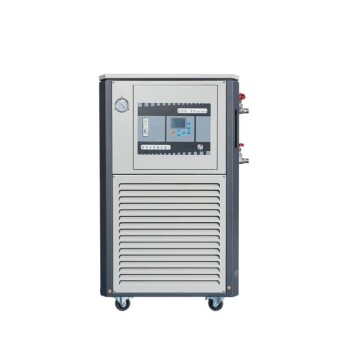
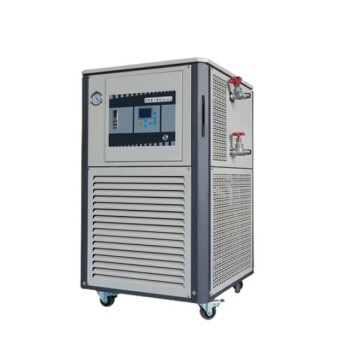
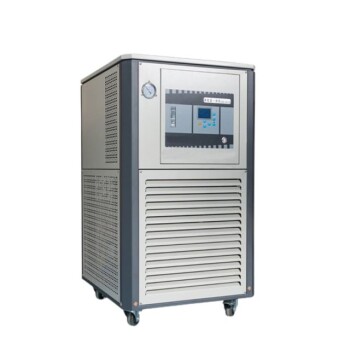
A precision constant temperature heating furnace is the critical control mechanism for the desilication process because the removal of silicon in an alkaline medium is extremely sensitive to thermal fluctuations. By maintaining a stable environment, typically around 65 degrees Celsius, the furnace ensures the reaction proceeds selectively, creating necessary mesopores without destroying the zeolite's underlying framework.
Creating hierarchical zeolites requires a delicate balance between modifying the structure and destroying it. A precision heating furnace guarantees that the desilication process creates a secondary mesopore system to improve diffusion while strictly preserving the microporous integrity and acidic centers essential for catalysis.
The Mechanics of Desilication
Sensitivity to Thermal Conditions
The preparation of hierarchical zeolites relies on treating the framework with an alkaline medium, such as sodium hydroxide (NaOH).
This chemical reaction is not static; it is highly dynamic and extremely sensitive to both temperature and time. Even minor deviations in heat can drastically alter the rate at which silicon is leached from the material.
Introducing Secondary Mesopores
The primary goal of this process is the precise introduction of secondary mesopore systems.
Standard zeolites have tiny micropores. By removing silicon under controlled heat, you create larger channels (mesopores) that significantly improve molecular diffusion efficiency, allowing larger molecules to move in and out of the catalyst more freely.
Why Precision is Non-Negotiable
Preserving Structural Integrity
While creating new pores is necessary, the original structure must not be compromised.
A constant temperature ensures the reaction remains stable enough to maintain the integrity of the microporous structure. Without this control, the aggressive alkaline solution could collapse the entire framework rather than just modifying it.
Protecting Acidic Centers
The utility of a zeolite often depends on the activity of its acidic centers.
If the temperature spikes or fluctuates, the desilication process becomes indiscriminate, potentially stripping away these active sites. Precision heating ensures that while silicon is removed, the catalytic "engine" of the zeolite remains intact.
Consistent Reaction Kinetics
Just as de-alumination processes require fixed temperatures (e.g., 333 K) to control leaching by organic acids, desilication requires similar rigor.
Precise temperature control ensures consistent reaction kinetics. This creates a reproducible environment where the degree of silicon removal can be predicted and replicated across different batches.
Understanding the Trade-offs
The Risk of Thermal Fluctuation
If the furnace fails to maintain a constant temperature, the balance tips immediately.
Excessive heat accelerates silicon removal beyond the desired limit, leading to framework collapse and a loss of crystallinity.
The Cost of Inadequate Heating
Conversely, if the temperature drops below the target (e.g., 65°C), the reaction kinetics slow down significantly.
This results in insufficient mesopore formation, leaving the zeolite with poor diffusion properties and failing to achieve the hierarchical structure required for advanced applications.
Making the Right Choice for Your Goal
To successfully engineer hierarchical zeolites, your heating equipment must align with your specific structural targets.
- If your primary focus is Diffusion Efficiency: Prioritize a furnace with rapid stabilization features to ensure the reaction reaches the target temperature (e.g., 65°C) immediately, maximizing the formation of secondary mesopores.
- If your primary focus is Catalytic Activity: Ensure your heating system has minimal thermal overshoot to prevent aggressive silicon leaching that could damage the acidic centers and microporous framework.
Precision in temperature control is not just an operational detail; it is the defining factor between a collapsed structure and a high-performance hierarchical zeolite.
Summary Table:
| Parameter | Influence on Desilication | Importance of Precision Control |
|---|---|---|
| Temperature Stability | Controls rate of silicon leaching from framework | Prevents framework collapse and loss of crystallinity |
| Mesopore Formation | Facilitates secondary channel creation | Ensures improved molecular diffusion without destroying micropores |
| Acidic Centers | Maintains catalytic active sites | Prevents indiscriminate leaching that strips away catalytic efficiency |
| Reaction Kinetics | Regulates chemical interaction with NaOH | Guarantees consistent, reproducible results across different batches |
Elevate Your Materials Synthesis with KINTEK Precision
Achieving the delicate balance of hierarchical zeolite production requires more than just heat—it requires absolute thermal control. KINTEK specializes in high-performance laboratory equipment designed for the most sensitive chemical processes. Our comprehensive range of high-temperature furnaces (muffle, tube, and vacuum) and high-pressure reactors provides the stability you need to preserve structural integrity while optimizing diffusion efficiency.
From advanced battery research tools to precision crushing and milling systems, KINTEK provides the end-to-end solutions researchers and manufacturers trust. Don't let thermal fluctuations compromise your catalytic activity.
Contact KINTEK today to find the perfect precision heating solution for your lab!
References
- Natalia Kordala, Mirosław Wyszkowski. Zeolite Properties, Methods of Synthesis, and Selected Applications. DOI: 10.3390/molecules29051069
This article is also based on technical information from Kintek Solution Knowledge Base .
Related Products
- Multi Heating Zones CVD Tube Furnace Machine Chemical Vapor Deposition Chamber System Equipment
- High Temperature Constant Temperature Heating Circulator Water Bath Chiller Circulator for Reaction Bath
- 1400℃ Controlled Atmosphere Furnace with Nitrogen and Inert Atmosphere
- 1700℃ Controlled Atmosphere Furnace Nitrogen Inert Atmosphere Furnace
- Vacuum Heat Treat and Pressure Sintering Furnace for High Temperature Applications
People Also Ask
- What are the advantages of a multi-zone tube furnace for Sb2S3? Unlock Superior Semiconductor Thin Film Purity
- What are the advantages of using a Multi-zone Tube Furnace? Enhanced Thermal Uniformity for Diffusion Research
- What is a CVD tube furnace? A Complete Guide to Thin-Film Deposition
- What are the technical advantages of using a CVD tube furnace? Optimize Silicon-Carbon Battery Anodes
- What is the function of a high-temperature CVD tube furnace in 3D graphene foam prep? Master 3D Nanomaterial Growth