Knowledge Why is it necessary to maintain 120°C in dilute sulfuric acid pretreatment? Optimize Biomass Conversion Efficiency
Author avatar

Tech Team · Kintek Solution

Updated 1 day ago

Why is it necessary to maintain 120°C in dilute sulfuric acid pretreatment? Optimize Biomass Conversion Efficiency


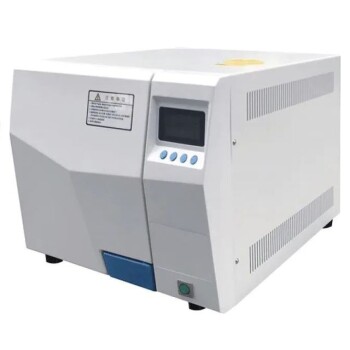
Maintaining a constant temperature of 120°C is mandatory because it provides the specific activation energy required to fundamentally alter the biomass structure. By utilizing a laboratory autoclave or high-temperature oven, you ensure the thermal environment is stable enough to drive the reaction between the dilute sulfuric acid and the lignocellulose material.

Core Takeaway: The precise 120°C environment acts as a catalyst that amplifies the chemical power of the acid, disrupting the crystalline structure of the biomass to maximize the release of fermentable sugars.

The Role of Thermal Energy in Pretreatment

Overcoming Structural Resistance

Lignocellulose possesses a complex, rigid crystalline structure that is naturally resistant to breakdown.

At ambient temperatures, dilute acid alone cannot effectively penetrate this structure. The steady application of 120°C provides the necessary activation energy to destabilize these crystalline bonds.

The Synergy of Heat and Chemistry

This process relies on the interaction between high thermal energy and chemical acidity.

The heat accelerates the kinetics of the dilute sulfuric acid. This synergy allows the acid to act far more aggressively than it would under milder conditions.

Chemical Outcomes of the Process

Hydrolysis of Hemicellulose

The primary chemical goal of this environment is the hydrolysis of hemicellulose.

Under constant heat, the acid cleaves the polymer chains of hemicellulose. This breakdown is the first step in unlocking the energy potential of the biomass.

Exposure of Cellulose

As hemicellulose is hydrolyzed, the protective matrix surrounding the cellulose is removed.

This results in the exposure of cellulose, making it accessible for further processing or enzymatic attack.

Conversion to Monosaccharides

The ultimate output of maintaining this specific temperature is the production of usable fuel precursors.

The process effectively converts complex carbohydrates into fermentable monosaccharides, specifically glucose.

Critical Trade-offs and Equipment Needs

Requirement for Precision Equipment

You cannot achieve this result with fluctuating heat sources.

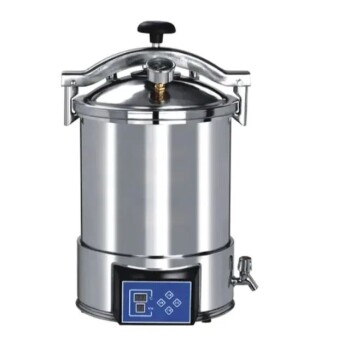
To maintain the strict 120°C requirement, you must use a laboratory autoclave or a specialized high-temperature oven. These devices prevent temperature dips that would stall the hydrolysis reaction.

Risks of Thermal Instability

If the temperature drops below the target, the activation energy threshold is not met, and the crystalline structure remains intact.

Conversely, while not explicitly detailed in the primary text, uncontrolled heating spikes often risk degrading the very sugars you are trying to produce. Stability is key.

Making the Right Choice for Your Goal

To maximize the efficacy of your dilute sulfuric acid pretreatment, ensure your thermal inputs are aligned with your desired outcomes:

  • If your primary focus is maximizing sugar yield: Ensure your equipment can hold a non-fluctuating 120°C to fully drive the hydrolysis of hemicellulose into glucose.
  • If your primary focus is process reproducibility: Use a calibrated autoclave to guarantee that the activation energy supplied is identical across every batch.

Precision in temperature control is the difference between simple acid exposure and effective chemical conversion.

Summary Table:

Parameter Requirement Role in Pretreatment
Temperature Constant 120°C Provides activation energy to disrupt crystalline biomass
Chemical Agent Dilute Sulfuric Acid Catalyzes the hydrolysis of hemicellulose chains
Equipment Autoclave / High-Temp Oven Ensures thermal stability and reaction reproducibility
Key Outcome Monosaccharide Production Converts complex carbohydrates into fermentable glucose

Maximize Your Research Precision with KINTEK

Achieving consistent 120°C thermal environments requires reliable laboratory equipment designed for high-pressure and high-temperature accuracy. At KINTEK, we specialize in providing researchers with the high-performance tools needed for complex chemical conversions, including:

  • High-Temperature High-Pressure Reactors & Autoclaves for precise biomass pretreatment.
  • Muffle & Tube Furnaces for advanced thermal processing.
  • Crushing & Milling Systems for biomass preparation.
  • Essential Consumables, including ceramics and PTFE products for acid-resistant applications.

Whether you are focusing on maximizing sugar yields or ensuring process reproducibility, KINTEK offers the technical expertise and robust equipment to support your laboratory's success. Contact us today to find the perfect thermal solution for your lab!

References

  1. Abdurrahman Abubakar, Adamu MUHAMMED. Dilute Sulphuric Acid Pre-treatment for Efficient Production of Bioethanol from Sugarcane Bagasse using Saccharomyces cerevisiae. DOI: 10.36108/jbt/2202.10.0150

This article is also based on technical information from Kintek Solution Knowledge Base .

Related Products

People Also Ask

Related Products

1700℃ Muffle Oven Furnace for Laboratory

1700℃ Muffle Oven Furnace for Laboratory

Get superior heat control with our 1700℃ Muffle Furnace. Equipped with intelligent temperature microprocessor, TFT touch screen controller & advanced insulation materials for precise heating up to 1700C. Order now!

1400℃ Muffle Oven Furnace for Laboratory

1400℃ Muffle Oven Furnace for Laboratory

Get precise high-temperature control up to 1500℃ with KT-14M Muffle furnace. Equipped with a smart touch screen controller and advanced insulation materials.

1800℃ Muffle Oven Furnace for Laboratory

1800℃ Muffle Oven Furnace for Laboratory

KT-18 muffle furnace with Japan Al2O3 polycrystalline fibe and Silicon Molybdenum heating element, up to 1900℃, PID temperature control and 7" smart touch screen. Compact design, low heat loss, and high energy efficiency. Safety interlock system and versatile functions.

1400℃ Laboratory High Temperature Tube Furnace with Alumina Tube

1400℃ Laboratory High Temperature Tube Furnace with Alumina Tube

Looking for a tube furnace for high-temperature applications? Our 1400℃ Tube Furnace with Alumina Tube is perfect for research and industrial use.

Laboratory Muffle Oven Furnace Bottom Lifting Muffle Furnace

Laboratory Muffle Oven Furnace Bottom Lifting Muffle Furnace

Efficiently produce batches with excellent temperature uniformity using our Bottom Lifting Furnace. Features two electric lifting stages and advanced temperature control up to 1600℃.

High Pressure Laboratory Vacuum Tube Furnace Quartz Tubular Furnace

High Pressure Laboratory Vacuum Tube Furnace Quartz Tubular Furnace

KT-PTF High Pressure Tube Furnace: Compact split tube furnace with strong positive pressure resistance. Working temp up to 1100°C and pressure up to 15Mpa. Also works under controller atmosphere or high vacuum.

1700℃ Laboratory High Temperature Tube Furnace with Alumina Tube

1700℃ Laboratory High Temperature Tube Furnace with Alumina Tube

Looking for a high-temperature tube furnace? Check out our 1700℃ Tube Furnace with Alumina Tube. Perfect for research and industrial applications up to 1700C.

Horizontal High Temperature Graphite Vacuum Graphitization Furnace

Horizontal High Temperature Graphite Vacuum Graphitization Furnace

Horizontal Graphitization Furnace: This type of furnace is designed with the heating elements placed horizontally, allowing for uniform heating of the sample. It's well-suited for graphitizing large or bulky samples that require precise temperature control and uniformity.

Laboratory Rapid Thermal Processing (RTP) Quartz Tube Furnace

Laboratory Rapid Thermal Processing (RTP) Quartz Tube Furnace

Get lightning-fast heating with our RTP Rapid Heating Tube Furnace. Designed for precise, high-speed heating and cooling with convenient sliding rail and TFT touch screen controller. Order now for ideal thermal processing!

1200℃ Split Tube Furnace with Quartz Tube Laboratory Tubular Furnace

1200℃ Split Tube Furnace with Quartz Tube Laboratory Tubular Furnace

KT-TF12 split tube furnace: high-purity insulation, embedded heating wire coils, and max. 1200C. Widely used for new materials and chemical vapour deposition.

Vertical High Temperature Graphite Vacuum Graphitization Furnace

Vertical High Temperature Graphite Vacuum Graphitization Furnace

Vertical high temperature graphitization furnace for carbonization and graphitization of carbon materials up to 3100℃.Suitable for shaped graphitization of carbon fiber filaments and other materials sintered in a carbon environment.Applications in metallurgy, electronics, and aerospace for producing high-quality graphite products like electrodes and crucibles.

Multi-zone Laboratory Tube Furnace

Multi-zone Laboratory Tube Furnace

Experience precise, efficient thermal testing with our Multi Zone Tube Furnace. Independent heating zones and temperature sensors allow for controlled high-temperature gradient heating fields. Order now for advanced thermal analysis!

Ultra-High Temperature Graphite Vacuum Graphitization Furnace

Ultra-High Temperature Graphite Vacuum Graphitization Furnace

The ultra-high temperature graphitization furnace utilizes medium frequency induction heating in a vacuum or inert gas environment. The induction coil generates an alternating magnetic field, inducing eddy currents in the graphite crucible, which heats up and radiates heat to the workpiece, bringing it to the desired temperature. This furnace is primarily used for graphitization and sintering of carbon materials, carbon fiber materials, and other composite materials.

Molybdenum Vacuum Heat Treat Furnace

Molybdenum Vacuum Heat Treat Furnace

Discover the benefits of a high-configuration molybdenum vacuum furnace with heat shield insulation. Ideal for high-purity, vacuum environments like sapphire crystal growth and heat treatment.

Vacuum Heat Treat and Molybdenum Wire Sintering Furnace for Vacuum Sintering

Vacuum Heat Treat and Molybdenum Wire Sintering Furnace for Vacuum Sintering

A vacuum molybdenum wire sintering furnace is a vertical or bedroom structure, which is suitable for withdrawal, brazing, sintering and degassing of metal materials under high vacuum and high temperature conditions. It is also suitable for dehydroxylation treatment of quartz materials.

1700℃ Controlled Atmosphere Furnace Nitrogen Inert Atmosphere Furnace

1700℃ Controlled Atmosphere Furnace Nitrogen Inert Atmosphere Furnace

KT-17A Controlled atmosphere furnace: 1700℃ heating, vacuum sealing technology, PID temperature control, and versatile TFT smart touch screen controller for laboratory and industrial use.

Laboratory Vacuum Tilt Rotary Tube Furnace Rotating Tube Furnace

Laboratory Vacuum Tilt Rotary Tube Furnace Rotating Tube Furnace

Discover the versatility of Laboratory Rotary Furnace: Ideal for calcination, drying, sintering, and high-temperature reactions. Adjustable rotating and tilting functions for optimal heating. Suitable for vacuum and controlled atmosphere environments. Learn more now!

600T Vacuum Induction Hot Press Furnace for Heat Treat and Sintering

600T Vacuum Induction Hot Press Furnace for Heat Treat and Sintering

Discover the 600T Vacuum Induction Hot Press Furnace, designed for high-temperature sintering experiments in vacuum or protected atmospheres. Its precise temperature and pressure control, adjustable working pressure, and advanced safety features make it ideal for nonmetal materials, carbon composites, ceramics, and metal powders.

Vacuum Dental Porcelain Sintering Furnace

Vacuum Dental Porcelain Sintering Furnace

Get precise and reliable results with KinTek's Vacuum Porcelain Furnace. Suitable for all porcelain powders, it features hyperbolic ceramic furnace function, voice prompt, and automatic temperature calibration.

Vacuum Heat Treat and Sintering Furnace with 9MPa Air Pressure

Vacuum Heat Treat and Sintering Furnace with 9MPa Air Pressure

The air pressure sintering furnace is a high-tech equipment commonly used for the sintering of advanced ceramic materials. It combines vacuum sintering and pressure sintering techniques to achieve high-density and high-strength ceramics.


Leave Your Message