Achieving the crystalline perfection required for 2D materials begins long before the furnace reaches growth temperatures. Long-duration purging with high-purity argon is essential to exhaustively remove residual oxygen, water vapor, and volatile impurities from the tube environment. This process establishes an ultra-clean, inert atmosphere that prevents parasitic side reactions, unintended oxidation of metal precursors, and potential safety hazards during the high-temperature synthesis phase.
Creating a pristine, oxygen-free environment is not merely a preparation step; it is a fundamental requirement for controlling the chemical vapor deposition (CVD) process. Without a thorough purge, trace contaminants will degrade the morphology, purity, and electronic properties of the resulting 2D crystals.
The Critical Role of an Inert Atmosphere
Eliminating Reactive Contaminants
Atmospheric oxygen and moisture are the primary enemies of 2D material synthesis. Even trace amounts of oxygen can trigger unintended side reactions, leading to the formation of oxides instead of the desired pure 2D layers.
Protecting Active Metal Intermediates
Many 2D material growth processes involve active metal intermediates that are highly sensitive to their environment. A high-purity argon purge ensures these intermediates remain stable and react only with intended precursors rather than environmental contaminants.
Ensuring Chemical Stability
High-purity argon acts as a protective shield for sensitive components within the furnace, such as copper foils or graphite substrates. This prevents oxidative loss or structural degradation of the materials that provide the foundation for crystal growth.
Impact on Material Quality and Morphology
Promoting Regular Morphology
The presence of moisture or volatile impurities can disrupt the nucleation process, leading to irregular crystal shapes. An ultra-clean environment is necessary to obtain large-area 2D crystals with the regular, symmetric morphology required for high-end applications.
Maintaining High Purity
Residual air can introduce nitrogen or other elements into the carbon or chalcogenide framework, resulting in unintentional doping. Long-duration purging ensures that the final product's chemical composition is determined solely by the introduced precursor gases.
Facilitating Vertical Growth
For specific structures like vertical graphene, a pure deposition environment is vital to prevent impurity interference. Argon displacement ensures that the growth site remains free of debris that would otherwise inhibit the desired orientation.
Safety and Process Stability
Mitigating Explosion Risks
Many 2D growth experiments involve the introduction of hydrogen-nitrogen or pure hydrogen mixtures as reducing agents. Purging with argon is a critical safety protocol that eliminates oxygen, thereby removing the risk of combustion or explosion when flammable gases meet high temperatures.
Establishing Accurate Partial Pressures
The accuracy of the experiment depends on maintaining a specific partial pressure of the reactant gases. By completely displacing air with argon, researchers can ensure that the gas ratios inside the tube precisely match their experimental designs.
Understanding the Trade-offs
Time vs. Throughput
Extending the purge duration increases the total cycle time of an experiment, which may reduce daily throughput in a high-volume lab. However, the cost of a failed run due to contamination far outweighs the time spent ensuring a pristine starting environment.
Gas Consumption Costs
High-purity argon (99.999% or higher) and high flow rates (500-800 sccm) represent a significant operational expense. While lower-purity gases are cheaper, they introduce cumulative impurities that can compromise the electronic quality of sensitive 2D materials.
System Leakage Risks
A long purge can sometimes mask small leaks in the vacuum system by temporarily diluting incoming air. It is vital to perform leak testing in conjunction with purging to ensure the system is truly airtight, rather than relying solely on the volume of argon to displace leaks.
How to Apply This to Your Growth Protocol
Optimizing Your Experimental Setup
To ensure the highest quality 2D material synthesis, tailor your purging strategy to the specific sensitivities of your precursors and substrates.
- If your primary focus is crystal morphology and size: Use high flow rates (700-800 sccm) for at least 20-30 minutes to ensure every pocket of the furnace tube is cleared of volatile contaminants.
- If your primary focus is safety with reducing gases: Ensure the purge duration is sufficient to replace the tube volume at least 5-10 times before introducing hydrogen.
- If your primary focus is electronic grade purity: Invest in ultra-high purity (UHP) argon and consider integrated gas purifiers to remove any remaining parts-per-billion (ppb) levels of oxygen or water.
By treating the argon purge as a foundational stage of synthesis, you secure the chemical control necessary to produce world-class 2D materials.
Summary Table:
| Objective | Impact on 2D Material Growth | Operational Value |
|---|---|---|
| Oxygen Removal | Prevents unintended oxidation of metal precursors | Ensures chemical stability |
| Moisture Control | Promotes regular morphology and large-area crystals | Prevents nucleation disruption |
| Inert Atmosphere | Eliminates unintentional doping (e.g., from Nitrogen) | Guarantees electronic-grade purity |
| Safety Protocol | Flushes air before introducing flammable $H_2$ | Mitigates explosion risks |
| Pressure Control | Establishes accurate partial pressures of reactants | Improves experimental repeatability |
Elevate Your 2D Material Research with KINTEK
Achieving crystalline perfection starts with a pristine environment. KINTEK provides the advanced laboratory equipment necessary to master the complexities of CVD and 2D material synthesis. Our comprehensive range of high-temperature furnaces (CVD, PECVD, vacuum, and atmosphere) is engineered for precise atmosphere control and exceptional thermal uniformity.
Beyond furnaces, we support your entire workflow with high-pressure reactors, electrolytic cells, battery research tools, and essential consumables like high-purity ceramics and crucibles. Whether you are scaling up production or refining atomic-layer growth, KINTEK offers the reliability and technical expertise you need to succeed.
Ready to optimize your growth protocol? Contact KINTEK today to discover how our specialized equipment can enhance your lab's precision and safety.
References
- Biao Qin, Xidong Duan. General low-temperature growth of two-dimensional nanosheets from layered and nonlayered materials. DOI: 10.1038/s41467-023-35983-6
This article is also based on technical information from Kintek Solution Knowledge Base .
Related Products
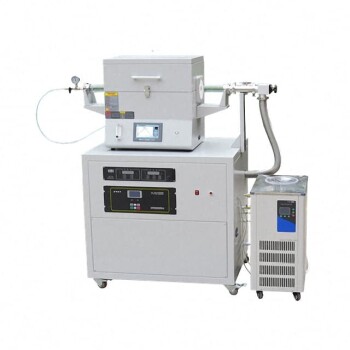
- Customer Made Versatile CVD Tube Furnace Chemical Vapor Deposition Chamber System Equipment
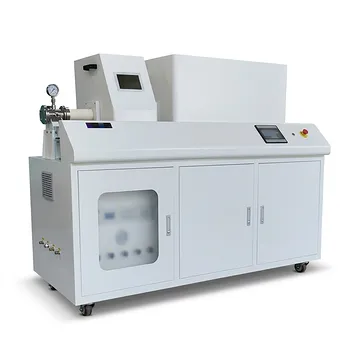
- Multi Heating Zones CVD Tube Furnace Machine Chemical Vapor Deposition Chamber System Equipment
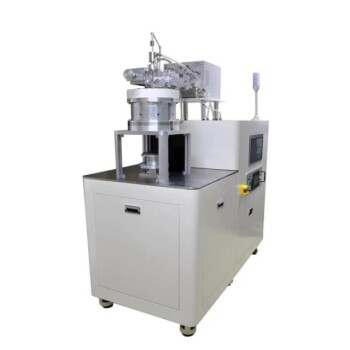
- Split Chamber CVD Tube Furnace with Vacuum Station Chemical Vapor Deposition System Equipment Machine
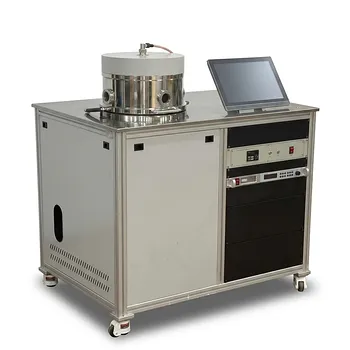
- Chemical Vapor Deposition CVD Equipment System Chamber Slide PECVD Tube Furnace with Liquid Gasifier PECVD Machine
- Vertical Laboratory Tube Furnace
People Also Ask
- What is a CVD tube furnace? A Complete Guide to Thin-Film Deposition
- What is the function of a high-temperature CVD tube furnace in 3D graphene foam prep? Master 3D Nanomaterial Growth
- What are the technical advantages of using a CVD tube furnace? Optimize Silicon-Carbon Battery Anodes
- How does a CVD tube furnace inhibit the sintering of silver supports? Boost Membrane Durability and Performance
- What is the function of a tube furnace in CVD SiC synthesis? Achieving Ultra-Pure Silicon Carbide Powders