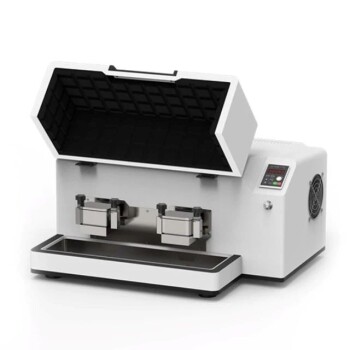
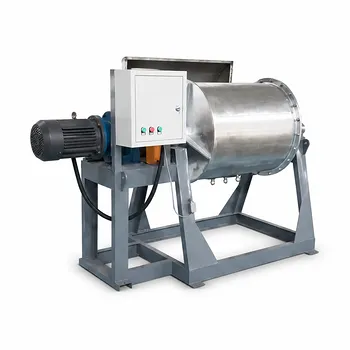
Mechanochemical synthesis equipment represents a paradigm shift in the manufacturing of single-atom catalysts (SACs) by replacing complex wet chemistry with high-energy physical processing. It is considered essential for large-scale production because it utilizes mechanical impact to achieve a "deep fusion" of metal components and supports in a completely solvent-free environment, effectively eliminating the handling and scalability bottlenecks associated with traditional liquid solvents.
Core Takeaway By utilizing a precursor dilution strategy and mechanical force, this technology bypasses the limitations of solvent-based chemistry and high-temperature sintering. It enables the scalable production of highly stable, high-loading catalytic materials without compromising structural integrity.
Solving the Scalability Crisis
Eliminating Solvent Dependency
The primary barrier to mass-producing single-atom catalysts has traditionally been the reliance on wet chemical synthesis.
High-energy ball milling systems operate under solvent-free conditions. This removes the complex logistics of handling large volumes of chemical solvents, making the transition from lab-scale to industrial-scale production significantly more viable.
The Precursor Dilution Strategy
To ensure uniformity without a liquid medium, these systems utilize a specific precursor dilution strategy.
This method facilitates the deep fusion of metal components into the support matrix. The result is a consistent distribution of single atoms, which is critical for catalytic performance but difficult to achieve in bulk solids without high-energy intervention.
Mechanisms of Enhancement
Mechanical Energy Transfer
High-energy ball mills utilize mechanical collision and shear forces to transfer energy directly to solid reactants.
This direct energy transfer is more efficient for solid-phase reactions than indirect heating. It drives the chemical transformation necessary to stabilize single metal atoms on a support structure.
Refining Material Structure
Beyond simple mixing, the mechanical impact refines the particle size of the support materials.
This process increases the specific surface area and induces lattice defects. These defects often serve as anchoring sites for metal atoms, preventing them from aggregating and ensuring high metal loading capacities.
Modulating Electronic Properties
For specific applications like photocatalysis, the energy provided by these mills allows for precise modifications such as ion doping.
This can narrow the bandgap of materials like titanium oxide or zinc oxide, significantly enhancing their response to visible light and improving overall catalytic efficiency.
Operational Considerations and Trade-offs
Managing Thermal Sensitivity
A critical advantage of mechanochemistry is its ability to induce reactions at temperatures far lower than traditional furnaces.
Conventional solid-state sintering often requires high heat, which can destroy heat-sensitive structures. For example, certain low-dimensional materials may suffer structural collapse or melting near 300 K.
The "Cold" Synthesis Advantage
High-energy ball milling circumvents this by utilizing mechanical force rather than thermal energy to drive the reaction.
This prevents the thermal destruction of sensitive superionic conductor structures. However, operators must balance the intensity of mechanical force to avoid physically degrading the material while ensuring enough energy is transferred to initiate the reaction.
Making the Right Choice for Your Goal
When evaluating mechanochemical synthesis for your production line, consider your specific material requirements:
- If your primary focus is Industrial Scalability: This method is superior due to its solvent-free operation, which eliminates complex fluid handling and waste disposal issues associated with wet chemistry.
- If your primary focus is Material Stability: Use this technology to process heat-sensitive precursors, as it induces chemical bonding without the destructive high temperatures of traditional sintering.
- If your primary focus is Catalytic Performance: Rely on the high-energy impact to create lattice defects and high surface areas, which facilitate higher metal loading and improved reactivity.
Ultimately, mechanochemical synthesis transforms the production of single-atom catalysts from a delicate laboratory procedure into a robust, scalable industrial process.
Summary Table:
| Feature | Traditional Wet Chemistry | Mechanochemical Synthesis |
|---|---|---|
| Solvent Use | High volume (waste issues) | Solvent-free (eco-friendly) |
| Scalability | Complex (fluid handling) | Simple (continuous processing) |
| Energy Source | Thermal/Heat | Mechanical collision/Shear |
| Temperature | Often high-temp sintering | "Cold" synthesis (low temp) |
| Catalyst Loading | Limited by solubility | High loading via lattice defects |
| Material Integrity | Risk of thermal collapse | Preserves heat-sensitive structures |
Elevate Your Material Innovation with KINTEK
Ready to transition from laboratory research to industrial-scale catalyst production? KINTEK specializes in advanced laboratory equipment designed for precision and durability. Our high-energy crushing and milling systems, alongside our robust hydraulic presses and high-temperature furnaces, provide the mechanical force and environmental control necessary to master mechanochemical synthesis.
Whether you are developing single-atom catalysts, battery materials, or advanced ceramics, our comprehensive portfolio—including high-energy ball mills, planetary mixers, and specialized crucibles—is engineered to help you achieve deep fusion and high-loading stability without the complexity of solvents.
Maximize your lab's potential today. Contact our technical experts to find the perfect milling solution for your application.
References
- Mario Pagliaro, Rosaria Ciriminna. Continuous Flow Single‐Atom Catalysis: A Viable Organic Process Technology?**. DOI: 10.1002/cctc.202200768
This article is also based on technical information from Kintek Solution Knowledge Base .
Related Products
- High-Energy Omnidirectional Planetary Ball Mill Milling Machine for Laboratory
- High Energy Planetary Ball Mill Milling Machine for Laboratory
- High Energy Planetary Ball Mill Milling Machine for Laboratory
- High Energy Planetary Ball Mill for Laboratory Horizontal Tank Type Milling Machine
- High-Energy Omnidirectional Planetary Ball Mill Machine for Laboratory
People Also Ask
- How does a planetary ball mill solve mixing challenges with PEO? Unlock solid-state synthesis for insoluble dopants
- What is the role of a planetary ball mill in preparing doped high-nickel cathode materials? Enhance Battery Stability
- Why is a planetary ball mill used for LNMO precursor powders? Optimize Particle Uniformity & Battery Performance
- What is the function of a planetary ball mill in the solid-state synthesis of LiTa2PO8? Achieve High-Purity Electrolytes
- What is the critical role of a planetary ball mill in the processing of inorganic fillers? Enhance Battery Performance