Precise temperature control is the fundamental safeguard against material failure. In the context of MXene-containing composites, the margin for error is non-existent because MXenes are chemically unstable at elevated temperatures. Strict thermal regulation is required to facilitate the crystallization of secondary components—such as metal sulfides—without triggering the rapid oxidation that strips the MXene of its defining metallic conductivity and structural utility.
The success of heat-treating MXene composites relies on a narrow thermal window: the temperature must be high enough to improve the crystallinity of functional additives, yet low enough to prevent the catastrophic oxidation that destroys the MXene’s electronic properties.
The Chemistry of Thermal Degradation
The Susceptibility of MXenes
MXenes are distinct nanomaterials prized for their metallic conductivity and unique 2D structure. However, the primary reference highlights that they are highly susceptible to oxidation when exposed to high heat.
Unlike standard ceramics, MXenes cannot withstand unchecked thermal escalation. If the temperature exceeds specific limits, the material begins to degrade chemically.
The Consequence of Oxidation
When oxidation occurs due to excessive heat, the MXene undergoes a phase transformation. It loses its metallic nature and converts into metal oxides.
This transformation is irreversible. Once the MXene turns into an oxide, the composite loses the high conductivity and structural benefits that likely drove the material selection in the first place.
The Competing Thermal Goals
The Drive for Crystallinity
You are likely using a calcination furnace to improve the properties of other components within the composite, such as metal sulfides.
To maximize the performance of these sulfides, thermal treatment is necessary to improve their crystallinity. Generally, higher temperatures yield better crystallinity, which enhances the specific functional properties of the sulfide phase.
The Thermal Ceiling
This creates a critical conflict. You need heat to process the metal sulfides, but that same heat endangers the MXene support.
Therefore, the furnace must operate under "mild temperatures." The controls must be precise enough to hit the lower bound required for sulfide crystallization without drifting into the upper bound where MXene oxidation accelerates.
Understanding the Trade-offs
Atmosphere vs. Temperature
While temperature is the primary variable, the atmosphere is the secondary control that dictates the "safe zone."
The primary reference notes that treatment must often occur within a protective atmosphere. If you cannot achieve strictly mild temperatures due to the processing needs of the other composite materials, you must compensate by removing oxygen from the equation to prevent functional degradation.
Uniformity Prevents Localized Failure
Drawing from broader heat treatment principles (referenced in the supplementary data), uniformity is as important as the target setpoint.
If a furnace lacks precise circulation or distribution, "hot spots" can develop. In an MXene composite, a localized temperature spike will cause heterogeneous oxidation, meaning parts of your batch will degrade into metal oxides while others remain pristine, leading to unpredictable bulk performance.
Making the Right Choice for Your Goal
To ensure your calcination process yields a viable composite, you must align your thermal strategy with your specific material hierarchy.
- If your primary focus is Electrical Conductivity: Prioritize lower temperatures and a strictly inert atmosphere to preserve the metallic nature of the MXene layer above all else.
- If your primary focus is Mechanical/Chemical Stability of Sulfides: Push the temperature to the upper limit of the MXene's tolerance threshold to maximize crystallinity, but invest in high-precision furnace controls to prevent overshooting.
Precise thermal management turns the conflicting requirements of composite materials into a balanced, high-performance reality.
Summary Table:
| Factor | Requirement | Impact of Poor Control |
|---|---|---|
| MXene Stability | Mild Temperatures | Irreversible oxidation into metal oxides |
| Crystallinity | Optimal Thermal Window | Poor performance of metal sulfide phases |
| Atmosphere | Protective/Inert | Rapid degradation of metallic conductivity |
| Uniformity | No Hot Spots | Heterogeneous failure and batch inconsistency |
Elevate Your MXene Research with KINTEK Precision
Don't let thermal overshoot compromise your material innovation. KINTEK specializes in advanced laboratory solutions designed for the most delicate heat treatment processes. Our high-precision calcination, muffle, and vacuum furnaces provide the exact temperature uniformity and atmosphere control required to enhance crystallinity while protecting your MXene structures from oxidation.
From high-temperature furnaces and CVD/PECVD systems to specialized PTFE products and ceramics, KINTEK provides the comprehensive toolset needed for cutting-edge material science.
Ready to achieve the perfect thermal balance? Contact our technical experts today to find the ideal equipment for your laboratory.
References
- Asieh Akhoondi, Panneerselvam Sathishkumar. Recent advances in hydrogen production using MXenes-based metal sulfide photocatalysts. DOI: 10.53063/synsint.2022.21106
This article is also based on technical information from Kintek Solution Knowledge Base .
Related Products
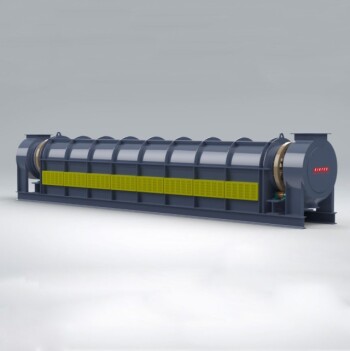
- Electric Rotary Kiln Pyrolysis Furnace Plant Machine Calciner Small Rotary Kiln Rotating Furnace
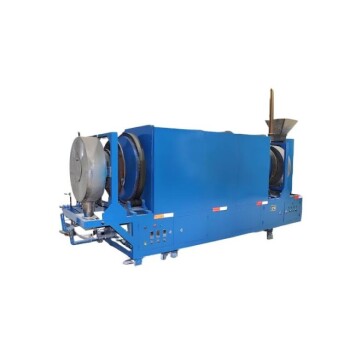
- Electric Rotary Kiln Continuous Working Small Rotary Furnace Heating Pyrolysis Plant
- Non Consumable Vacuum Arc Induction Melting Furnace
- Vertical High Temperature Graphite Vacuum Graphitization Furnace
- Ultra-High Temperature Graphite Vacuum Graphitization Furnace
People Also Ask
- What is a rotary kiln electric furnace? Achieve Superior Uniform Heating for Your Materials
- What are the characteristics of the slipping, slumping, and rolling modes of bed motion? Optimize Your Rotary Process
- What are the advantages of rotary kiln furnace? Achieve Superior Uniformity & Efficiency
- What is the temperature of a rotating kiln? It Depends on Your Material and Process Goal
- What are the principles of a rotary kiln? Master the Mechanics of High-Temperature Processing