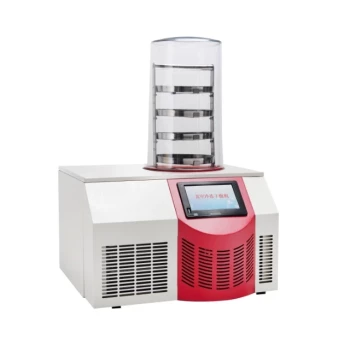
The vacuum drying oven is a mandatory processing tool used to thoroughly extract residual volatile components from Li4Ti5O12 electrode sheets. By combining elevated temperatures (typically around 120°C) with negative pressure, this equipment ensures the complete removal of binder solvents like N-methylpyrrolidone (NMP) and deeply adsorbed moisture that standard thermal drying cannot eliminate.
Core Takeaway: The critical value of vacuum drying is not just evaporation, but chemical protection. By eliminating trace moisture, you prevent a catastrophic reaction with the electrolyte (LiPF6) that produces hydrofluoric acid (HF), a corrosive by-product that destroys battery materials and ruins cycling stability.
The Critical Danger: Why "Dry" Isn't Dry Enough
Standard air drying often leaves trace amounts of moisture trapped within the porous electrode structure. In lithium-ion battery chemistry, even microscopic amounts of water can cause failure.
The Formation of Hydrofluoric Acid (HF)
The primary reason for rigorous vacuum drying is to protect the electrolyte.
If moisture remains in the electrode sheet, it reacts with lithium hexafluorophosphate (LiPF6) once the electrolyte is injected.
This reaction generates hydrofluoric acid (HF). HF is highly corrosive and attacks the active materials and current collectors, leading to rapid capacity fading.
Ensuring Cycling Stability
Long-term battery performance relies on a stable internal environment.
By removing the moisture triggers for side reactions, vacuum drying preserves the electrochemical integrity of the cell. This ensures the battery can undergo repeated charge and discharge cycles without premature degradation.
The Role of Vacuum Physics
Using heat alone is often insufficient or dangerous for electrode materials. The addition of a vacuum environment alters the physics of evaporation to the manufacturer's advantage.
Lowering Boiling Points
The vacuum environment significantly reduces the ambient pressure inside the oven.
This physical change lowers the boiling point of solvents like NMP and water.
Consequently, these liquids volatilize and escape the electrode paste at lower temperatures or more rapidly at standard temperatures, ensuring efficiency without requiring destructive heat levels.
Deep Pore Extraction
Electrodes are porous structures; solvents can become trapped deep within the coating.
Negative pressure helps "pull" these volatiles out from the core of the material. This prevents the issue where the surface dries and forms a crust, trapping liquid underneath (the "skinning" effect).
Secondary Protection Benefits
Beyond moisture and solvent removal, the vacuum oven offers protection against environmental factors during the heating process.
Preventing Oxidation
Heating metals and active materials in the presence of oxygen can lead to surface oxidation.
Because the vacuum oven evacuates air (and oxygen), it creates an inert environment. This protects the current collectors (such as aluminum foil) and the Li4Ti5O12 material from reacting with oxygen while hot.
Preventing Binder Degradation
To remove high-boiling solvents like NMP, high temperatures are usually required.
However, excessive heat can degrade polymer binders. By using a vacuum to lower the boiling point, you can effectively dry the sheets at temperatures (e.g., 120°C) that are safe for the binder and electrode structure.
Understanding the Trade-offs
While essential, the vacuum drying process introduces specific constraints that must be managed.
Throughput Limitations
Vacuum drying is typically a batch process, unlike the continuous drying found on slot-die coating machines.
This can create a bottleneck in manufacturing flow. It requires careful scheduling to match the continuous output of coating lines with the batch cadence of vacuum ovens.
Thermal Sensitivity
Even under vacuum, precise temperature control is vital.
If the temperature is set too high in an attempt to speed up the process, you risk decomposing the binder or causing micro-cracks in the electrode coating. If set too low, residual NMP may remain, leading to poor adhesion and delamination.
Making the Right Choice for Your Goal
The vacuum drying step is the final gatekeeper of electrode quality before assembly.
- If your primary focus is Cycle Life: Prioritize maximum vacuum levels and extended dwell times to ensure moisture is below the distinct ppm threshold required to prevent HF formation.
- If your primary focus is Structural Integrity: Monitor your temperature ramp-rates carefully to ensure solvent evaporation doesn't occur so violently that it cracks the electrode coating.
Ultimately, the vacuum drying oven is not just a dryer; it is a chemical safety device that prevents your battery from destroying itself from the inside out.
Summary Table:
| Feature | Benefit for Li4Ti5O12 Electrodes |
|---|---|
| Moisture Removal | Prevents LiPF6 reaction and corrosive HF formation |
| Vacuum Pressure | Lowers solvent boiling points, preventing binder degradation |
| Deep Extraction | Pulls volatiles from porous structures, avoiding "skinning" |
| Inert Environment | Prevents oxidation of current collectors and active materials |
| Cycle Stability | Ensures long-term electrochemical integrity and capacity retention |
Elevate Your Battery Research with KINTEK Precision
Don't let trace moisture compromise your cell performance. KINTEK specializes in high-performance laboratory equipment designed for the rigorous demands of battery material processing. From our advanced vacuum drying ovens and high-temperature furnaces (muffle, tube, vacuum) to our specialized battery research tools, consumables, and hydraulic presses, we provide the precision you need to prevent side reactions and maximize cycling stability.
Whether you are working on Li4Ti5O12 electrode preparation or next-generation energy storage, our comprehensive portfolio—including PTFE products, ceramics, and electrolytic cells—is engineered to support your innovation.
Ready to optimize your electrode drying process? Contact KINTEK today for a consultation and custom quote!
Related Products
- 56L Vertical Laboratory Vacuum Drying Oven
- 23L Laboratory Vacuum Drying Oven
- Laboratory Scientific Electric Heating Blast Drying Oven
- Benchtop Laboratory Vacuum Freeze Dryer
- Dental Porcelain Zirconia Sintering Ceramic Vacuum Press Furnace
People Also Ask
- Why is a laboratory vacuum drying oven recommended for rice straw residues? Protect Your Biomass Integrity
- What role does a laboratory vacuum drying oven play in the preparation of modified multi-walled carbon nanotubes?
- What is the importance of using a laboratory vacuum drying oven? Preserving Slow-Release Microcapsule Integrity
- Why is a Laboratory Vacuum Drying Oven recommended for PBAT microspheres? Protect Sensitive Polymer Integrity
- What role does a laboratory vacuum drying oven play in processing nanoparticle powder samples? Protect Sample Integrity