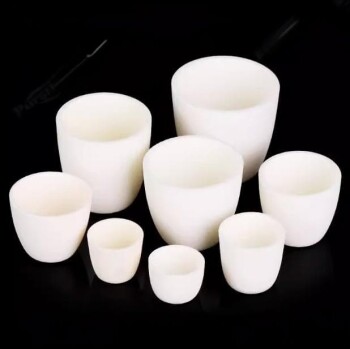
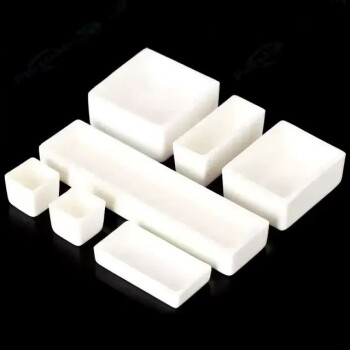
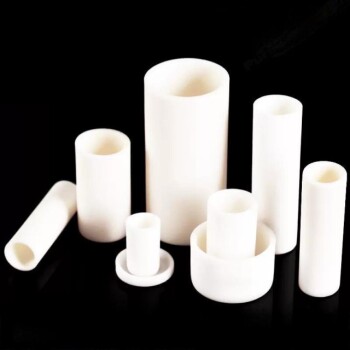
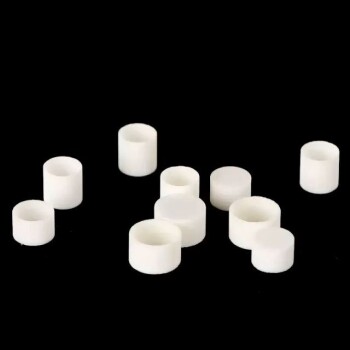
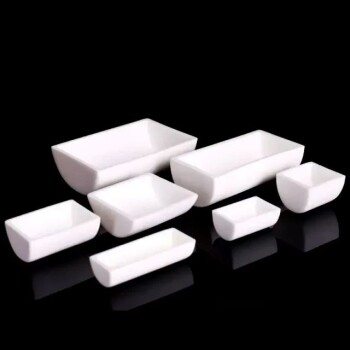
The use of high-purity alumina crucibles is strictly necessary during the sintering or annealing of lithium-based coatings to prevent chemical contamination and structural degradation. Their superior thermal resistance and chemical inertness ensure that the crucible does not react with the high-voltage spinel cathode materials or the reactive lithium coating at elevated temperatures.
Core Takeaway: The success of modifying cathode materials relies on a contamination-free environment. High-purity alumina prevents high-temperature solid-phase reactions, ensuring the final product maintains the exact purity and crystalline structural integrity required for optimal performance.
The Critical Role of Chemical Inertness
Preventing Solid-Phase Reactions
At the elevated temperatures required for sintering, materials become highly reactive. High-purity alumina is chemically inert, meaning it refuses to bond with the contents of the crucible.
This inertness is vital for avoiding high-temperature solid-phase reactions. Without this protection, the crucible material would chemically interact with the cathode or coating, effectively ruining the batch.
Handling Reactive Lithium
Lithium-based coatings are particularly volatile and reactive during thermal processing.
Alumina crucibles provide a neutral barrier that contains the lithium without absorbing it or reacting with it. This ensures the lithium remains available to coat the cathode material rather than bonding with the vessel walls.
Thermal Stability and Environment
Withstanding Extreme Conditions
The sintering process involves intense heat to set the coating and modify the material structure.
High-purity alumina possesses superior thermal resistance, allowing it to maintain its structural integrity without warping or degrading. It is capable of performing under various conditions, including reducing atmospheres, inert gas environments, or high vacuums.
Wear and Abrasion Resistance
Beyond heat, the processing environment can be physically demanding.
Alumina maintains excellent wear and abrasion resistance even at high temperatures. This durability ensures that physical particles from the crucible do not flake off and mechanically contaminate the cathode powder.
Common Pitfalls: The Risk of Impurity
The Danger of Foreign Impurities
If a crucible with lower purity or lower chemical resistance is used, foreign impurities are inevitably introduced into the cathode material.
These impurities are not just surface contaminants; they can alter the fundamental chemistry of the cathode. Using high-purity alumina is the only way to guarantee that no foreign impurities compromise the material.
Impact on Crystalline Integrity
The ultimate goal of sintering is to achieve a specific crystalline structure in the modified cathode material.
Any reaction between the crucible and the cathode creates defects in this structure. High-purity alumina ensures the crystalline structural integrity is preserved, which is directly linked to the electrochemical performance of the battery.
Making the Right Choice for Your Goal
To ensure your cathode material meets performance standards, apply the following guidelines when selecting processing equipment:
- If your primary focus is Material Purity: Prioritize crucibles with the highest available alumina content to eliminate the risk of solid-phase reactions with reactive lithium.
- If your primary focus is Process Stability: Ensure the chosen alumina grade is rated for the specific atmosphere (vacuum, inert, or reducing) of your sintering furnace.
High-purity alumina is not just a container; it is a critical process control variable that preserves the chemical identity of your cathode materials.
Summary Table:
| Feature | Benefit for Lithium Cathode Processing |
|---|---|
| Chemical Inertness | Prevents high-temperature solid-phase reactions with reactive lithium. |
| Thermal Resistance | Maintains structural integrity under extreme heat and high vacuum. |
| High Purity | Eliminates the risk of foreign impurities altering material chemistry. |
| Abrasion Resistance | Prevents mechanical contamination from vessel flaking or wear. |
| Structural Stability | Preserves crystalline integrity for optimal electrochemical performance. |
Elevate Your Battery Research with KINTEK Precision
Don't let crucible impurities compromise your next generation of cathode materials. KINTEK provides high-performance laboratory solutions specifically designed for the rigorous demands of battery research and material science.
Our extensive portfolio includes:
- High-Purity Alumina & Ceramic Crucibles: Essential for contamination-free sintering and annealing.
- Advanced Thermal Systems: Muffle, tube, vacuum, and atmosphere furnaces tailored for precise lithium-ion processing.
- Specialized Lab Equipment: High-pressure reactors, crushing systems, and hydraulic presses to streamline your workflow.
Ready to ensure the purity and performance of your materials? Contact our technical experts today to find the perfect equipment and consumables for your laboratory.
Related Products
- Arc-Shaped Alumina Ceramic Crucible High Temperature Resistant for Engineering Advanced Fine Ceramics
- Engineering Advanced Fine Alumina Al2O3 Ceramic Crucible for Laboratory Muffle Furnace
- Engineering Advanced Fine Ceramics Alumina Al2O3 Crucible With Lid Cylindrical Laboratory Crucible
- High Purity Pure Graphite Crucible for Evaporation
- High Purity Alumina Granulated Powder for Engineering Advanced Fine Ceramics
People Also Ask
- Why Use Alumina Crucibles & Powder Burial for NaSICON? Ensure Phase Purity and Prevent Elemental Volatilization
- What is the primary purpose of using alumina crucibles for LLTO ceramics? Optimize Your High-Temperature Sintering
- Why are alumina crucibles and mother powder essential for LATP sintering? Optimize Your Solid Electrolyte Performance
- Why are high-purity alumina crucibles used for liquid lead corrosion experiments? Ensure Data Accuracy at 550°C
- Primary considerations for choosing alumina crucibles and quartz tubes in indium intercalation: Ensure Material Purity