Vacuum Induction Melting Furnace is a type of metallurgical furnace that is widely used in the field of vacuum metallurgy. It is used to melt and form metals such as ordinary steel, special steel, high-temperature alloy, precision alloy, non-ferrous metal, permanent magnet rare earth material, and industrial silicon. The furnace operates under vacuum or protective atmosphere using alternating electromagnetic fields to generate an eddy current of heat in the material being processed. Vacuum Induction Melting Furnace is used to produce alloys and special steels needed for aerospace, missile, rocket, atomic energy equipment, and electronics industry.
Toggle Categories
Get Instant Support
Choose your preferred way to connect with our team
-
Get Free Quote Fill out form for detailed pricing
-
Send Email Detailed inquiry support
-
WhatsApp Quick mobile chat
Response Time
Within 8 hours on working days, 24 hours on holidays
vacuum induction melting furnace

Lab-Scale Vacuum Induction Melting Furnace
Item Number: KT-VI

Vacuum Heat Treat and Molybdenum Wire Sintering Furnace for Vacuum Sintering
Item Number: KT-VMW

Vacuum Heat Treat Sintering Brazing Furnace
Item Number: KT-BF

Vacuum Arc Induction Melting Furnace
Item Number: KT-VA
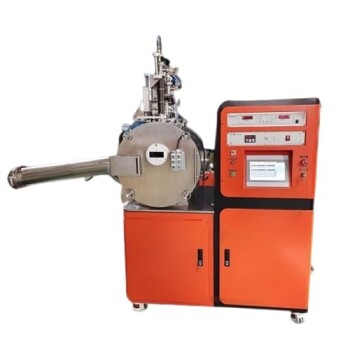
Vacuum Induction Melting Spinning System Arc Melting Furnace
Item Number: KT-VIS
We have the best Vacuum Induction Melting Furnace solutions for your metallurgical needs, regardless of your available budget. Our extensive portfolio guarantees there is an appropriate standard solution that will exceed your expectations. For more unique applications, our bespoke design service allows us to meet almost any customer requirement. Our vacuum induction melting furnace is widely used in the field of vacuum metallurgy for producing various materials such as ordinary steel, special steel, high-temperature alloy, non-ferrous metal, and more. Contact us today to learn more about our solutions.
Applications of Vacuum Induction Melting Furnace
- Production of special steel, high temperature alloy, precision alloy, non-ferrous metal, permanent magnet rare earth material, industrial silicon and other materials under vacuum or protective atmosphere.
- Manufacturing of alloy and special steel for aerospace, missile, rocket, atomic energy equipment and electronics industry.
- Improvement of hot workability and mechanical properties of nickel-based, cobalt-based, and iron-based superalloys.
- Melting of stainless steel, heat-resistant steel, ultra-high strength steel, tool steel, bearing steel, and magnetic material, elastic alloy, expansion alloy, and other materials for ensuring their performance and quality.
- Melting of metals and alloys that combine easily or have close affinity with oxygen, nitrogen and hydrogen such as superalloys, aluminum, stainless steel and a range of other metals.
- Casting of aircraft components, complex valves for harsh conditions, refining high purity metals and alloys and electrodes for remelting.
- Production of metals with close compositional tolerances, ensuring consistency in the quality of metals.
- Eradication of gases from molten metals that can lead to a quick oxidation process.
Advantages of Vacuum Induction Melting Furnace
- Elimination of gases and potentially harmful volatile elements from charged raw materials during melting
- Exceptional and reproducible control of reactive element containing compositions due to the lack of atmosphere
- Independent control of pressure, temperature, and inductive stirring provides an exceptional opportunity for developing melt practices specifically tailored to alloy composition and desired properties
- Slag-free melting eliminates the need for a protective slag cover and decreases the potential of accidental slag contamination or inclusions in the ingot
- High vacuum prevents deleterious contaminating reactions with atmospheric gases
- Improves the hot workability and mechanical properties of nickel-based, cobalt-based, and iron-based superalloys
- Produces alloy and special steel needed for aerospace, missile, rocket, atomic energy equipment, and electronics industry
- Melted materials have uniform composition, which ensures material performance and quality
- The obtained metal alloy material is more pure due to the removal of gas impurities inside the metal
- Energy-saving, environmentally friendly, and low labor intensity compared to traditional smelting methods.
Our Vacuum Induction Melting Furnace is a highly cost-effective solution for metallurgical processing of various materials. It is widely used in the aerospace, missile, rocket, atomic energy equipment, and electronics industry due to its exceptional performance and quality.
We offer a complete customisation service that caters to your specific requirements.
FAQ
How Does A Vacuum Induction Melting Furnace Work?
A vacuum induction melting furnace works by utilizing electromagnetic induction under vacuum or protective atmosphere conditions to melt metals and alloys that combine easily or have close affinity with oxygen, nitrogen, and hydrogen. The furnace contains a refractory-lined crucible enclosed by an induction coil that generates an eddy current of heat in the material being processed. The furnace's vacuum system totally eradicates gases from the molten metals, and the cooling system contributes to the controlled melting temperature. The furnace is highly reliable, gives high productivity, and produces metals with very close compositional tolerances.
What Are The Advantages Of Vacuum Induction Melting?
The advantages of vacuum induction melting (VIM) include the elimination of gases, superior process control, close control of chemical analysis, slag-free melting, and melt protection. VIM is currently the most energy-efficient, fastest, low-consumption, and environmentally friendly induction heating technology for heating metal materials. The technology offers exceptional and reproducible control of reactive element-containing compositions and eliminates the need for a protective slag cover, decreasing the potential for accidental contamination or inclusions in the ingot. The process takes place in a vacuum environment, making it beneficial to remove gas impurities inside the metal, resulting in a more pure metal alloy material.
How Does Vacuum Help In Induction Melting Furnace?
Vacuum conditions are critical in induction melting furnaces as they help to eliminate gases from the molten metals, preventing quick oxidation. The absence of gases during the melting process ensures the creation of very close compositional tolerances, resulting in consistent metals. The vacuum also provides a protective atmosphere for metals that combine easily or have a close affinity with oxygen, nitrogen and hydrogen. Vacuum induction melting furnaces use electromagnetic induction to melt metals and alloys in a refractory lined crucible enclosed by an induction coil, creating eddy currents that make the melting process possible.
What Is Vacuum Induction Melting Furnace?
A vacuum induction melting furnace is a metallurgical furnace that uses an alternating electromagnetic field to melt and form various materials under vacuum or protective atmosphere. It is widely used in the vacuum metallurgy field and is essential for producing alloys and special steels used in the aerospace, electronics, and atomic energy industries. Vacuum induction melting furnaces are also used to improve the hot workability and mechanical properties of nickel, cobalt, and iron-based superalloys, as well as to melt stainless steel, heat-resistant steel, ultra-high strength steel, and various other materials to ensure their quality and performance.
REQUEST A QUOTE
Our professional team will reply to you within one business day. Please feel free to contact us!
Related Articles

The Architecture of Heat: Why Vacuum Furnace Temperature is a Design Choice
Vacuum furnace temperature isn't a single metric—it's a design constraint. From 1315°C annealing to 2400°C sintering, discover how process dictates equipment.
Read more
An Anatomy of Control: The Interconnected Systems of a Vacuum Furnace
A vacuum furnace isn't a box, but an ecosystem. Discover how its interconnected systems create the perfect environment for material transformation.
Read more
The Architecture of Emptiness: Why Vacuum Level is a Decision, Not Just a Number
Vacuum levels define material purity. We explore the engineering trade-offs between rough vacuum and ultra-high vacuum, and how to choose the right system.
Read more
The Physics of Free Fall: Simulating Industrial Chaos in the Lab
Industrial reactors are chaotic black boxes. The drop tube furnace is the scientific scalpel that dissects combustion and kinetics, one particle at a time.
Read more
Density Without Destruction: The Quiet Power of Hot Press Sintering
Hot press sintering uses simultaneous heat and pressure to achieve near-perfect material density while inhibiting the grain growth that weakens components.
Read more
The Thermal Ceiling: Why Vacuum Furnace Limits Are Defined by Physics, Not Specs
Maximum vacuum furnace temperature isn't just a number; it's a material limit. Explore how heating elements like Tungsten and Graphite define performance and purity.
Read more
The Physics of Limits: Understanding Tube Furnace Temperatures
Tube furnace temperature isn't just a number—it's defined by heating element materials. Discover how to match HRE, SiC, and MoSi2 elements to your research needs.
Read more
The Heart of the Void: Why Your Vacuum Furnace's Heating Element Defines Your Results
A guide to choosing between graphite, molybdenum, and CFC heating elements for vacuum furnaces, balancing purity, cost, and process speed.
Read more
Beyond the Gauge: The Systematic Hunt for Vacuum Furnace Leaks
Master vacuum furnace leak detection by choosing the right method for hot/cold and pressure states. A systematic guide to finding invisible faults.
Read more
The Art of Isolation: Why Drop Tube Furnaces Define Industrial Efficiency
Discover how Drop Tube Furnaces (DTF) bridge the gap between microscopic particle kinetics and massive industrial combustion systems.
Read more
The Glass Ceiling: Why the Physics of Quartz Dictates Your Furnace Strategy
The true limit of a tube furnace isn't the heating element—it's the vessel. Discover why 1100°C is the critical threshold for quartz integrity.
Read more
The Red Line: Why the "Maximum Temperature" is a Myth
A furnace's temperature limit isn't just a number—it's a relationship between materials and safety margins. Here is how to engineer longevity into your lab choice.
Read more
The Art of Nothing: Mastering the Physics of the Vacuum Furnace
In advanced metallurgy, air is the enemy. Discover how vacuum furnaces utilize the "physics of nothingness" to achieve unparalleled material purity and strength.
Read more
The Temperature Trap: Why a Furnace's Max Rating is Only Half the Story
A furnace's max temperature is set by its weakest component. Understanding this system helps you avoid costly errors in lab equipment selection.
Read more
The Geometry of Consistency: Why the Tube Furnace Remains Indispensable
Explore the engineering logic behind tube furnaces. From thermal uniformity to atmosphere control, discover why this cylindrical design defines laboratory precision.
Read more
The Fragile Edge of 1450°C: When Durable Tools Become Consumables
Operating a vacuum tube furnace at 1450°C transforms the work tube into a consumable. Explore the limits of size, speed, and material science.
Read more
The Geometry of Control: Why Shape Dictates Chemistry in High-Temp Labs
The difference between muffle and tube furnaces isn't just heat—it's geometry. Learn how chamber shape dictates atmosphere, purity, and experimental success.
Read more
The Geometry of Control: Why Millimeters Dictate Experimental Destiny
In electrochemistry, the difference between success and failure often lies in aperture size. Explore the engineering logic behind Φ 6.2mm and Φ 3.2mm standards.
Read more
The Thermodynamics of Cleanliness: A Protocol for Tube Furnace Longevity
Cleaning a tube furnace is not just a chore; it is a critical defense against thermal shock and data corruption. Here is the expert protocol for maintenance.
Read more
The Pursuit of Purity: How a Sealed Vacuum Furnace Creates Metallurgical Certainty
Explore how sealed vacuum furnaces eliminate atmospheric interference to deliver superior material purity, process control, and absolute repeatability.
Read more