Blog The Art of Nothing: Mastering the Physics of the Vacuum Furnace
The Art of Nothing: Mastering the Physics of the Vacuum Furnace

The Art of Nothing: Mastering the Physics of the Vacuum Furnace

1 week ago

The Invisible Contaminant

In the history of material science, we have spent centuries mastering heat. We learned to smelt, to forge, and to temper. But for a long time, we ignored the invisible variable in the room: the air itself.

Oxygen is necessary for life, but it is often catastrophic for metallurgy.

When you heat a metal in the presence of air, chemistry happens. It oxidizes. It scales. It interacts with the hydrogen and nitrogen floating around it. For a wrought iron fence, this is acceptable. For an aerospace turbine blade or a medical implant, it is a failure of the system.

The vacuum furnace is the engineer’s answer to this problem. It is a machine designed to create a specific paradox: generating intense heat while removing the medium (air) that usually transmits it.

It is not just a heater; it is a pristine, low-pressure sanctuary.

The Anatomy of Emptiness

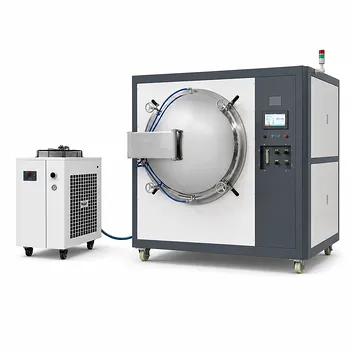
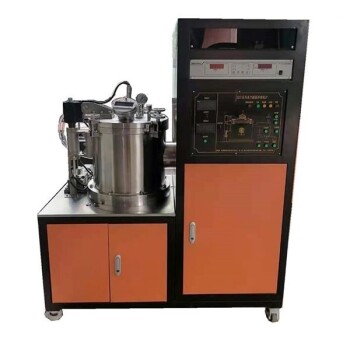
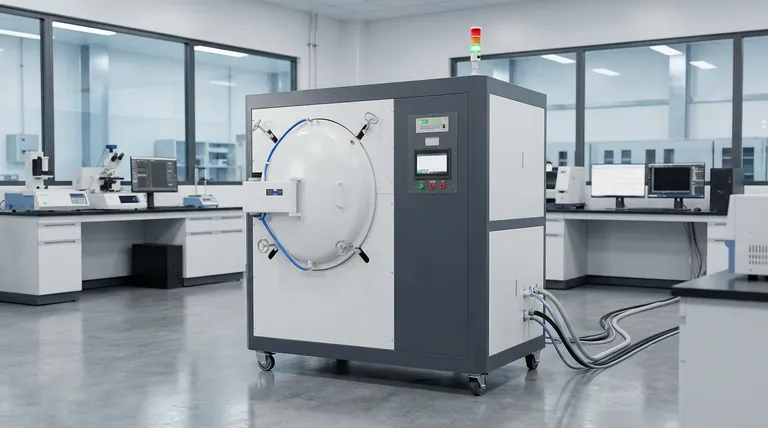
A vacuum furnace is a deceptive machine. It looks like a heavy industrial vessel, but inside, it is performing a delicate balancing act of physics.

To understand how it achieves superior material integrity, we must look at the ecosystem of its components.

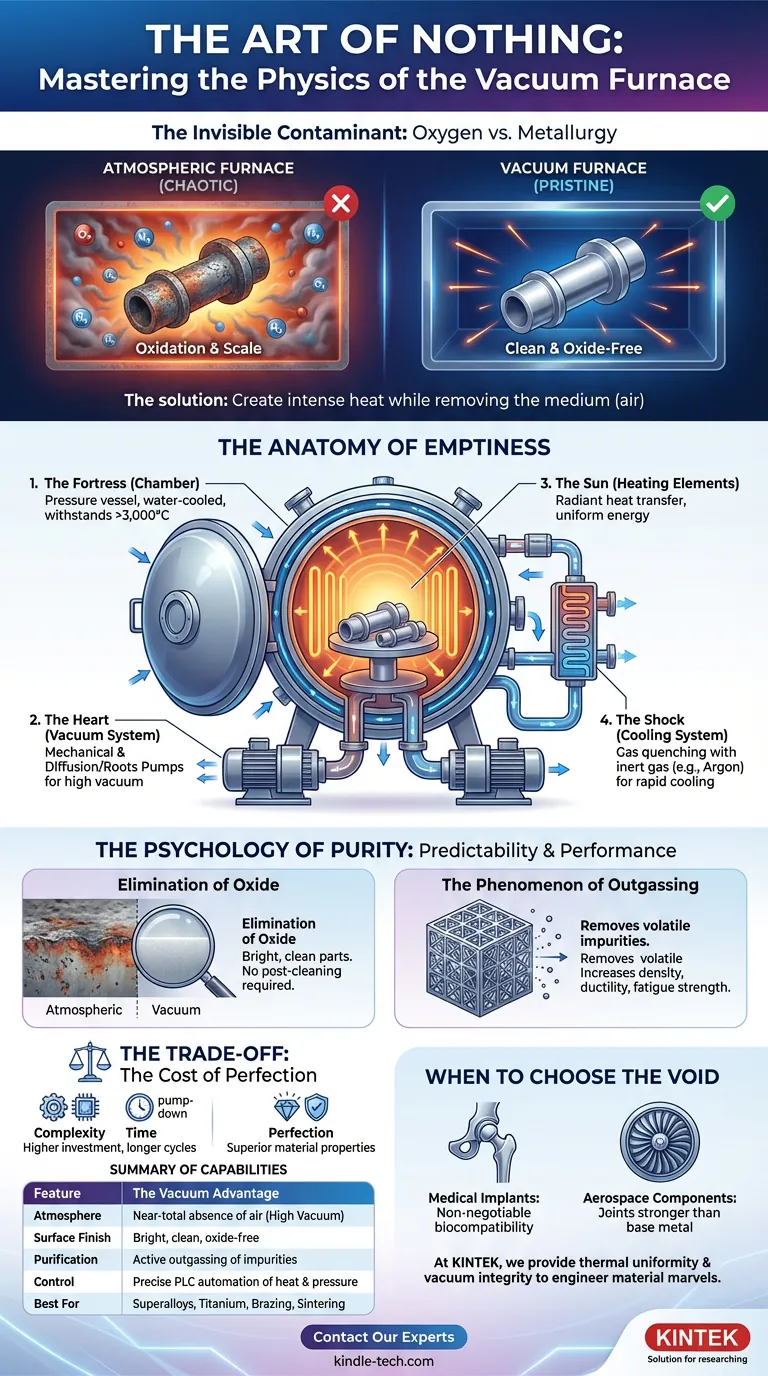
1. The Fortress (The Chamber)

The process begins with the shell. This isn't just a box; it is a pressure vessel. Typically water-cooled and double-walled, it must withstand the crushing pressure difference between the outside atmosphere and the internal vacuum, all while containing temperatures that can exceed 3,000°C.

2. The Heart (The Vacuum System)

Creating "nothing" is hard work. The vacuum system uses a multi-stage approach:

  • Mechanical Pumps: Handle the initial evacuation, removing the bulk of the atmosphere.
  • Diffusion or Roots Pumps: Take over to scrub the remaining molecules, achieving the high-vacuum state essential for processing.

3. The Sun (Heating Elements)

Without air to carry convection currents, heat transfer changes. It relies on radiation. Electric heating elements surround the workload, ensuring that energy is transferred evenly and directly. There are no cold spots. There is no wind. Just pure, radiant energy.

4. The Shock (Cooling System)

Once the cycle is complete, the material must often be cooled rapidly to lock in metallurgical properties. The system backfills the chamber with high-purity inert gas (like argon) and circulates it through a heat exchanger. This is "gas quenching"—a clean, violent drop in temperature without the mess of oil or water.

The Psychology of Purity

Why do we go to such lengths? Why build these complex, expensive systems just to remove air?

It comes down to predictability.

In a standard atmospheric furnace, you are fighting a chaotic chemical battle on the surface of your material. In a vacuum furnace, you control the battlefield.

The Elimination of Oxide

The most immediate benefit is cosmetic and structural. By removing oxygen, you prevent the formation of scale. Parts emerge bright and clean. There is no need for acid cleaning or sanding. The surface you put in is the surface you get out, only stronger.

The Phenomenon of Outgassing

This is where the process feels like magic. The vacuum doesn't just protect the metal; it cleans it.

Under low pressure and high heat, volatile impurities trapped inside the metal structure are forced to the surface and pumped away. This is called outgassing. It increases the material's density, ductility, and fatigue strength.

The Trade-off: The Cost of Perfection

Engineering is the science of trade-offs. The vacuum furnace is a powerful tool, but it is not a universal hammer.

  • Complexity: These are high-precision instruments. They require rigorous maintenance and a higher capital investment than a brick oven.
  • Time: You cannot simply turn it on. The "pump-down" phase—evacuating the air—adds time to every cycle.
  • Material Physics: Some materials have high vapor pressures. If you heat them in a vacuum, they don't just get hot; they evaporate (sublimate).

Summary of Capabilities

Feature The Vacuum Advantage
Atmosphere Near-total absence of air (High Vacuum)
Surface Finish Bright, clean, oxide-free
Purification Active outgassing of impurities
Control Precise PLC automation of heat and pressure
Best For Superalloys, Titanium, Brazing, Sintering

When to Choose the Void

You do not need a vacuum furnace to bake a brick. You need it when the cost of failure is unacceptable.

If you are manufacturing medical implants, the biocompatibility of the surface is non-negotiable. If you are brazing aircraft components, the joint must be stronger than the base metal.

At KINTEK, we understand that at the laboratory and high-tech manufacturing level, you are not just buying equipment; you are buying certainty.

Our vacuum furnace solutions are designed for those specific moments where material properties must be pushed to their theoretical limits. We provide the thermal uniformity and vacuum integrity required to turn raw elements into engineering marvels.

Does your process require the elimination of oxidation and the assurance of absolute purity?

Contact Our Experts to discuss how KINTEK can help you engineer the perfect environment for your materials.

Visual Guide
The Art of Nothing: Mastering the Physics of the Vacuum Furnace Visual Guide

Related Products

Related Articles

Related Products

Vacuum Heat Treat Furnace with Ceramic Fiber Liner

Vacuum Heat Treat Furnace with Ceramic Fiber Liner

Vacuum furnace with polycrystalline ceramic fiber insulation liner for excellent heat insulation and uniform temperature field. Choose from 1200℃ or 1700℃ max. working temperature with high vacuum performance and precise temperature control.

2200 ℃ Tungsten Vacuum Heat Treat and Sintering Furnace

2200 ℃ Tungsten Vacuum Heat Treat and Sintering Furnace

Experience the ultimate refractory metal furnace with our Tungsten vacuum furnace. Capable of reaching 2200℃, perfect for sintering advanced ceramics and refractory metals. Order now for high-quality results.

Vacuum Heat Treat Sintering Brazing Furnace

Vacuum Heat Treat Sintering Brazing Furnace

A vacuum brazing furnace is a type of industrial furnace used for brazing, a metalworking process that joins two pieces of metal using a filler metal that melts at a lower temperature than the base metals. Vacuum brazing furnaces are typically used for high-quality applications where a strong, clean joint is required.

Molybdenum Vacuum Heat Treat Furnace

Molybdenum Vacuum Heat Treat Furnace

Discover the benefits of a high-configuration molybdenum vacuum furnace with heat shield insulation. Ideal for high-purity, vacuum environments like sapphire crystal growth and heat treatment.

2200 ℃ Graphite Vacuum Heat Treat Furnace

2200 ℃ Graphite Vacuum Heat Treat Furnace

Discover the power of the KT-VG Graphite Vacuum Furnace - with a maximum working temperature of 2200℃, it's perfect for vacuum sintering of various materials. Learn more now.

Vacuum Heat Treat and Molybdenum Wire Sintering Furnace for Vacuum Sintering

Vacuum Heat Treat and Molybdenum Wire Sintering Furnace for Vacuum Sintering

A vacuum molybdenum wire sintering furnace is a vertical or bedroom structure, which is suitable for withdrawal, brazing, sintering and degassing of metal materials under high vacuum and high temperature conditions. It is also suitable for dehydroxylation treatment of quartz materials.

Vacuum Hot Press Furnace Heated Vacuum Press Machine Tube Furnace

Vacuum Hot Press Furnace Heated Vacuum Press Machine Tube Furnace

Reduce forming pressure & shorten sintering time with Vacuum Tube Hot Press Furnace for high-density, fine-grain materials. Ideal for refractory metals.

Vacuum Heat Treat and Sintering Furnace with 9MPa Air Pressure

Vacuum Heat Treat and Sintering Furnace with 9MPa Air Pressure

The air pressure sintering furnace is a high-tech equipment commonly used for the sintering of advanced ceramic materials. It combines vacuum sintering and pressure sintering techniques to achieve high-density and high-strength ceramics.

Vacuum Hot Press Furnace Machine Heated Vacuum Press

Vacuum Hot Press Furnace Machine Heated Vacuum Press

Discover the advantages of Vacuum Hot Press Furnace! Manufacture dense refractory metals & compounds, ceramics, and composites under high temp and pressure.

Laboratory High Pressure Vacuum Tube Furnace

Laboratory High Pressure Vacuum Tube Furnace

KT-PTF High Pressure Tube Furnace: Compact split tube furnace with strong positive pressure resistance. Working temp up to 1100°C and pressure up to 15Mpa. Also works under controller atmosphere or high vacuum.

600T Vacuum Induction Hot Press Furnace for Heat Treat and Sintering

600T Vacuum Induction Hot Press Furnace for Heat Treat and Sintering

Discover the 600T Vacuum Induction Hot Press Furnace, designed for high-temperature sintering experiments in vacuum or protected atmospheres. Its precise temperature and pressure control, adjustable working pressure, and advanced safety features make it ideal for nonmetal materials, carbon composites, ceramics, and metal powders.

Ultra-High Temperature Graphite Vacuum Graphitization Furnace

Ultra-High Temperature Graphite Vacuum Graphitization Furnace

The ultra-high temperature graphitization furnace utilizes medium frequency induction heating in a vacuum or inert gas environment. The induction coil generates an alternating magnetic field, inducing eddy currents in the graphite crucible, which heats up and radiates heat to the workpiece, bringing it to the desired temperature. This furnace is primarily used for graphitization and sintering of carbon materials, carbon fiber materials, and other composite materials.

1200℃ Controlled Atmosphere Furnace Nitrogen Inert Atmosphere Furnace

1200℃ Controlled Atmosphere Furnace Nitrogen Inert Atmosphere Furnace

Discover our KT-12A Pro Controlled atmosphere furnace - high precision, heavy duty vacuum chamber, versatile smart touch screen controller, and excellent temperature uniformity up to 1200C. Ideal for both laboratory and industrial application.

Graphite Vacuum Furnace High Thermal Conductivity Film Graphitization Furnace

Graphite Vacuum Furnace High Thermal Conductivity Film Graphitization Furnace

The high thermal conductivity film graphitization furnace has uniform temperature, low energy consumption and can operate continuously.

Horizontal High Temperature Graphite Vacuum Graphitization Furnace

Horizontal High Temperature Graphite Vacuum Graphitization Furnace

Horizontal Graphitization Furnace: This type of furnace is designed with the heating elements placed horizontally, allowing for uniform heating of the sample. It's well-suited for graphitizing large or bulky samples that require precise temperature control and uniformity.

Vacuum Heat Treat Furnace and Levitation Induction Melting Furnace

Vacuum Heat Treat Furnace and Levitation Induction Melting Furnace

Experience precise melting with our Vacuum Levitation Melting Furnace. Ideal for high melting point metals or alloys, with advanced technology for effective smelting. Order now for high-quality results.

Vacuum Dental Porcelain Sintering Furnace

Vacuum Dental Porcelain Sintering Furnace

Get precise and reliable results with KinTek's Vacuum Porcelain Furnace. Suitable for all porcelain powders, it features hyperbolic ceramic furnace function, voice prompt, and automatic temperature calibration.

Laboratory Vacuum Tilt Rotary Tube Furnace Rotating Tube Furnace

Laboratory Vacuum Tilt Rotary Tube Furnace Rotating Tube Furnace

Discover the versatility of Laboratory Rotary Furnace: Ideal for calcination, drying, sintering, and high-temperature reactions. Adjustable rotating and tilting functions for optimal heating. Suitable for vacuum and controlled atmosphere environments. Learn more now!

Vertical High Temperature Graphite Vacuum Graphitization Furnace

Vertical High Temperature Graphite Vacuum Graphitization Furnace

Vertical high temperature graphitization furnace for carbonization and graphitization of carbon materials up to 3100℃.Suitable for shaped graphitization of carbon fiber filaments and other materials sintered in a carbon environment.Applications in metallurgy, electronics, and aerospace for producing high-quality graphite products like electrodes and crucibles.

1700℃ Controlled Atmosphere Furnace Nitrogen Inert Atmosphere Furnace

1700℃ Controlled Atmosphere Furnace Nitrogen Inert Atmosphere Furnace

KT-17A Controlled atmosphere furnace: 1700℃ heating, vacuum sealing technology, PID temperature control, and versatile TFT smart touch screen controller for laboratory and industrial use.


Leave Your Message