A Flaw in the Microstructure
Imagine an engineer inspecting a turbine blade destined for a jet engine. It looks perfect. The dimensions are precise, the surface is flawless. But deep within its metallic grain structure, a microscopic flaw—an invisible pocket of oxide or a subtle impurity introduced by a stray water molecule during heat treatment—silently waits. Under extreme stress, this is where failure begins.
This scenario isn't just a technical problem; it's a crisis of confidence. In fields from aerospace to medical implants, success isn't defined by what you create, but by the failures you prevent. The greatest challenge isn't just heating a material, but protecting its integrity from an enemy you can't see: the air itself.
The Unseen Sabotage of Atmosphere
The air we breathe is a cocktail of reactive gases. At room temperature, it's benign. At the high temperatures required for heat treatment, brazing, or sintering, it becomes a corrosive agent.
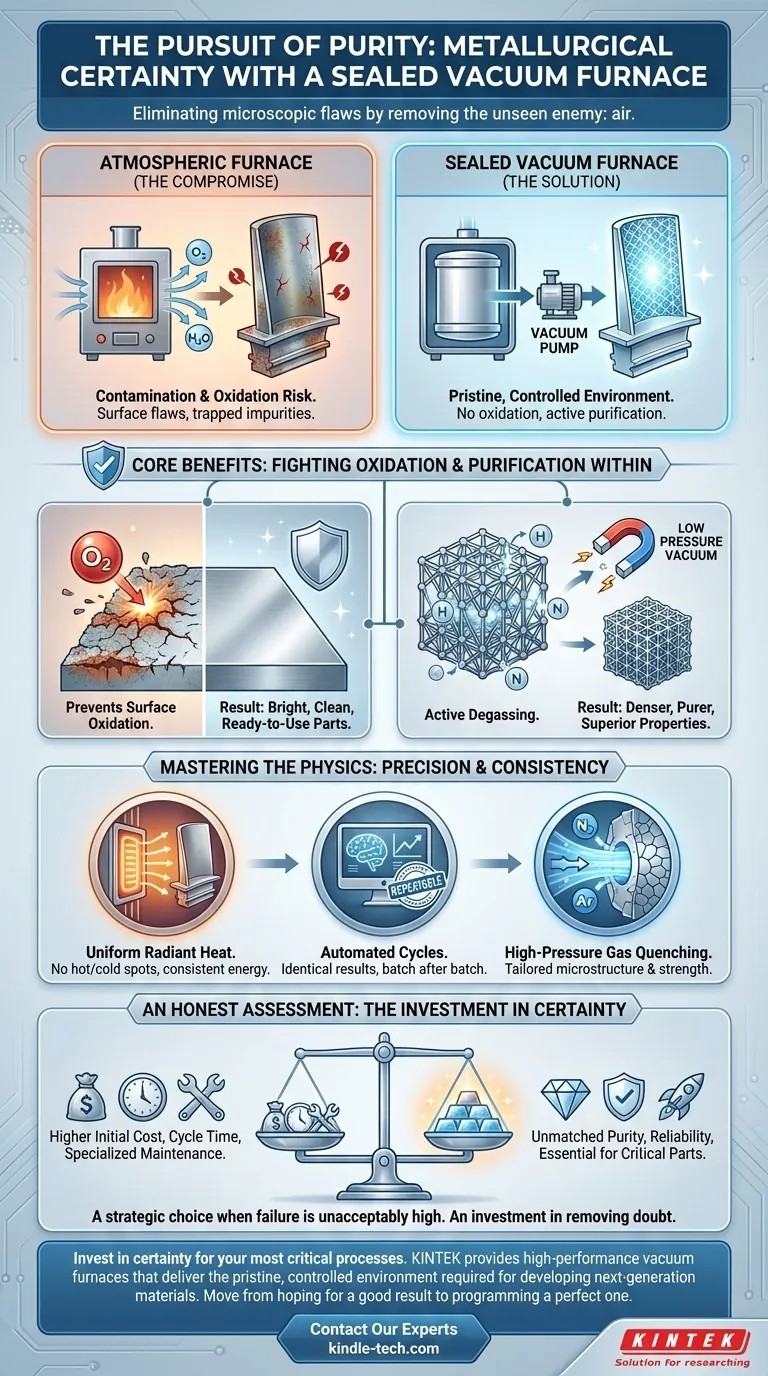
A conventional furnace, which heats parts in the presence of air, is a compromise. You accept a certain level of surface oxidation and contamination as the cost of doing business. A sealed vacuum furnace operates on a different philosophy: it removes the battlefield entirely.
Fighting Oxidation: The Battle for a Flawless Surface
The most obvious adversary is oxygen (21% of our atmosphere). At high temperatures, it aggressively bonds with metals, forming a brittle, discolored oxide layer. This isn't just a cosmetic issue; it compromises surface integrity and often requires secondary cleaning processes like sandblasting or acid washing.
A vacuum furnace removes the oxygen. By operating in a near-perfect vacuum, it prevents oxidation from ever occurring. The result is a component that emerges from the furnace bright, clean, and metallurgically pure, exactly as designed.
The Purification Within: More Than Just a Shield
A vacuum does more than just shield the material from external contaminants. It actively purifies it from within.
Every material contains trace amounts of trapped gases and volatile elements. The low-pressure environment of a vacuum furnace acts like a magnet, pulling these impurities out of the material's lattice. This degassing process results in a final product that is denser, purer, and possesses superior mechanical properties.
Mastering the Physics of Heat and Time
By eliminating the chaotic variable of air, a sealed vacuum furnace grants the user an unprecedented level of control. It transforms the art of heat treatment into a precise, repeatable science.
The Certainty of Radiant Heat
In a conventional furnace, heat is transferred by convection—the unpredictable movement of hot air. This creates hot and cold spots, leading to inconsistent treatment across a single part or a batch.
In a vacuum, the primary mode of heat transfer is radiation. Heat radiates uniformly from the heating elements to the workpiece. This ensures that every surface, regardless of its geometry, receives the exact same thermal energy, guaranteeing unparalleled temperature uniformity.
The Principle of Identical Results
Human beings are a source of variability. An automated process is a source of consistency. Modern vacuum furnaces are computer-controlled systems that execute a programmed thermal cycle with absolute fidelity.
From the vacuum pump-down to the precise temperature ramp, the soak time, and the controlled cooling, every parameter is managed by the system. This removes human error and ensures that the first part of a batch is metallurgically identical to the last, and that today's batch is identical to next year's. This isn't just repeatability; it's a guarantee.
Controlled Cooling: Forging Strength, Not Just Shape
Many systems are equipped with high-pressure gas quenching. After the heating cycle, a blast of inert gas like argon or nitrogen can cool the component at a precisely controlled rate. This is critical for achieving specific microstructures and hardness in alloys, turning a simple heating process into a sophisticated metallurgical transformation.
An Honest Assessment: The Investment in Certainty
A vacuum furnace is a strategic tool, and its adoption requires a clear understanding of the trade-offs.
| Consideration | Implication |
|---|---|
| Higher Initial Cost | The complex vacuum pumps, sealed chambers, and control systems represent a significant capital investment compared to atmospheric furnaces. |
| Cycle Time | The initial "pump-down" phase to achieve the required vacuum can add time to the overall process. |
| Maintenance | The integrity of seals, pumps, and valves requires diligent, specialized maintenance to prevent leaks that would compromise the environment. |
| Material Limits | Materials with high vapor pressure (e.g., zinc, cadmium) can sublimate in a high vacuum, altering the alloy's composition. |
These are not deterrents but rather a framework for a decision. The choice for a vacuum furnace is made when the cost of failure is unacceptably high.
You choose a vacuum furnace when your components are mission-critical, when your materials are reactive, and when the absolute purity of the final product is non-negotiable. It is an investment in removing doubt.
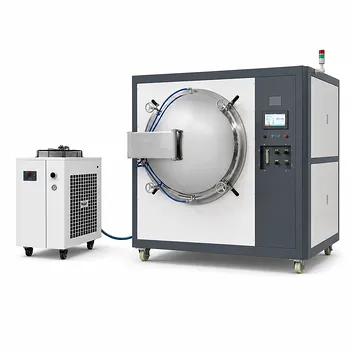
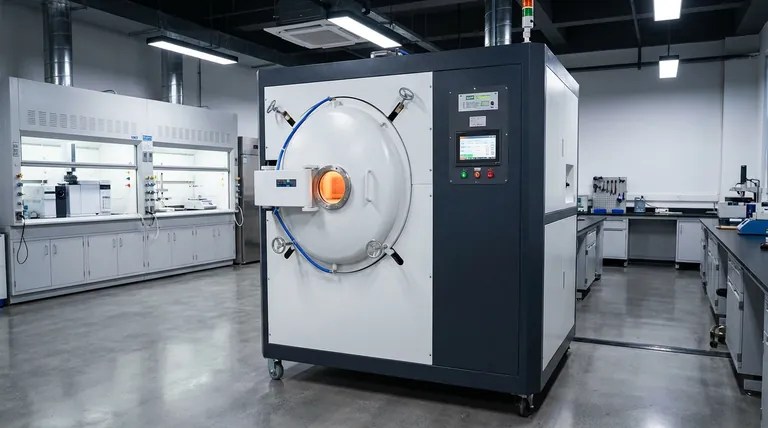
For laboratories and R&D facilities dedicated to pushing the boundaries of material science, this level of control isn't a luxury; it's a necessity. KINTEK provides high-performance vacuum furnaces that deliver the pristine, controlled environment required for developing next-generation materials. We help you move from hoping for a good result to programming a perfect one.
Invest in certainty for your most critical processes. Contact Our Experts
Visual Guide
Related Products
- Vacuum Sealed Continuous Working Rotary Tube Furnace Rotating Tube Furnace
- Molybdenum Vacuum Heat Treat Furnace
- Vacuum Hot Press Furnace Heated Vacuum Press Machine Tube Furnace
- 1700℃ Controlled Atmosphere Furnace Nitrogen Inert Atmosphere Furnace
- Non Consumable Vacuum Arc Induction Melting Furnace
Related Articles
- Unlocking Efficiency: The Ultimate Guide to Rotary Tube Furnaces
- Unlocking Efficiency: Exploring the Advantages and Applications of Rotary Tube Furnaces
- The Physics of Perfection: How Rotary Furnaces Eliminate Randomness in Material Processing
- Exploring the Benefits and Applications of Rotary Furnaces: A Comprehensive Guide
- The Geometry of Heat: Engineering the Perfect Thermal Environment