Knowledge How do chemical vapor deposition (CVD) systems optimize high-performance strain thin films? Master Atomic Precision
Author avatar

Tech Team · Kintek Solution

Updated 3 days ago

How do chemical vapor deposition (CVD) systems optimize high-performance strain thin films? Master Atomic Precision


Chemical vapor deposition (CVD) systems optimize thin-film production by maintaining rigorous control over three critical variables: gas-phase precursor flow rates, reaction chamber pressure, and substrate temperature. By manipulating these parameters, engineers can achieve atomic-scale precision over both the growth rate and the chemical composition (stoichiometry) of the film.

The ultimate goal of this precision is to induce specific lattice mismatch strains on the substrate. This atomic-level control is the foundation for creating high-performance strain-engineered materials used in advanced devices.

The Mechanics of Optimization

Regulating the Environment

The optimization process begins with the gas-phase precursor flow rates. CVD systems must deliver exact amounts of chemical reactants to the chamber.

Simultaneously, the system actively manages the reaction chamber pressure. This ensures the density of the reactants remains consistent throughout the deposition process.

Finally, the substrate temperature is strictly maintained. This thermal control is essential for driving the chemical reactions required for high-quality film formation.

Achieving Atomic Precision

By synchronizing flow, pressure, and temperature, CVD systems achieve atomic-scale control over the manufacturing process.

This allows operators to dictate the exact thin-film growth rates. A controlled rate is necessary to ensure uniform thickness across the substrate.

Furthermore, this regulation ensures the correct stoichiometry. This refers to the precise chemical balance of elements within the film, which is fundamental to its material properties.

The Role of Strain Engineering

Inducing Lattice Mismatch

The primary objective of this atomic control is to induce specific lattice mismatch strains.

Strain occurs when the crystalline lattice of the thin film does not perfectly align with the substrate. CVD systems leverage this mismatch deliberately rather than treating it as a defect.

Enabling Device-Level Production

Creating these specific strain states is a necessary step for the device-level production of strain-engineered materials.

Without the precise inputs provided by the CVD system, replicating these strain effects consistently across high-volume production would be impossible.

Understanding the Process Sensitivities

The Dependency on Calibration

The effectiveness of CVD is entirely dependent on the precision of the input variables.

Because the process relies on the interaction of temperature, pressure, and flow, any fluctuation in one variable can impact the others.

The Risk of Stoichiometric Imbalance

If the process parameters drift, the film may suffer from stoichiometric errors.

A film with incorrect chemical composition will fail to generate the specific lattice mismatch required. This renders the material ineffective for high-performance strain applications.

Making the Right Choice for Your Goal

To effectively utilize CVD for strain-engineered films, you must align your process controls with your specific material requirements.

  • If your primary focus is Lattice Strain: Prioritize the precise tuning of precursor flow and temperature to force the specific lattice mismatch required.
  • If your primary focus is Film Uniformity: Focus on stabilizing reaction chamber pressure and growth rates to ensure consistent stoichiometry across the device.

CVD transforms the theoretical benefits of strain engineering into tangible, high-performance devices through rigorous environmental control.

Summary Table:

Optimization Variable Primary Role in Thin-Film Production Impact on Strain Engineering
Precursor Flow Rate Delivers exact chemical reactants Controls chemical composition (stoichiometry)
Chamber Pressure Manages reactant density Ensures uniform growth rates across the substrate
Substrate Temp Drives required chemical reactions Facilitates intentional lattice mismatch strains
Atomic Control Synchronizes all environmental factors Enables device-level production of strained materials

Elevate Your Thin-Film Research with KINTEK Precision

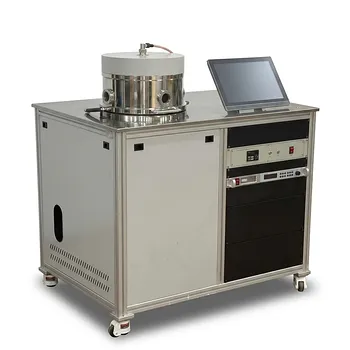
Achieving the perfect lattice mismatch for high-performance devices requires the most reliable laboratory tools. KINTEK specializes in advanced CVD and PECVD systems, vacuum technology, and high-temperature furnaces designed to give you atomic-scale control over your manufacturing process.

Whether you are focused on strain engineering for advanced semiconductors or developing next-generation battery materials, our comprehensive portfolio—including high-temperature reactors, crushing systems, and precision hydraulic presses—ensures your lab delivers consistent, scalable results.

Ready to optimize your stoichiometry and film uniformity? Contact our experts today to find the perfect equipment solution for your research goals.

References

  1. Hasmik Kirakosyan, Sofiya Aydinyan. The preparation of high-entropy refractory alloys by aluminothermic reduction process. DOI: 10.1063/5.0189206

This article is also based on technical information from Kintek Solution Knowledge Base .

Related Products

People Also Ask

Related Products

Multi Heating Zones CVD Tube Furnace Machine Chemical Vapor Deposition Chamber System Equipment

Multi Heating Zones CVD Tube Furnace Machine Chemical Vapor Deposition Chamber System Equipment

KT-CTF14 Multi Heating Zones CVD Furnace - Precise Temperature Control and Gas Flow for Advanced Applications. Max temp up to 1200℃, 4 channels MFC mass flow meter, and 7" TFT touch screen controller.

Vacuum Hot Press Furnace Heated Vacuum Press Machine Tube Furnace

Vacuum Hot Press Furnace Heated Vacuum Press Machine Tube Furnace

Reduce forming pressure & shorten sintering time with Vacuum Tube Hot Press Furnace for high-density, fine-grain materials. Ideal for refractory metals.

1200℃ Split Tube Furnace with Quartz Tube Laboratory Tubular Furnace

1200℃ Split Tube Furnace with Quartz Tube Laboratory Tubular Furnace

KT-TF12 split tube furnace: high-purity insulation, embedded heating wire coils, and max. 1200C. Widely used for new materials and chemical vapour deposition.

Ultra-High Temperature Graphite Vacuum Graphitization Furnace

Ultra-High Temperature Graphite Vacuum Graphitization Furnace

The ultra-high temperature graphitization furnace utilizes medium frequency induction heating in a vacuum or inert gas environment. The induction coil generates an alternating magnetic field, inducing eddy currents in the graphite crucible, which heats up and radiates heat to the workpiece, bringing it to the desired temperature. This furnace is primarily used for graphitization and sintering of carbon materials, carbon fiber materials, and other composite materials.

Vacuum Heat Treat Sintering Brazing Furnace

Vacuum Heat Treat Sintering Brazing Furnace

A vacuum brazing furnace is a type of industrial furnace used for brazing, a metalworking process that joins two pieces of metal using a filler metal that melts at a lower temperature than the base metals. Vacuum brazing furnaces are typically used for high-quality applications where a strong, clean joint is required.

600T Vacuum Induction Hot Press Furnace for Heat Treat and Sintering

600T Vacuum Induction Hot Press Furnace for Heat Treat and Sintering

Discover the 600T Vacuum Induction Hot Press Furnace, designed for high-temperature sintering experiments in vacuum or protected atmospheres. Its precise temperature and pressure control, adjustable working pressure, and advanced safety features make it ideal for nonmetal materials, carbon composites, ceramics, and metal powders.

Vacuum Hot Press Furnace Machine Heated Vacuum Press

Vacuum Hot Press Furnace Machine Heated Vacuum Press

Discover the advantages of Vacuum Hot Press Furnace! Manufacture dense refractory metals & compounds, ceramics, and composites under high temp and pressure.

Vacuum Heat Treat Furnace and Levitation Induction Melting Furnace

Vacuum Heat Treat Furnace and Levitation Induction Melting Furnace

Experience precise melting with our Vacuum Levitation Melting Furnace. Ideal for high melting point metals or alloys, with advanced technology for effective smelting. Order now for high-quality results.

Laboratory Rapid Thermal Processing (RTP) Quartz Tube Furnace

Laboratory Rapid Thermal Processing (RTP) Quartz Tube Furnace

Get lightning-fast heating with our RTP Rapid Heating Tube Furnace. Designed for precise, high-speed heating and cooling with convenient sliding rail and TFT touch screen controller. Order now for ideal thermal processing!

1200℃ Controlled Atmosphere Furnace Nitrogen Inert Atmosphere Furnace

1200℃ Controlled Atmosphere Furnace Nitrogen Inert Atmosphere Furnace

Discover our KT-12A Pro Controlled atmosphere furnace - high precision, heavy duty vacuum chamber, versatile smart touch screen controller, and excellent temperature uniformity up to 1200C. Ideal for both laboratory and industrial application.

1400℃ Controlled Atmosphere Furnace with Nitrogen and Inert Atmosphere

1400℃ Controlled Atmosphere Furnace with Nitrogen and Inert Atmosphere

Achieve precise heat treatment with KT-14A controlled atmosphere furnace. Vacuum sealed with a smart controller, it's ideal for lab and industrial use up to 1400℃.

Vacuum Heat Treat and Sintering Furnace with 9MPa Air Pressure

Vacuum Heat Treat and Sintering Furnace with 9MPa Air Pressure

The air pressure sintering furnace is a high-tech equipment commonly used for the sintering of advanced ceramic materials. It combines vacuum sintering and pressure sintering techniques to achieve high-density and high-strength ceramics.

Vacuum Heat Treat and Molybdenum Wire Sintering Furnace for Vacuum Sintering

Vacuum Heat Treat and Molybdenum Wire Sintering Furnace for Vacuum Sintering

A vacuum molybdenum wire sintering furnace is a vertical or bedroom structure, which is suitable for withdrawal, brazing, sintering and degassing of metal materials under high vacuum and high temperature conditions. It is also suitable for dehydroxylation treatment of quartz materials.

Mesh belt controlled atmosphere furnace

Mesh belt controlled atmosphere furnace

Discover our KT-MB mesh belt sintering furnace - perfect for high-temperature sintering of electronic components & glass insulators. Available for open air or controlled atmosphere environments.

1800℃ Muffle Oven Furnace for Laboratory

1800℃ Muffle Oven Furnace for Laboratory

KT-18 muffle furnace with Japan Al2O3 polycrystalline fibe and Silicon Molybdenum heating element, up to 1900℃, PID temperature control and 7" smart touch screen. Compact design, low heat loss, and high energy efficiency. Safety interlock system and versatile functions.

Vacuum Dental Porcelain Sintering Furnace

Vacuum Dental Porcelain Sintering Furnace

Get precise and reliable results with KinTek's Vacuum Porcelain Furnace. Suitable for all porcelain powders, it features hyperbolic ceramic furnace function, voice prompt, and automatic temperature calibration.

Laboratory Vacuum Tilt Rotary Tube Furnace Rotating Tube Furnace

Laboratory Vacuum Tilt Rotary Tube Furnace Rotating Tube Furnace

Discover the versatility of Laboratory Rotary Furnace: Ideal for calcination, drying, sintering, and high-temperature reactions. Adjustable rotating and tilting functions for optimal heating. Suitable for vacuum and controlled atmosphere environments. Learn more now!

Vertical High Temperature Graphite Vacuum Graphitization Furnace

Vertical High Temperature Graphite Vacuum Graphitization Furnace

Vertical high temperature graphitization furnace for carbonization and graphitization of carbon materials up to 3100℃.Suitable for shaped graphitization of carbon fiber filaments and other materials sintered in a carbon environment.Applications in metallurgy, electronics, and aerospace for producing high-quality graphite products like electrodes and crucibles.

2200 ℃ Tungsten Vacuum Heat Treat and Sintering Furnace

2200 ℃ Tungsten Vacuum Heat Treat and Sintering Furnace

Experience the ultimate refractory metal furnace with our Tungsten vacuum furnace. Capable of reaching 2200℃, perfect for sintering advanced ceramics and refractory metals. Order now for high-quality results.

1700℃ Muffle Oven Furnace for Laboratory

1700℃ Muffle Oven Furnace for Laboratory

Get superior heat control with our 1700℃ Muffle Furnace. Equipped with intelligent temperature microprocessor, TFT touch screen controller & advanced insulation materials for precise heating up to 1700C. Order now!


Leave Your Message