Knowledge How do crushing and sieving systems facilitate the extraction of bioactive compounds? Maximize Your Lab's Extraction Yield
Author avatar

Tech Team · Kintek Solution

Updated 3 weeks ago

How do crushing and sieving systems facilitate the extraction of bioactive compounds? Maximize Your Lab's Extraction Yield


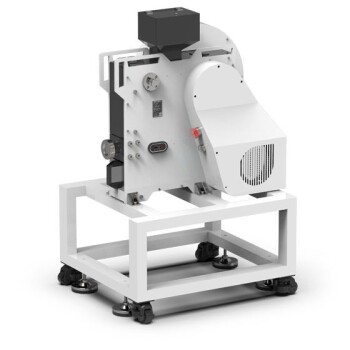
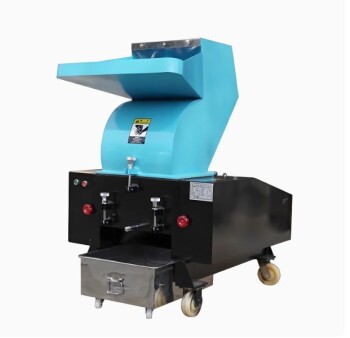
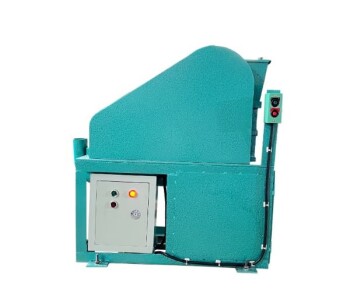
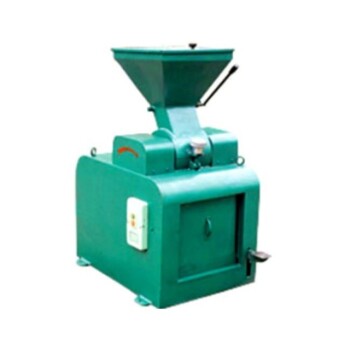
Mechanical reduction is the foundational step in maximizing extraction efficiency. Crushing and sieving systems operate by physically breaking down grape byproducts—such as skins and seeds—into fine particles. This process drastically increases the specific surface area of the material and ruptures cellular structures, allowing solvents to penetrate the biomass matrix and release target compounds.

The core principle of efficient extraction is maximizing the interface between solid matter and liquid solvent. Crushing and sieving facilitate this by physically destroying cell walls and significantly shortening the diffusion path required for solvents to reach and dissolve bioactive molecules.

The Mechanics of Enhanced Extraction

Increasing Specific Surface Area

The primary function of crushing is to transform bulk biomass into fine particles.

By reducing the size of the material, the specific surface area available for interaction increases exponentially. This maximizes the contact zone between the plant tissues and the extraction solvent.

Rupturing Cellular Barriers

Bioactive compounds are often locked within tough cell wall structures.

Mechanical forces applied during crushing effectively rupture these cell walls. This physical modification of the biomass matrix exposes the internal cellular contents directly to the solvent, removing the primary physical barrier to extraction.

Shortening Diffusion Paths

In a large particle, the solvent must penetrate deep into the core to access compounds.

Crushing reduces the distance the solvent must travel. These shortened diffusion paths allow for rapid mass transfer, meaning the target compounds move from the solid to the liquid phase much faster.

Optimizing Solvent Interaction

Enhancing Solvent Penetration

Once the biomass matrix is modified and loosened, the solvent can permeate the material more freely.

This is particularly critical when using solvents like deionized water to target specific molecules. Better penetration ensures a more thorough "wash" of the cellular material, leading to higher recovery rates.

Targeting Specific Bioactives

Effective mechanical processing is essential for recovering complex molecules like flavonoids and polyphenols.

These compounds act as reducing and stabilizing agents—essential for applications such as nanoparticle synthesis—and their recovery is directly correlated to how effectively the solvent can access the ruptured plant tissues.

Understanding the Trade-offs

The Risk of Thermal Degradation

While mechanical force is necessary, it inevitably generates friction and heat.

If the crushing process is too aggressive or prolonged, the resulting heat can degrade sensitive bioactive compounds. It is vital to monitor temperature to ensure the biological activity of the molecules remains intact.

The Importance of Sieving Uniformity

Sieving is not just about making things small; it is about making them uniform.

Inconsistent particle sizes lead to uneven extraction rates. Fine dust may over-extract or clog filters, while larger chunks may remain under-extracted, resulting in an inefficient process overall.

Optimizing Your Process for Yield and Purity

To ensure you are getting the most out of your crushing and sieving systems, consider your specific extraction goals:

  • If your primary focus is maximum yield: Prioritize finer particle sizes to maximize specific surface area and ensure total cell wall rupture.
  • If your primary focus is compound stability: Monitor mechanical heat generation closely to prevent the thermal degradation of heat-sensitive polyphenols.
  • If your primary focus is downstream application (e.g., Nanoparticles): Ensure the extraction maximizes flavonoids, as these are critical reducing agents for synthesis processes.

Balancing physical particle reduction with temperature control is the key to achieving high-efficiency extraction without compromising chemical integrity.

Summary Table:

Mechanism Impact on Extraction Key Benefit
Particle Size Reduction Increases specific surface area Maximizes solvent-to-biomass contact
Cell Wall Rupture Breaks physical cellular barriers Releases locked bioactive compounds
Shortened Diffusion Path Reduces travel distance for solvents Enables faster mass transfer rates
Sieving Uniformity Ensures consistent particle size Prevents over-extraction and clogging
Temperature Control Minimizes frictional heat Preserves stability of heat-sensitive polyphenols

Elevate Your Extraction Precision with KINTEK

Maximize the recovery of high-value polyphenols and flavonoids with KINTEK’s advanced crushing and milling systems. Whether you are processing grape byproducts for nanoparticle synthesis or pharmaceutical research, our precision-engineered sieving equipment ensures the particle uniformity required for consistent, high-yield results.

From high-temperature furnaces for material characterization to specialized PTFE and ceramic consumables for solvent purity, KINTEK provides the comprehensive tools your laboratory needs to push the boundaries of biomass research. Don't let inefficient mechanical processing limit your scientific potential.

Ready to optimize your lab's extraction efficiency? Contact KINTEK experts today to discover the perfect equipment solution for your specific research goals.

References

  1. Marta Coelho, Manuela Pintado. The use of emergent technologies to extract added value compounds from grape by-products. DOI: 10.1016/j.tifs.2020.09.028

This article is also based on technical information from Kintek Solution Knowledge Base .

Related Products

People Also Ask

Related Products

Laboratory Test Sieves and Vibratory Sieve Shaker Machine

Laboratory Test Sieves and Vibratory Sieve Shaker Machine

Efficiently process powders, granules, and small blocks with a high-frequency vibration sieve. Control vibration frequency, screen continuously or intermittently, and achieve accurate particle size determination, separation, and classification.

Laboratory Jar Ball Mill with Alumina Zirconia Grinding Jar and Balls

Laboratory Jar Ball Mill with Alumina Zirconia Grinding Jar and Balls

Grind to perfection with alumina/zirconia grinding jars and balls. Available in volume sizes from 50ml to 2500ml, compatible with various mills.

Laboratory Jaw Crusher

Laboratory Jaw Crusher

Discover the small jaw crusher for efficient, flexible, and affordable crushing in labs and small mines. Ideal for coal, ores, and rocks. Learn more now!

Sealed Jaw Crusher High Efficiency Environmental Protection Safe and Reliable

Sealed Jaw Crusher High Efficiency Environmental Protection Safe and Reliable

Discover our Sealed Jaw Crusher: High efficiency, environmental protection, Safe and reliable crushing for labs, mines, and more.

Laboratory Sealed Hammer Crusher for Efficient Sample Preparation

Laboratory Sealed Hammer Crusher for Efficient Sample Preparation

Discover the Laboratory Sealed Hammer Crusher for efficient sample preparation. Ideal for coal, metallurgy, and research, this crusher ensures high production efficiency and environmental friendliness.

Liquid Nitrogen Cryogenic Grinder Mill Cryomill Airflow Ultrafine Pulverizer

Liquid Nitrogen Cryogenic Grinder Mill Cryomill Airflow Ultrafine Pulverizer

Discover the Liquid Nitrogen Cryogenic Grinding Machine, perfect for lab use, ultra-fine pulverization, and preserving material properties. Ideal for pharmaceuticals, cosmetics, and more.

Vibratory Sieve Shaker Machine Dry Three-Dimensional Vibrating Sieve

Vibratory Sieve Shaker Machine Dry Three-Dimensional Vibrating Sieve

The KT-V200 product focuses on solving common sieving tasks in the laboratory. It is suitable for sieving 20g-3kg dry samples.

Cold Isostatic Pressing Machine CIP for Small Workpiece Production 400Mpa

Cold Isostatic Pressing Machine CIP for Small Workpiece Production 400Mpa

Produce uniformly high-density materials with our Cold Isostatic Press. Ideal for compacting small workpieces in production settings. Widely used in powder metallurgy, ceramics, and biopharmaceutical fields for high-pressure sterilization and protein activation.

Custom PTFE Teflon Parts Manufacturer for PTFE Mesh F4 Sieve

Custom PTFE Teflon Parts Manufacturer for PTFE Mesh F4 Sieve

PTFE mesh sieve is a specialized test sieve designed for particle analysis in various industries, featuring a non-metallic mesh woven from PTFE filament. This synthetic mesh is ideal for applications where metal contamination is a concern . PTFE sieves are crucial for maintaining the integrity of samples in sensitive environments, ensuring accurate and reliable results in particle size distribution analysis.

Automatic Heated Hydraulic Press Machine with Heated Plates for Laboratory Hot Press 25T 30T 50T

Automatic Heated Hydraulic Press Machine with Heated Plates for Laboratory Hot Press 25T 30T 50T

Efficiently prepare your samples with our Automatic Heated Lab Press. With a pressure range up to 50T and precise control, it's perfect for various industries.

HFCVD Machine System Equipment for Drawing Die Nano-Diamond Coating

HFCVD Machine System Equipment for Drawing Die Nano-Diamond Coating

The nano-diamond composite coating drawing die uses cemented carbide (WC-Co) as the substrate, and uses the chemical vapor phase method ( CVD method for short ) to coat the conventional diamond and nano-diamond composite coating on the surface of the inner hole of the mold.

Automatic Lab Cold Isostatic Press CIP Machine Cold Isostatic Pressing

Automatic Lab Cold Isostatic Press CIP Machine Cold Isostatic Pressing

Efficiently prepare samples with our Automatic Lab Cold Isostatic Press. Widely used in material research, pharmacy, and electronic industries. Provides greater flexibility and control compared to electric CIPs.

Manual High Temperature Heated Hydraulic Press Machine with Heated Plates for Lab

Manual High Temperature Heated Hydraulic Press Machine with Heated Plates for Lab

The High Temperature Hot Press is a machine specifically designed for pressing, sintering and processing materials in a high temperature environment. It is capable of operating in the range of hundreds of degrees Celsius to thousands of degrees Celsius for a variety of high temperature process requirements.

Vacuum Hot Press Furnace Machine for Lamination and Heating

Vacuum Hot Press Furnace Machine for Lamination and Heating

Experience clean and precise lamination with Vacuum Lamination Press. Perfect for wafer bonding, thin-film transformations, and LCP lamination. Order now!

Lab Blown Film Extrusion Three Layer Co-Extrusion Film Blowing Machine

Lab Blown Film Extrusion Three Layer Co-Extrusion Film Blowing Machine

Lab blown film extrusion is mainly used to detect the feasibility of film blowing of polymer materials and the colloid condition in the materials, as well as the dispersion of colored dispersions, controlled mixtures, and extrudates;

Laboratory High Pressure Horizontal Autoclave Steam Sterilizer for Lab Use

Laboratory High Pressure Horizontal Autoclave Steam Sterilizer for Lab Use

The horizontal autoclave steam sterilizer adopts the gravity displacement method to remove the cold air in the inner chamber, so that the inner steam and cold air content is less, and the sterilization is more reliable.

Custom PTFE Teflon Parts Manufacturer for Culture Dish and Evaporation Dish

Custom PTFE Teflon Parts Manufacturer for Culture Dish and Evaporation Dish

The PTFE culture dish evaporating dish is a versatile laboratory tool known for its chemical resistance and high-temperature stability. PTFE, a fluoropolymer, offers exceptional non-stick properties and durability, making it ideal for various applications in research and industry, including filtration, pyrolysis, and membrane technology.

Electric Rotary Kiln Pyrolysis Furnace Plant Machine Calciner Small Rotary Kiln Rotating Furnace

Electric Rotary Kiln Pyrolysis Furnace Plant Machine Calciner Small Rotary Kiln Rotating Furnace

Electric rotary kiln - precisely controlled, it's ideal for calcination and drying of materials like lithium cobalate, rare earths, and non-ferrous metals.

Microwave Plasma Chemical Vapor Deposition MPCVD Machine System Reactor for Lab and Diamond Growth

Microwave Plasma Chemical Vapor Deposition MPCVD Machine System Reactor for Lab and Diamond Growth

Get high-quality diamond films with our Bell-jar Resonator MPCVD machine designed for lab and diamond growth. Discover how Microwave Plasma Chemical Vapor Deposition works for growing diamonds using carbon gas and plasma.

Square Lab Press Mold for Laboratory Applications

Square Lab Press Mold for Laboratory Applications

Create uniform samples easily with Square Lab Press Mold - available in various sizes. Ideal for battery, cement, ceramics, and more. Custom sizes available.


Leave Your Message