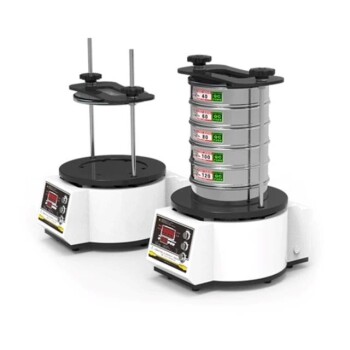
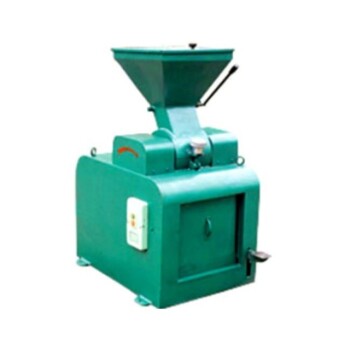
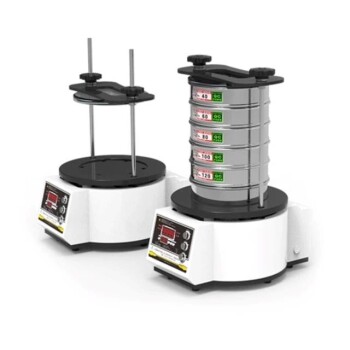
Crushing and sieving systems are the critical preparatory step in extracting bioactive compounds from plant materials like Tilia cordata. By mechanically processing plant components—such as stems, leaves, and flowers—into fine particles, these systems maximize the contact surface area between the biological tissue and the solvent, typically deionized water. This physical transformation directly enhances the extraction efficiency of key molecules like flavonoids and polyphenols.
The core function of this mechanical processing is to optimize mass transfer. By breaking down the plant matrix, you ensure thorough solvent penetration and shorter diffusion paths, which maximizes the yield of the reducing and stabilizing agents necessary for downstream applications like nanoparticle synthesis.
The Mechanics of Extraction Efficiency
Maximizing Specific Surface Area
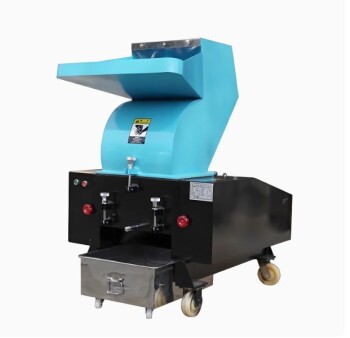
The primary obstacle in extraction is the physical barrier of the plant structure. Crushing systems reduce the biomass to fine particles, significantly increasing the specific surface area.
This exposes a greater volume of the plant tissue to the solvent immediately upon contact. As the surface area increases, the interface for chemical transfer expands, allowing the solvent to interact with more material simultaneously.
Rupturing Cell Structures
Beyond simple size reduction, mechanical crushing acts to rupture cell walls. This structural modification is vital for accessing intracellular compounds.
By breaking these barriers, the process shortens the diffusion path required for bioactive molecules to exit the plant matrix. This allows the solvent to penetrate the lignocellulosic structure more uniformly and deeply.
Enhancing Solvent Permeability
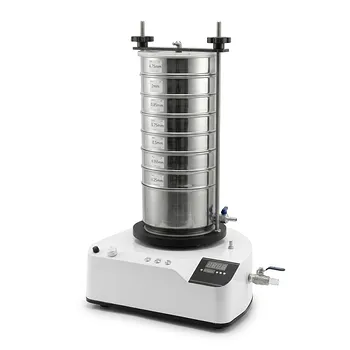
Sieving ensures that the particles fall within a specific size range. This uniformity prevents the formation of "channels" where solvent might bypass larger chunks of material.
Instead, the solvent permeates the material evenly. This results in a consistent and thorough extraction process, rather than a superficial wash of the outer plant surfaces.
The Impact on Bioactive Molecule Yield
Targeting Flavonoids and Polyphenols
For Tilia cordata, the goal is the isolation of specific bioactive groups: flavonoids and polyphenols.
These molecules are trapped within the plant's fibrous networks. High-efficiency crushing ensures that the solvent can dissolve these specific compounds at a rate that makes the process viable for laboratory or industrial use.
Enabling SnO2 Nanoparticle Synthesis
The extraction of these molecules is not an end in itself; it serves a precise chemical purpose. The extracted flavonoids and polyphenols function as reducing and stabilizing agents.
These agents are essential for the subsequent synthesis of tin dioxide (SnO2) nanoparticles. Without the high extraction efficiency enabled by crushing and sieving, the concentration of these agents would be insufficient to support stable nanoparticle formation.
Understanding the Trade-offs
The Necessity of Particle Uniformity
It is not enough to simply crush the material randomly; it must be sieved to a consistent size. Variable particle sizes lead to inconsistent reaction kinetics.
If particles are too large, the solvent cannot penetrate to the core, leaving valuable compounds trapped. If the distribution is too wide, the extraction becomes unpredictable, making it difficult to replicate results or scale the process.
Balancing Size and Processing constraints
While smaller particles generally offer better extraction, extreme reduction requires more energy and precise equipment.
The goal is to reach a "sweet spot"—a particle size range that maximizes surface area while maintaining a structure that allows for easy handling and subsequent filtration.
Making the Right Choice for Your Goal
- If your primary focus is Nanoparticle Synthesis (SnO2): Prioritize systems that produce fine, uniform particles to maximize the concentration of reducing agents (polyphenols) needed for reaction stability.
- If your primary focus is Process Consistency: Ensure your system includes rigorous sieving capabilities to maintain specific particle ranges, guaranteeing reproducible kinetic data and extraction rates.
Optimizing the mechanical preparation of your biomass is the single most effective way to ensure the chemical success of your extraction process.
Summary Table:
| Process Step | Mechanism | Impact on Extraction |
|---|---|---|
| Mechanical Crushing | Ruptures cell walls and increases specific surface area | Maximizes solvent contact and shortens diffusion paths for molecules |
| Precision Sieving | Ensures particle size uniformity and removes outliers | Prevents solvent channeling and ensures consistent reaction kinetics |
| Solvent Interaction | Deep penetration of the lignocellulosic matrix | Efficiently dissolves targeted flavonoids and polyphenols |
| Yield Optimization | Increases concentration of reducing/stabilizing agents | Enables stable synthesis of SnO2 nanoparticles |
Elevate Your Extraction Efficiency with KINTEK
Unlock the full potential of your botanical research with KINTEK’s premium crushing and milling systems. Whether you are extracting bioactive molecules from Tilia cordata for nanoparticle synthesis or developing complex chemical profiles, our laboratory solutions are engineered for precision.
Why choose KINTEK?
- Superior Particle Control: High-performance crushing and sieving equipment for optimal surface area.
- Comprehensive Lab Portfolio: From high-temperature furnaces and hydraulic presses to specialized high-temperature high-pressure reactors and autoclaves.
- Reliability & Scale: Quality consumables like ceramics, crucibles, and PTFE products to support every stage of your workflow.
Contact KINTEK today to optimize your laboratory process!
References
- Eduardo González, P.A. Luque. A Study of the Optical and Structural Properties of SnO2 Nanoparticles Synthesized with Tilia cordata Applied in Methylene Blue Degradation. DOI: 10.3390/sym14112231
This article is also based on technical information from Kintek Solution Knowledge Base .
Related Products
- Laboratory Test Sieves and Sieving Machines
- Three-dimensional electromagnetic sieving instrument
- Laboratory Vibratory Sieve Shaker Machine for Dry and Wet Three-Dimensional Sieving
- Powerful Plastic Crusher Machine
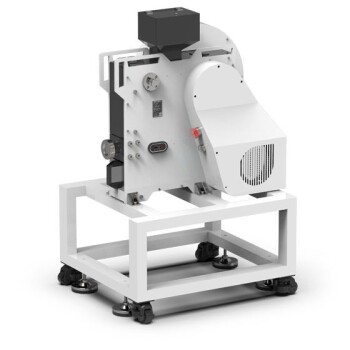
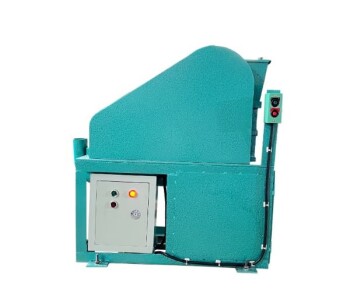
- Laboratory Jaw Crusher
People Also Ask
- What are laboratory test sieves used for? A Guide to Particle Size Analysis
- How do you calculate the sieve test? Master Particle Size Distribution for Quality Control
- How does a lab test sieve contribute to biomass charcoal powder preparation? Achieve Uniform Particle Size
- What are the specifications for test sieves? A Guide to ASTM & ISO Standards for Accurate Particle Analysis
- What materials are required for sieving? Achieve Accurate Particle Size Analysis