Knowledge How do industrial-grade crushing and sieving systems ensure the experimental suitability of catalyst particles?
Author avatar

Tech Team · Kintek Solution

Updated 10 hours ago

How do industrial-grade crushing and sieving systems ensure the experimental suitability of catalyst particles?


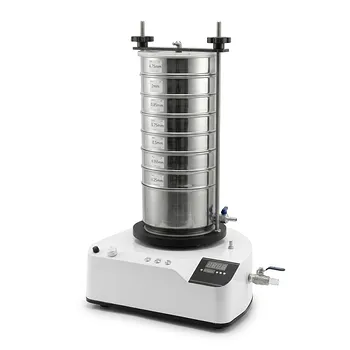
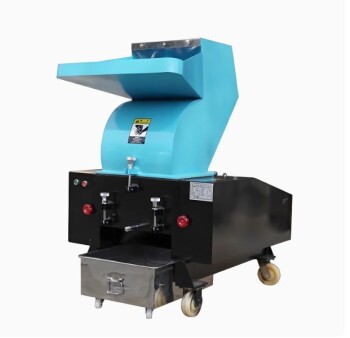
Industrial-grade crushing and sieving systems act as the primary control mechanism for experimental integrity by processing calcined catalysts into precise particle size ranges, typically between 0.15 and 0.25 mm. This specific size reduction is essential to ensure that reactants can efficiently access the active sites within the catalyst's mesoporous structure. By mechanically enforcing uniformity, these systems allow researchers to assess the true kinetic performance of the material without interference from physical transport issues.

Core Takeaway: The value of crushing and sieving lies not just in size reduction, but in the elimination of variables. By removing internal diffusion limitations, these systems ensure that experimental data reflects the catalyst's intrinsic chemistry rather than its physical limitations.

The Role of Particle Sizing in Catalytic Performance

To determine if a catalyst is truly effective, you must separate its chemical potential from physical barriers. Industrial crushing systems facilitate this by preparing the material for rigorous testing.

Eliminating Diffusion Limitations

The primary objective of sizing is to overcome diffusion limitations.

If catalyst particles are too large, reactants cannot travel deep enough to reach the active sites buried within the mesoporous structure.

Crushing the material to a fine range (e.g., 0.15–0.25 mm) ensures the path to these active sites is short and accessible.

Uncovering Intrinsic Kinetics

Accurate data collection relies on measuring intrinsic kinetic performance.

When diffusion interferes with the reaction, the resulting data represents a mix of transport speed and reaction speed, obscuring the truth.

Properly sieved particles allow researchers to ignore transport time and focus purely on how fast the chemistry occurs.

Ensuring Uniform Reactor Packing

Beyond chemical kinetics, physical consistency is vital for reactor stability.

Sievers ensure that the processed supports (such as alumina or AlCeO3) fall within a uniform distribution, often around 350 to 500 µm for specific fixed-bed applications.

This uniformity prevents channeling and ensures that the catalyst bed packs densely and evenly.

Understanding the Trade-offs

While reducing particle size is necessary for kinetic accuracy, it introduces physical challenges that must be managed.

The Pressure Drop Balance

There is a distinct tension between kinetic accuracy and hydraulic performance.

While smaller particles (0.15 mm) offer the best kinetic data, they pack so tightly that they can cause excessive pressure drops across a reactor.

Conversely, larger particles (up to 500 µm) reduce pressure issues but increase the risk of diffusion limitations, potentially skewing reaction data.

Material Integrity and Yield

Aggressive crushing can pulverize catalysts into "fines" (dust) that are unusable for testing.

Sieving systems must be calibrated to maximize the yield of the target range while discarding particles that are structurally compromised or too small to be useful.

Making the Right Choice for Your Goal

Selecting the correct target particle size requires understanding the specific constraints of your experimental apparatus and your scientific objectives.

  • If your primary focus is Intrinsic Kinetics: Target the smaller range (0.15–0.25 mm) to guarantee that diffusion limitations are eliminated and active sites are fully accessible.
  • If your primary focus is Reactor Hydrodynamics: Target the larger range (350–500 µm) to prevent excessive pressure drops and ensure stable flow through fixed-bed systems.

Ultimately, precise particle sizing is the baseline requirement for converting a raw chemical solid into a reliable scientific tool.

Summary Table:

Particle Size Range Primary Objective Key Advantage Potential Challenge
0.15 – 0.25 mm Kinetic Accuracy Eliminates diffusion limits; full active site access Higher pressure drop in reactor
350 – 500 µm Reactor Hydrodynamics Uniform bed packing; stable fluid flow Possible internal transport limitations
< 0.15 mm (Fines) N/A High surface area Clogging risk; unusable for fixed-beds

Precision Sizing for Superior Catalysis

Ensure your experimental results reflect your catalyst's true chemical potential, not physical limitations. KINTEK provides the advanced industrial crushing and milling systems, precision sieving equipment, and hydraulic presses required to achieve perfect particle uniformity.

Whether you are processing alumina supports or specialized catalysts, our lab-grade solutions minimize fines and maximize yield for your research. From high-temperature furnaces to specialized reactors and cooling solutions, KINTEK is your partner in laboratory excellence.

Ready to optimize your material preparation? Contact KINTEK today to discuss your equipment needs!

References

  1. Cheng‐Di Dong, Chang‐Mao Hung. Platinum particles supported on mesoporous carbons: fabrication and electrocatalytic performance in methanol-tolerant oxygen-reduction reactions. DOI: 10.1038/srep05790

This article is also based on technical information from Kintek Solution Knowledge Base .

Related Products

People Also Ask

Related Products

Laboratory Test Sieves and Vibratory Sieve Shaker Machine

Laboratory Test Sieves and Vibratory Sieve Shaker Machine

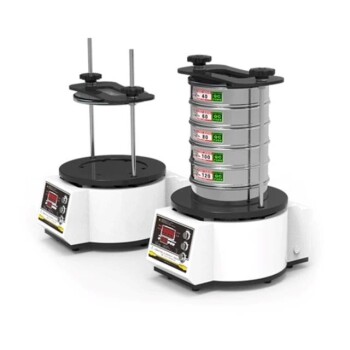
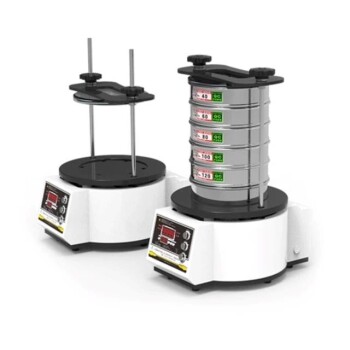
Efficiently process powders, granules, and small blocks with a high-frequency vibration sieve. Control vibration frequency, screen continuously or intermittently, and achieve accurate particle size determination, separation, and classification.

Laboratory Single Horizontal Jar Mill

Laboratory Single Horizontal Jar Mill

KT-JM3000 is a mixing and grinding instrument for placing a ball milling tank with a volume of 3000ml or less. It adopts frequency conversion control to realize timing, constant speed, direction change, overload protection and other functions.

High Energy Planetary Ball Mill for Laboratory Horizontal Tank Type Milling Machine

High Energy Planetary Ball Mill for Laboratory Horizontal Tank Type Milling Machine

KT-P4000H uses the unique Y-axis planetary motion trajectory, and utilizes the collision, friction and gravity between the sample and the grinding ball to have a certain anti-sinking ability, which can obtain better grinding or mixing effects and further improve the sample output.

High Energy Planetary Ball Mill Milling Machine for Laboratory

High Energy Planetary Ball Mill Milling Machine for Laboratory

Experience fast and effective sample processing with the F-P2000 high-energy planetary ball mill. This versatile equipment offers precise control and excellent grinding capabilities. Perfect for laboratories, it features multiple grinding bowls for simultaneous testing and high output. Achieve optimal results with its ergonomic design, compact structure, and advanced features. Ideal for a wide range of materials, it ensures consistent particle size reduction and low maintenance.

High Energy Planetary Ball Mill Milling Machine for Laboratory

High Energy Planetary Ball Mill Milling Machine for Laboratory

The biggest feature is that the high energy planetary ball mill can not only perform fast and effective grinding, but also has good crushing ability

Laboratory Jar Mill with Agate Grinding Jar and Balls

Laboratory Jar Mill with Agate Grinding Jar and Balls

Grind your materials with ease using Agate Grinding Jars with Balls. Sizes from 50ml to 3000ml, perfect for planetary and vibration mills.

Laboratory Planetary Ball Mill Rotating Ball Milling Machine

Laboratory Planetary Ball Mill Rotating Ball Milling Machine

KT-P400E is a desktop multi-directional planetary ball mill with unique grinding and mixing capabilities. It offers continuous and intermittent operation, timing, and overload protection, making it ideal for various applications.

Electric Split Lab Cold Isostatic Press CIP Machine for Cold Isostatic Pressing

Electric Split Lab Cold Isostatic Press CIP Machine for Cold Isostatic Pressing

Split cold isostatic presses are capable of providing higher pressures, making them suitable for testing applications that require high pressure levels.

Laboratory Disc Rotary Mixer for Efficient Sample Mixing and Homogenization

Laboratory Disc Rotary Mixer for Efficient Sample Mixing and Homogenization

Efficient Laboratory Disc Rotary Mixer for Precise Sample Mixing, Versatile for Various Applications, DC Motor and Microcomputer Control, Adjustable Speed and Angle.

High Energy Vibratory Ball Mill for Lab Use

High Energy Vibratory Ball Mill for Lab Use

The high-energy vibrating ball mill is a high-energy oscillating and impacting multifunctional laboratory ball mill. The table-top type is easy to operate, small in size, comfortable and safe.

Automatic Heated Hydraulic Press Machine with Heated Plates for Laboratory Hot Press 25T 30T 50T

Automatic Heated Hydraulic Press Machine with Heated Plates for Laboratory Hot Press 25T 30T 50T

Efficiently prepare your samples with our Automatic Heated Lab Press. With a pressure range up to 50T and precise control, it's perfect for various industries.

Lab Blown Film Extrusion Three Layer Co-Extrusion Film Blowing Machine

Lab Blown Film Extrusion Three Layer Co-Extrusion Film Blowing Machine

Lab blown film extrusion is mainly used to detect the feasibility of film blowing of polymer materials and the colloid condition in the materials, as well as the dispersion of colored dispersions, controlled mixtures, and extrudates;

Small Injection Molding Machine for Lab Use

Small Injection Molding Machine for Lab Use

The small injection molding machinehas fast and stable movements; good controllability and repeatability, super energy saving; the product can be automatically dropped and formed; the machine body is low, convenient for feeding, easy to maintain, and no height restrictions on the installation site.

Benchtop Laboratory Freeze Dryer for Lab Use

Benchtop Laboratory Freeze Dryer for Lab Use

Premium benchtop laboratory freeze dryer for lyophilization, preserving samples with ≤ -60°C cooling. Ideal for pharmaceuticals & research.

Vacuum Hot Press Furnace Machine for Lamination and Heating

Vacuum Hot Press Furnace Machine for Lamination and Heating

Experience clean and precise lamination with Vacuum Lamination Press. Perfect for wafer bonding, thin-film transformations, and LCP lamination. Order now!

Small Vacuum Heat Treat and Tungsten Wire Sintering Furnace

Small Vacuum Heat Treat and Tungsten Wire Sintering Furnace

The small vacuum tungsten wire sintering furnace is a compact experimental vacuum furnace specially designed for universities and scientific research institutes. The furnace features a CNC welded shell and vacuum piping to ensure leak-free operation. Quick-connect electrical connections facilitate relocation and debugging, and the standard electrical control cabinet is safe and convenient to operate.

Graphite Vacuum Furnace IGBT Experimental Graphitization Furnace

Graphite Vacuum Furnace IGBT Experimental Graphitization Furnace

IGBT experimental graphitization furnace, a tailored solution for universities and research institutions, with high heating efficiency, user-friendliness, and precise temperature control.

Precision Machined Zirconia Ceramic Ball for Engineering Advanced Fine Ceramics

Precision Machined Zirconia Ceramic Ball for Engineering Advanced Fine Ceramics

zirconia ceramic ball have the characteristics of high strength, high hardness, PPM wear level, high fracture toughness, good wear resistance, and high specific gravity.

Electric button battery sealing machine

Electric button battery sealing machine

The electric button battery sealing machine is a high-performance packaging equipment designed for mass production of button batteries (such as CR series, LR series, SR series, etc.), suitable for electronic manufacturing, new energy research and development, and industrial automation production lines.

CVD Diamond Cutting Tool Blanks for Precision Machining

CVD Diamond Cutting Tool Blanks for Precision Machining

CVD Diamond Cutting Tools: Superior Wear Resistance, Low Friction, High Thermal Conductivity for Non-Ferrous Materials, Ceramics, Composites Machining


Leave Your Message