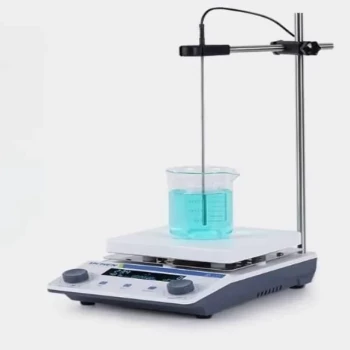
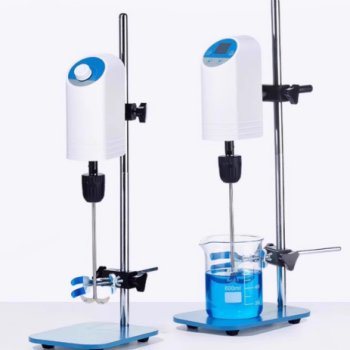
Stirred reactors enhance glycerin purification by ensuring the solvent (such as butanol) makes complete, vigorous contact with the glycerin-rich phase. This mechanical agitation maximizes mass transfer efficiency, enabling the solvent to exploit polarity differences to selectively extract fatty acids and precipitate inorganic salts, ultimately yielding a precursor with significantly higher purity.
The synergy between mechanical agitation and chemical selectivity is the key to this process. While the solvent provides the chemical pathway to separate impurities based on polarity, the stirred reactor provides the physical energy required to drive this exchange efficiently and completely.
The Mechanics of Purification
Maximizing Contact Area
In a static environment, solvents only interact with the surface of the glycerin mixture, limiting the extraction speed. A stirred reactor overcomes this by bringing the specific solvent into "full contact" with the glycerin-rich phase.
This constant agitation breaks the liquids into smaller droplets, drastically increasing the surface area available for chemical interaction. This ensures that the solvent does not just sit on top of the glycerin but actively mixes throughout the volume.
Leveraging Polarity Differences
The core mechanism of purification relies on the differences in polarity between the glycerin, the solvent, and the impurities. When using a specific solvent like butanol, the system creates a chemical environment where impurities are forced to migrate.
Fatty acids are selectively transferred into the solvent phase, while inorganic salts, which are insoluble in the organic solvent, often precipitate out of the solution. This dual action removes two major contaminant categories simultaneously.
The Role of Mass Transfer
Driving Efficiency
The stirring function is not merely about mixing; it is about ensuring maximum mass transfer efficiency. Mass transfer is the movement of impurities from the glycerin phase to the solvent phase.
Without sufficient agitation, equilibrium takes a long time to reach. The stirred reactor accelerates this transport, ensuring that the solvent becomes saturated with impurities as quickly as possible.
Improving Precursor Purity
The result of this intensive mass transfer is a glycerin precursor that is significantly cleaner than the original feedstock. By physically forcing the interaction, the system ensures that the chemical potential of the solvent is fully utilized.
Separation and Recovery
Post-Reaction Processing
Once the stirring phase concludes, the mixture must be separated to recover the purified glycerin. The reference notes that this is achieved through static layering or further mechanical separation.
Phase Separation
Because the solvent and glycerin have different properties, they will naturally settle into distinct layers once the agitation stops. The impurity-laden solvent phase is removed, leaving behind the purified glycerin layer.
Understanding the Trade-offs
Energy Consumption vs. Speed
While stirred reactors maximize mass transfer, they introduce an energy cost due to the mechanical power required for agitation. Operators must balance the intensity of stirring with the energy budget; excessive stirring yields diminishing returns once mass transfer equilibrium is reached.
Separation Latency
Relying on static layering after stirring can create a bottleneck. While the reactor speeds up the mixing, gravity settling takes time. For continuous high-throughput processes, additional mechanical separation equipment (like centrifuges) may be required to match the speed of the reactor.
Making the Right Choice for Your Goal
When designing a glycerin purification line using solvent extraction, consider your primary constraints:
- If your primary focus is Purity: Prioritize the selection of a solvent with the optimal polarity difference relative to your specific impurities (salts vs. fatty acids).
- If your primary focus is Throughput: Implement mechanical separation immediately following the stirred reactor to avoid the time delays associated with static layering.
By optimizing the agitation intensity in the reactor, you ensure the solvent has the physical opportunity to perform its chemical work, resulting in a highly efficient purification cycle.
Summary Table:
| Feature | Impact on Glycerin Purification |
|---|---|
| Mechanical Agitation | Increases surface area and ensures full contact between solvent and glycerin. |
| Polarity Difference | Enables selective extraction of fatty acids into the solvent phase. |
| Inorganic Salts | Facilitates the precipitation of insoluble salts for easier removal. |
| Mass Transfer | Accelerates the transport of impurities to reach equilibrium faster. |
| Post-Reaction Separation | Utilizes static layering or centrifuges to recover high-purity glycerin. |
Elevate Your Chemical Processing with KINTEK Precision
Unlock superior purity and efficiency in your extraction workflows with KINTEK’s high-performance stirred reactors and chemical processing systems. Whether you are refining glycerin or conducting complex solvent extractions, our equipment is designed to maximize mass transfer and ensure reliable results.
As experts in laboratory and industrial solutions, KINTEK provides a comprehensive range of:
- High-Temperature High-Pressure Reactors & Autoclaves for demanding chemical reactions.
- Crushing, Milling, & Sieving Systems for feedstock preparation.
- Advanced Electrolytic Cells & Battery Research Tools for cutting-edge energy R&D.
- Essential Consumables including high-purity ceramics, PTFE products, and crucibles.
Ready to optimize your lab's output? Our technical team is standing by to match you with the perfect equipment for your specific application. Contact KINTEK today to discuss your project!
References
- Cédric Decarpigny, Rénato Froidevaux. Bioprocesses for the Biodiesel Production from Waste Oils and Valorization of Glycerol. DOI: 10.3390/en15093381
This article is also based on technical information from Kintek Solution Knowledge Base .
Related Products
- Laboratory Small Constant Temperature Heated Magnetic Stirrer Heater and Stirrer
- High Performance Laboratory Stirrers for Diverse Applications
- Customizable Laboratory High Temperature High Pressure Reactors for Diverse Scientific Applications
- Mini SS High Pressure Autoclave Reactor for Laboratory Use
- Stainless High Pressure Autoclave Reactor Laboratory Pressure Reactor
People Also Ask
- What role does a magnetic stirrer with heating play in ZnO nanoparticle synthesis? Precision Control for Quality Results
- What role does a constant temperature heating magnetic stirrer play in MFC-HAp synthesis? Achieve Material Homogeneity
- What is the function of a laboratory magnetic stirrer in Ni–Cr–P electrodeposition? Optimize Ion Transport & Coating
- Why is a laboratory magnetic stirrer required for benzoic acid esters? Boost Reaction Speed & Yield with High RPM
- What role does a laboratory magnetic stirrer play in TiO2 and TiO2-Ag sol preparation? Master Chemical Kinetics