Substrate heating and temperature control are fundamental to manipulating the microstructure and mechanical integrity of a coating. By providing precise thermal energy, these systems determine how atoms settle, bond, and arrange themselves on a surface, directly governing adhesion, stress levels, and hardness.
Precise thermal regulation acts as a catalyst for favorable atomic behavior, converting a stream of deposited material into a dense, adherent, and chemically optimized film.
The Physics of Film Formation
Atomic Surface Mobility
Heating the substrate provides essential thermal energy to the atoms arriving on the surface.
This energy increases the surface mobility of deposited atoms, allowing them to migrate to energetically favorable positions before locking into place. This movement is critical for determining the final growth mode of the thin film.
Controlling Phase Structure
Temperature is a primary variable in promoting the selective growth of specific material phases.
For example, in the synthesis of Ti-Si-B-C coatings, specific substrate temperatures facilitate necessary phase separation and chemical segregation. This results in microstructures with high resistance to plastic deformation (high H3/E2 values).
Mechanical Integrity and Adhesion
Managing Residual Stress
Depositing a coating often generates internal forces known as residual stresses, which can lead to cracking or delamination.
Precise temperature control allows you to adjust the residual stress distribution within the coating. By regulating the thermal input, you can mitigate excessive internal stress that compromises structural integrity.
Strengthening Adhesion
Proper heating improves the film-substrate adhesion, ensuring the coating bonds securely to the base material.
A stable thermal environment is necessary to prevent interface failure. This ensures the coating remains durable even under mechanical load.
The Critical Role of Thermal Stability
Avoiding Uneven Accumulation
While the primary reference focuses on atomic structure, supplementary data highlights the importance of consistency over time.
In processes like hydrothermal carbonization, stable thermal input is critical to ensure uniform reactions. Fluctuations can lead to the uneven accumulation of material (such as carbon spheres) or inconsistent coating thickness.
Equipment Precision
Achieving this stability often requires specialized hardware, such as cast aluminum heating rings paired with high-precision temperature controllers.
This equipment ensures the reaction temperature remains constant, even over processes lasting several hours. This stability is the safeguard against quality drift and structural defects.
Making the Right Choice for Your Goal
To optimize your deposition process, align your temperature strategy with your specific performance requirements:
- If your primary focus is Hardness and Wear Resistance: Prioritize high-precision heating to drive phase separation and chemical segregation, creating structures that resist plastic deformation.
- If your primary focus is Uniformity and Adhesion: Focus on the stability of your controller and heating elements to prevent fluctuations that cause uneven accumulation and internal stress spikes.
The quality of your coating is ultimately defined by how effectively you control the energy state of the substrate during deposition.
Summary Table:
| Factor influenced | Impact on Coating Quality | Key Mechanism |
|---|---|---|
| Atomic Mobility | Dense, uniform film growth | Thermal energy enables atoms to find stable lattice positions. |
| Phase Structure | Higher hardness & wear resistance | Promotes selective growth and chemical segregation (e.g., Ti-Si-B-C). |
| Residual Stress | Prevents cracking & delamination | Balances thermal expansion and internal forces during deposition. |
| Adhesion Strength | Long-term coating durability | Ensures a secure bond between the thin film and the substrate. |
| Thermal Stability | Consistent thickness & quality | High-precision controllers prevent material drift and defects. |
Elevate Your Thin Film Deposition with KINTEK
Achieving the perfect coating requires more than just high-quality materials—it requires absolute thermal precision. KINTEK specializes in advanced laboratory solutions, providing the high-temperature furnaces, high-pressure reactors, and precision heating elements necessary to master surface mobility and phase structure.
Whether you are developing wear-resistant coatings or advanced battery technologies, our range of muffle, vacuum, and CVD furnaces, alongside our specialized high-temperature reactors, ensures your research achieves maximum mechanical integrity.
Ready to optimize your lab's performance? Contact our technical experts today to find the ideal heating and crushing systems for your specific application.
References
- S.K. Mishra. Toughening of nanocomposite hard coatings. DOI: 10.1515/rams-2020-0049
This article is also based on technical information from Kintek Solution Knowledge Base .
Related Products
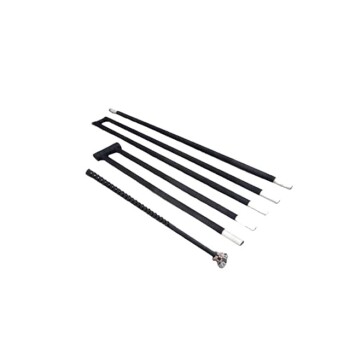
- Silicon Carbide SiC Thermal Heating Elements for Electric Furnace
- Laboratory Small Constant Temperature Heated Magnetic Stirrer Heater and Stirrer
People Also Ask
- What is the function of the heating element in a furnace? The Engine of Your Thermal Process
- What is the best heating element for a furnace? A Guide to Selecting the Right Material for Your Temperature Needs
- What is SiC elements? The Ultimate High-Temperature Heating Solution
- How long does a heating element last on the furnace? Understand Lifespan & Safety for Your System
- What are silicon carbide heating elements used for? Reliable High-Temp Heating for Industrial Processes