The water bath and gas delivery systems function as the control center of a semi-continuous stirred reactor, working in tandem to isolate true catalytic performance. Together, they eliminate physical variables—specifically thermal fluctuation and reactant starvation—ensuring that the data collected reflects precise chemical kinetics rather than environmental anomalies.
In glycerol oxidation, accurate kinetic data is impossible without separating chemical reaction limits from physical transport limits. These systems ensure the reaction rate is defined by the catalyst's activity, not by a lack of oxygen or unstable temperatures.
The Role of Thermal Regulation
Precision Control via Water Bath
The constant temperature water bath is the primary defense against thermal instability. By maintaining the reactor at a steady 60 °C, it ensures minimal temperature fluctuations throughout the experiment.
Ensuring Kinetic Consistency
Reaction rates are highly sensitive to heat. Even minor deviations can skew kinetic data, making it difficult to calculate activation energy accurately. The water bath anchors this variable, providing a stable baseline for analysis.
The Function of Gas Delivery
Maintaining Oxygen Saturation
The gas delivery system provides a constant flow of oxygen, typically at rates such as 120 mL/min. This continuous supply is critical to maintain oxygen saturation within the liquid phase of the mixture.
Preventing Mass Transfer Limitations
Without a steady surplus of oxygen, the reaction rate might be limited by how fast oxygen dissolves rather than how fast the catalyst works. By saturating the liquid, the system ensures the data reflects true chemical kinetics, not mass transfer constraints.
The Integration Mechanism: Stirring
Facilitating Interaction
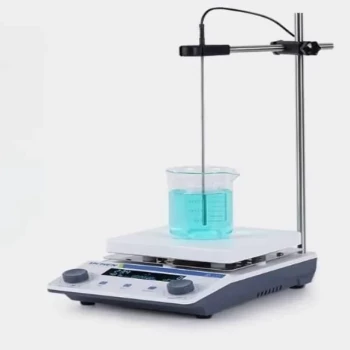
While the bath provides heat and the gas system provides reactants, the magnetic stirring system acts as the bridge. It guarantees efficient mass transfer between the solid catalyst, liquid glycerol, and sodium hydroxide.
Homogenizing the Environment
Stirring ensures that the precise temperature from the water bath and the dissolved oxygen from the gas feed are distributed evenly throughout the reactor volume immediately.
Understanding the Trade-offs
The Risk of Transport Limitations
If the gas flow is inconsistent or the stirring speed is inadequate, the system enters a "mass transfer limited" regime. In this state, your data measures how fast fluids move rather than how effective your catalyst is.
Thermal Lag
While a water bath is effective, it reacts to the external wall of the vessel. In highly exothermic reactions, internal temperature spikes can still occur if mixing is not vigorous enough to dissipate heat to the walls.
Making the Right Choice for Your Goal
To ensure your experimental setup yields valid results, consider these priorities:
- If your primary focus is obtaining intrinsic kinetic data: Ensure the gas flow rate is high enough (e.g., >120 mL/min) and stirring is vigorous to prove you are not in a mass-transfer limited regime.
- If your primary focus is catalyst screening: Prioritize the precision of the water bath to ensure all candidates are tested at an exact, reproducible temperature (e.g., 60 °C).
Ultimately, the reliability of your glycerol oxidation study depends on using these systems to create an environment where the catalyst is the only variable.
Summary Table:
| System Component | Primary Function | Impact on Research Data |
|---|---|---|
| Water Bath | Precise Thermal Control (e.g., 60 °C) | Ensures kinetic consistency and accurate activation energy calculation. |
| Gas Delivery | Continuous Oxygen Supply (e.g., 120 mL/min) | Prevents mass transfer limitations and ensures oxygen saturation. |
| Magnetic Stirring | Homogenization & Mass Transfer | Bridges thermal and reactant delivery for a uniform reaction environment. |
Elevate Your Chemical Research with KINTEK Precision
Precision in glycerol oxidation requires equipment that eliminates every physical variable. KINTEK specializes in high-performance laboratory solutions, providing the advanced high-temperature high-pressure reactors, autoclaves, and magnetic stirring systems necessary to isolate true chemical kinetics.
Whether you are performing catalyst screening or intrinsic kinetic studies, our comprehensive portfolio—including crushing systems, cooling solutions, and specialized reactors—ensures your data reflects your catalyst's activity, not environmental limitations.
Ready to optimize your lab's performance? Contact KINTEK today to discover how our high-precision equipment can transform your research outcomes.
References
- Zhun Zhao, Michael S. Wong. Volcano-shape glycerol oxidation activity of palladium-decorated gold nanoparticles. DOI: 10.1039/c4sc01001a
This article is also based on technical information from Kintek Solution Knowledge Base .
Related Products
- Laboratory Small Constant Temperature Heated Magnetic Stirrer Heater and Stirrer
- High Performance Laboratory Stirrers for Diverse Applications
- Customizable Laboratory High Temperature High Pressure Reactors for Diverse Scientific Applications
- Mini SS High Pressure Autoclave Reactor for Laboratory Use
- Customizable High Pressure Reactors for Advanced Scientific and Industrial Applications
People Also Ask
- What role does a magnetic stirrer with heating play in ZnO nanoparticle synthesis? Precision Control for Quality Results
- What role does a constant temperature heating magnetic stirrer play in MFC-HAp synthesis? Achieve Material Homogeneity
- What is the function of a laboratory magnetic stirrer in Ni–Cr–P electrodeposition? Optimize Ion Transport & Coating
- Why is a laboratory magnetic stirrer required for benzoic acid esters? Boost Reaction Speed & Yield with High RPM
- What role does a laboratory magnetic stirrer play in TiO2 and TiO2-Ag sol preparation? Master Chemical Kinetics