Knowledge How does e-beam deposition work? A Guide to High-Purity Thin Film Coating
Author avatar

Tech Team · Kintek Solution

Updated 1 week ago

How does e-beam deposition work? A Guide to High-Purity Thin Film Coating


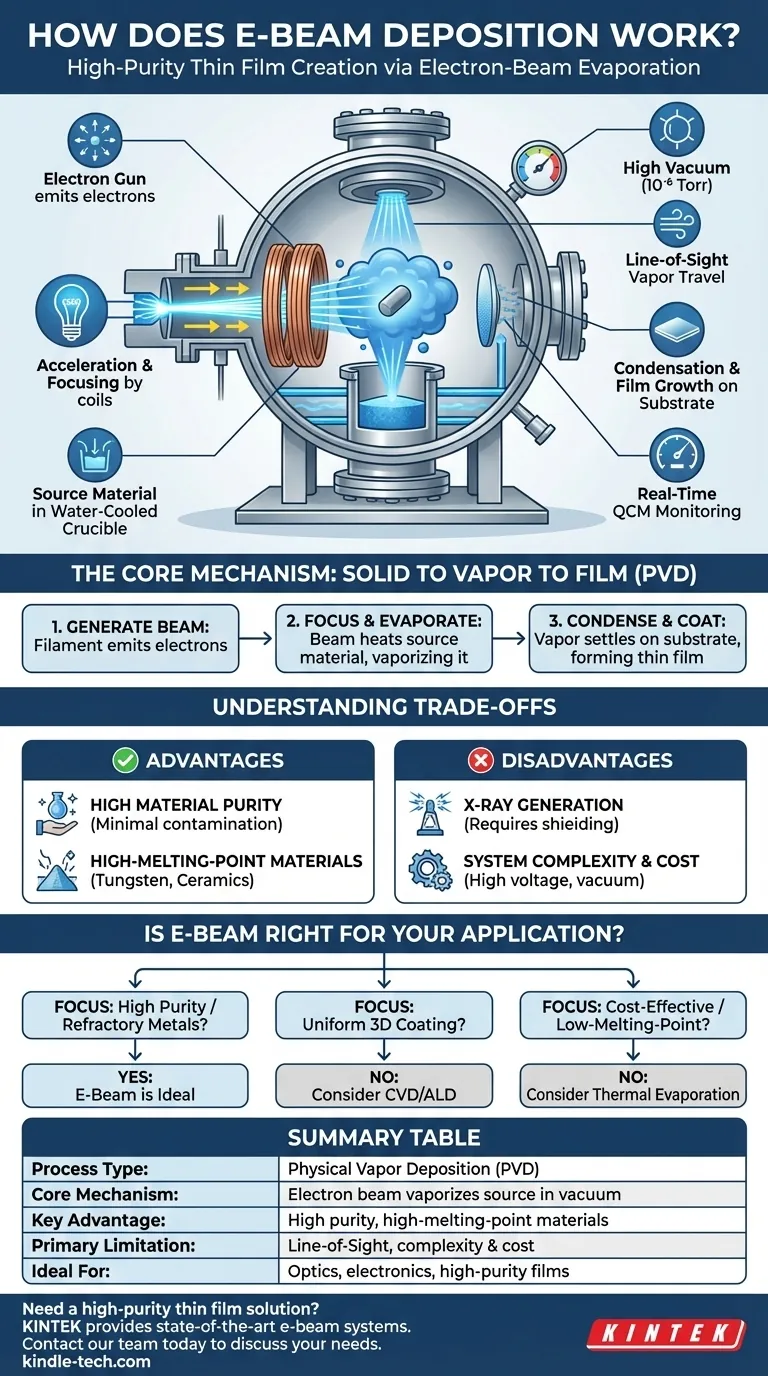
At its core, electron-beam deposition is a high-vacuum process that uses a focused, high-energy beam of electrons to heat and vaporize a source material. This vapor then travels through the vacuum and condenses onto a substrate, forming a very pure, high-quality thin film. It is a highly controlled method for creating coatings for optics, electronics, and advanced materials.

The central principle of e-beam deposition is precision energy transfer. Unlike methods that heat an entire container, the electron beam directly heats only the source material, ensuring high purity and the ability to evaporate materials with extremely high melting points.
How does e-beam deposition work? A Guide to High-Purity Thin Film Coating

The Core Mechanism: From Solid to Vapor

E-beam deposition is a type of Physical Vapor Deposition (PVD), meaning the material transitions from a solid to a vapor and back to a solid without a chemical reaction. The process begins with the generation and focusing of an electron beam.

The Electron Gun

The process starts with an electron gun, which contains a tungsten filament. This filament is heated to a high temperature, causing it to emit a cloud of electrons through a process called thermionic emission.

Acceleration and Focusing

These free electrons are then accelerated by a strong electric field, typically created by applying a high voltage (several kilovolts). This gives them a significant amount of kinetic energy.

Electromagnetic coils act as lenses, precisely focusing and bending the electron beam to strike a specific spot on the source material.

The Crucible and Source Material

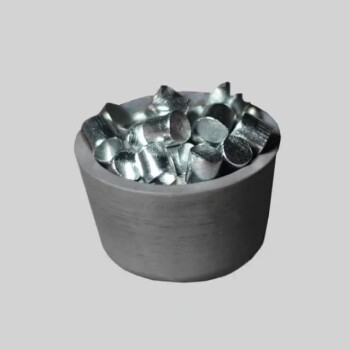
The material to be deposited, often in the form of pellets or powder, sits in a water-cooled copper crucible (or hearth).

The water cooling is critical. It keeps the crucible itself from melting or reacting with the source material, which is essential for preventing contamination of the resulting film.

The Role of the High Vacuum

The entire process occurs in a high-vacuum chamber (typically 10⁻⁶ Torr or lower). This vacuum is necessary for two key reasons: it prevents the electron beam from scattering off air molecules, and it allows the vaporized material to travel directly to the substrate without collisions or contamination.

The Deposition Process: From Vapor to Film

Once the high-energy electrons strike the source material, their kinetic energy is instantly converted into thermal energy, causing the material to rapidly heat, melt, and then evaporate or sublimate into a vapor.

Line-of-Sight Travel

The vaporized atoms travel in straight lines from the source towards the substrate. This is known as a line-of-sight process, which is characteristic of most PVD techniques.

Condensation and Film Growth

When the vapor atoms strike the relatively cool surface of the substrate (the object being coated), they lose their energy, condense back into a solid, and begin to form a thin film.

In-Situ Monitoring

The thickness of the growing film is typically monitored in real-time using a Quartz Crystal Microbalance (QCM). This device allows for extremely precise control over the final film thickness, often down to the single-angstrom level.

Understanding the Trade-offs

Like any technical process, e-beam deposition has clear advantages and specific limitations that make it suitable for some applications but not others.

Advantage: High Material Purity

Because only the source material is directly heated by the beam, there is minimal contamination from the crucible. This results in films of exceptionally high purity, which is critical for optical and electronic applications.

Advantage: High-Melting-Point Materials

The intense, localized heating allows e-beam deposition to evaporate materials with very high melting points, such as tungsten, titanium, and various ceramics, which are difficult or impossible to evaporate with simpler thermal methods.

Disadvantage: X-Ray Generation

A significant side effect of high-energy electrons striking a target is the generation of X-rays. This requires proper shielding to protect operators and can sometimes damage sensitive substrates or electronic components.

Disadvantage: System Complexity and Cost

E-beam systems, with their high-voltage power supplies, electromagnetic focusing coils, and sophisticated vacuum equipment, are significantly more complex and expensive than alternative methods like thermal evaporation.

Is E-Beam Deposition Right for Your Application?

Choosing the correct deposition method requires matching the technique's capabilities to your specific goal.

  • If your primary focus is exceptional material purity or coating with refractory metals: E-beam deposition is one of the best choices available due to its direct, crucible-free heating mechanism.
  • If your primary focus is coating complex 3D shapes uniformly: You should consider a non-line-of-sight method like chemical vapor deposition (CVD) or atomic layer deposition (ALD).
  • If your primary focus is cost-effective coating with low-melting-point materials (like aluminum or silver): A simpler and cheaper resistive thermal evaporation system may be a more practical solution.

Understanding these fundamental principles allows you to select the deposition technique that best aligns with your material, performance, and project requirements.

Summary Table:

Aspect Key Detail
Process Type Physical Vapor Deposition (PVD)
Core Mechanism Electron beam vaporizes source material in a high vacuum
Key Advantage High purity; can coat high-melting-point materials (e.g., tungsten)
Primary Limitation Line-of-sight process; higher system complexity and cost
Ideal For Optics, electronics, applications requiring high-purity films

Need a high-purity thin film coating solution?

E-beam deposition is ideal for demanding applications in optics, semiconductors, and advanced materials research. KINTEK specializes in providing state-of-the-art lab equipment and consumables, including e-beam evaporation systems, to meet your precise coating requirements.

Our experts can help you determine if e-beam deposition is the right choice for your project and provide the reliable equipment you need for success.

Contact our team today to discuss your specific needs and discover how KINTEK can support your laboratory's goals.

Visual Guide
How does e-beam deposition work? A Guide to High-Purity Thin Film Coating Visual Guide

Related Products

People Also Ask

Related Products

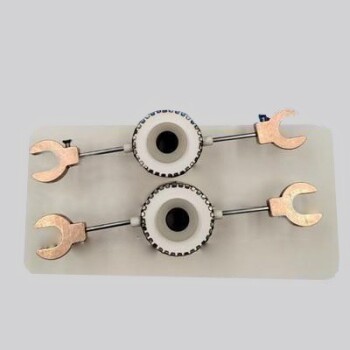
RF PECVD System Radio Frequency Plasma-Enhanced Chemical Vapor Deposition RF PECVD

RF PECVD System Radio Frequency Plasma-Enhanced Chemical Vapor Deposition RF PECVD

RF-PECVD is an acronym for "Radio Frequency Plasma-Enhanced Chemical Vapor Deposition." It deposits DLC (Diamond-like carbon film) on germanium and silicon substrates. It is utilized in the 3-12um infrared wavelength range.

Electron Beam Evaporation Coating Conductive Boron Nitride Crucible BN Crucible

Electron Beam Evaporation Coating Conductive Boron Nitride Crucible BN Crucible

High-purity and smooth conductive boron nitride crucible for electron beam evaporation coating, with high temperature and thermal cycling performance.

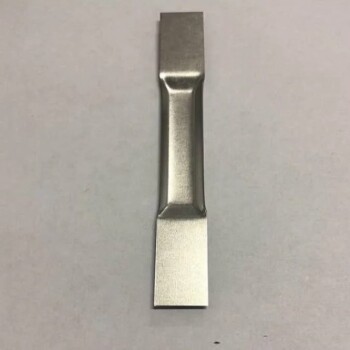
Molybdenum Tungsten Tantalum Evaporation Boat for High Temperature Applications

Molybdenum Tungsten Tantalum Evaporation Boat for High Temperature Applications

Evaporation boat sources are used in thermal evaporation systems and are suitable for depositing various metals, alloys and materials. Evaporation boat sources are available in different thicknesses of tungsten, tantalum and molybdenum to ensure compatibility with a variety of power sources. As a container, it is used for vacuum evaporation of materials. They can be used for thin film deposition of various materials, or designed to be compatible with techniques such as electron beam fabrication.

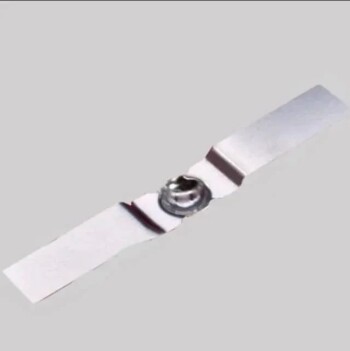
Hemispherical Bottom Tungsten Molybdenum Evaporation Boat

Hemispherical Bottom Tungsten Molybdenum Evaporation Boat

Used for gold plating, silver plating, platinum, palladium, suitable for a small amount of thin film materials. Reduce the waste of film materials and reduce heat dissipation.

Split Chamber CVD Tube Furnace with Vacuum Station Chemical Vapor Deposition System Equipment Machine

Split Chamber CVD Tube Furnace with Vacuum Station Chemical Vapor Deposition System Equipment Machine

Efficient split chamber CVD furnace with vacuum station for intuitive sample checking and quick cooling. Up to 1200℃ max temperature with accurate MFC mass flowmeter control.

Aluminized Ceramic Evaporation Boat for Thin Film Deposition

Aluminized Ceramic Evaporation Boat for Thin Film Deposition

Vessel for depositing thin films; has an aluminum-coated ceramic body for improved thermal efficiency and chemical resistance. making it suitable for various applications.

Three-dimensional electromagnetic sieving instrument

Three-dimensional electromagnetic sieving instrument

KT-VT150 is a desktop sample processing instrument for both sieving and grinding. Grinding and sieving can be used both dry and wet. The vibration amplitude is 5mm and the vibration frequency is 3000-3600 times/min.

Tungsten Evaporation Boat for Thin Film Deposition

Tungsten Evaporation Boat for Thin Film Deposition

Learn about tungsten boats, also known as evaporated or coated tungsten boats. With a high tungsten content of 99.95%, these boats are ideal for high-temperature environments and widely used in various industries. Discover their properties and applications here.

Vacuum Heat Treat Furnace with Ceramic Fiber Liner

Vacuum Heat Treat Furnace with Ceramic Fiber Liner

Vacuum furnace with polycrystalline ceramic fiber insulation liner for excellent heat insulation and uniform temperature field. Choose from 1200℃ or 1700℃ max. working temperature with high vacuum performance and precise temperature control.

Vacuum Heat Treat and Molybdenum Wire Sintering Furnace for Vacuum Sintering

Vacuum Heat Treat and Molybdenum Wire Sintering Furnace for Vacuum Sintering

A vacuum molybdenum wire sintering furnace is a vertical or bedroom structure, which is suitable for withdrawal, brazing, sintering and degassing of metal materials under high vacuum and high temperature conditions. It is also suitable for dehydroxylation treatment of quartz materials.

1200℃ Controlled Atmosphere Furnace Nitrogen Inert Atmosphere Furnace

1200℃ Controlled Atmosphere Furnace Nitrogen Inert Atmosphere Furnace

Discover our KT-12A Pro Controlled atmosphere furnace - high precision, heavy duty vacuum chamber, versatile smart touch screen controller, and excellent temperature uniformity up to 1200C. Ideal for both laboratory and industrial application.

Vacuum Heat Treat and Sintering Furnace with 9MPa Air Pressure

Vacuum Heat Treat and Sintering Furnace with 9MPa Air Pressure

The air pressure sintering furnace is a high-tech equipment commonly used for the sintering of advanced ceramic materials. It combines vacuum sintering and pressure sintering techniques to achieve high-density and high-strength ceramics.

Small Vacuum Heat Treat and Tungsten Wire Sintering Furnace

Small Vacuum Heat Treat and Tungsten Wire Sintering Furnace

The small vacuum tungsten wire sintering furnace is a compact experimental vacuum furnace specially designed for universities and scientific research institutes. The furnace features a CNC welded shell and vacuum piping to ensure leak-free operation. Quick-connect electrical connections facilitate relocation and debugging, and the standard electrical control cabinet is safe and convenient to operate.

1400℃ Controlled Atmosphere Furnace with Nitrogen and Inert Atmosphere

1400℃ Controlled Atmosphere Furnace with Nitrogen and Inert Atmosphere

Achieve precise heat treatment with KT-14A controlled atmosphere furnace. Vacuum sealed with a smart controller, it's ideal for lab and industrial use up to 1400℃.

30T 40T Split Automatic Heated Hydraulic Press Machine with Heated Plates for Laboratory Hot Press

30T 40T Split Automatic Heated Hydraulic Press Machine with Heated Plates for Laboratory Hot Press

Discover our split automatic heated lab press 30T/40T for precise sample preparation in material research, pharmacy, ceramics, and electronics industries. With a small footprint and heating up to 300°C, it's perfect for processing under vacuum environment.

Ultra-High Temperature Graphite Vacuum Graphitization Furnace

Ultra-High Temperature Graphite Vacuum Graphitization Furnace

The ultra-high temperature graphitization furnace utilizes medium frequency induction heating in a vacuum or inert gas environment. The induction coil generates an alternating magnetic field, inducing eddy currents in the graphite crucible, which heats up and radiates heat to the workpiece, bringing it to the desired temperature. This furnace is primarily used for graphitization and sintering of carbon materials, carbon fiber materials, and other composite materials.

2200 ℃ Tungsten Vacuum Heat Treat and Sintering Furnace

2200 ℃ Tungsten Vacuum Heat Treat and Sintering Furnace

Experience the ultimate refractory metal furnace with our Tungsten vacuum furnace. Capable of reaching 2200℃, perfect for sintering advanced ceramics and refractory metals. Order now for high-quality results.

Graphite Vacuum Furnace IGBT Experimental Graphitization Furnace

Graphite Vacuum Furnace IGBT Experimental Graphitization Furnace

IGBT experimental graphitization furnace, a tailored solution for universities and research institutions, with high heating efficiency, user-friendliness, and precise temperature control.

304 316 Stainless Steel Vacuum Ball Valve Stop Valve for High Vacuum Systems

304 316 Stainless Steel Vacuum Ball Valve Stop Valve for High Vacuum Systems

Discover 304/316 stainless steel vacuum ball valves, Ideal for high vacuum systems, Ensure precise control and durability. Explore now!

Graphite Vacuum Continuous Graphitization Furnace

Graphite Vacuum Continuous Graphitization Furnace

High-temperature graphitization furnace is a professional equipment for graphitization treatment of carbon materials. It is a key equipment for the production of high-quality graphite products. It has high temperature, high efficiency and uniform heating. It is suitable for various high-temperature treatments and graphitization treatments. It is widely used in metallurgy, electronics, aerospace, etc. industry.


Leave Your Message